

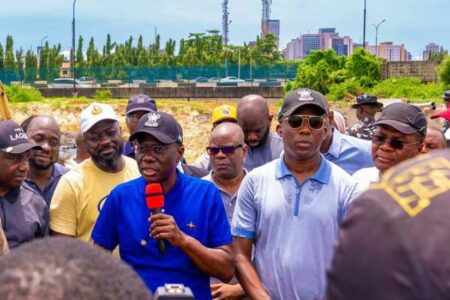
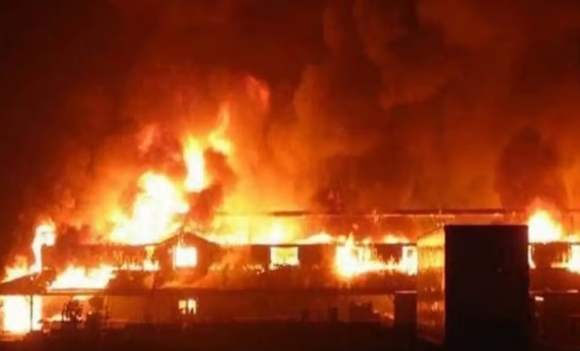
The Lagos State Government has dismissed the criticisms made by former Labour Party presidential candidate, Peter Obi, over the recent demolition of structures at the ASPAMDA section of the Trade Fair Complex, insisting that his claims are “wrong” and misleading.
In a statement issued on Wednesday, the Commissioner for Information and Strategy, Gbenga Omotoso, accused Obi of spreading “misinformation and disinformation” after his visit to the affected site alongside lawmakers and political associates.
Obi had condemned the demolition of market stalls and plazas, arguing that the traders had valid building approvals. He described the exercise as “a test of impunity, justice and compassion,” warning that destroying legitimate investments without due process was unjust and economically damaging, especially as many traders had borrowed funds to build their businesses.
But the state government countered that the demolished structures were illegal, stressing that the owners had no building approvals despite several opportunities to regularise their documents.
“The owners of the buildings had no approval. They were given ample time to regularise their papers when the state government declared a general amnesty last year, which was extended several times, but they shunned the offer,” Omotoso stated.
The government further alleged that its physical planning officials were attacked when they attempted to inspect the site, while property owners repeatedly ignored invitations for dialogue.
A major sticking point has been the role of the Trade Fair Management Board, a federal agency overseeing the complex. While Obi suggested that traders acted in good faith based on permissions from the board, Lagos State insists the board has no legal authority to approve building projects.
Citing state law and a 2003 Supreme Court ruling, Omotoso explained that only the Lagos State Government has the power to grant physical planning and building permits, even on federal lands.
“The board may manage leases, tenancies, and commercial activities, but any construction, alteration, or development requires Lagos State approval. Otherwise, such structures are illegal under state law and subject to demolition,” he clarified.
Framing the matter as a broader governance issue, Omotoso added:
“We must decide the kind of society we want – one governed by the rule of law or one driven by emotions and political interests.”











Leave a comment