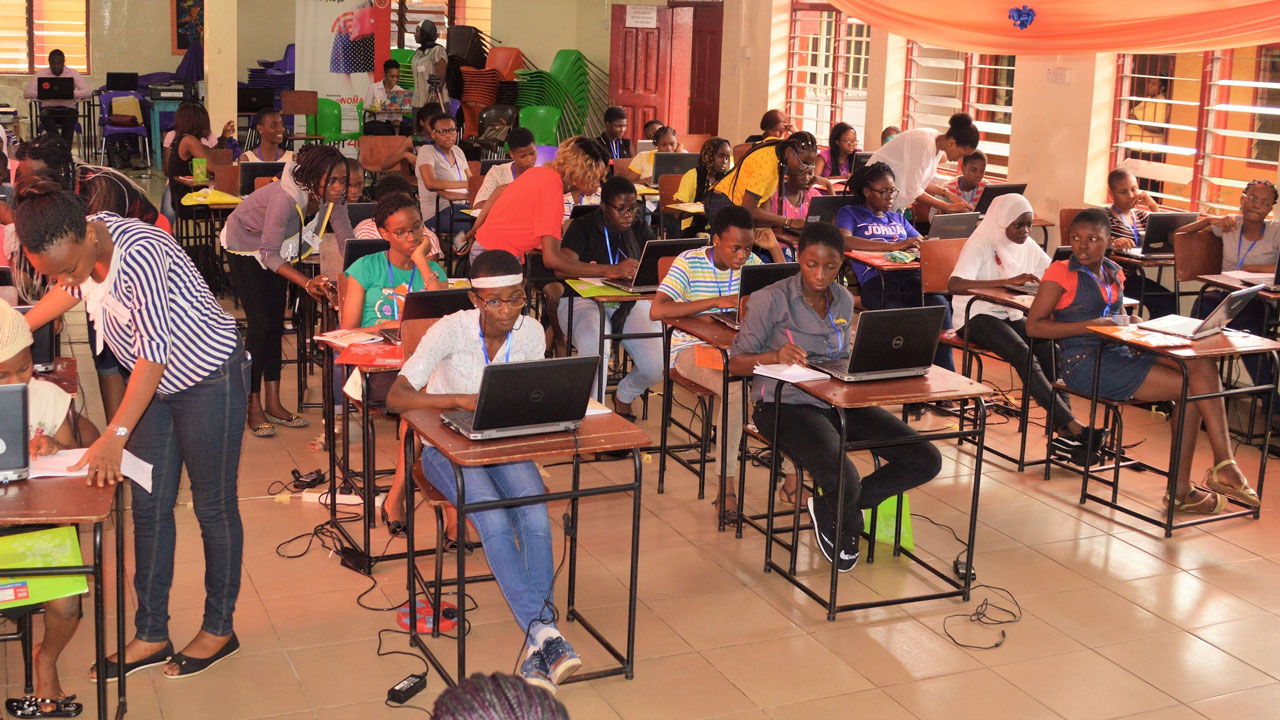
The Federal Government has inaugurated the Federal Technical Committee (FTC) for the Nigeria for Women Programme Scale-Up (NFWP–SU), marking a major step in expanding women’s economic empowerment initiatives across the country.
Speaking at the ceremony in Abuja on Tuesday, the Permanent Secretary of the Federal Ministry of Women Affairs and Social Development, Dr. Maryam Keshinro, said the committee’s launch demonstrates the government’s commitment to strengthening women-focused programmes and promoting inclusive national development.
Dr. Keshinro explained that the NFWP–SU builds on the success of the initial Nigeria for Women Project, implemented between 2018 and 2024 in six pilot states, Abia, Akwa Ibom, Kebbi, Niger, Ogun, and Taraba.
The project reached more than 460,000 women, formed 22,000 Women Affinity Groups (WAGs) and mobilised over N4.4 billion in collective savings.
Approved in June 2024, the scale-up phase aims to extend the programme to all states, integrating financial inclusion, livelihood support, and social protection into a unified national framework.
“This model transforms Women Affinity Groups into sustainable economic institutions with direct links to formal markets and financial services,” she said.
Highlighting the persistent gender gaps in economic participation, Dr. Keshinro stressed that the project aligns with the National Women Economic Empowerment (WEE) Policy, which seeks to reduce inequalities in access to resources and opportunities.
According to her, 70% of Nigerian women live in extreme poverty and have access to only 10% of land ownership. Despite accounting for 70–80% of agricultural labour, women hold only 20% of board representation. She further noted that women earn 45–50% less than men in similar roles, and only 34% have digital access compared to 88% of men.
She added that the scale-up also supports the World Bank Group’s Global Crises Response Framework by promoting food security, agricultural productivity, and climate resilience among women.
Committee members, drawn from key departments in the Ministries of Budget and Economic Planning, Education, Water Resources, Health and Social Welfare, Communications and Digital Economy, and Trade and Investment, were urged to ensure strategic coordination, provide technical guidance, track progress and uphold accountability to achieve programme goals.
National Project Coordinator, Dr. Hadiza Maina, reported ongoing collaboration with state governments, financial institutions, development partners, and community leaders to strengthen sustainability. She said the scale-up phase will feature improved digital tools for real-time monitoring and better delivery of financial and livelihood support.
“Our goal is to ensure every participating woman benefits economically and becomes part of a strong, resilient network capable of supporting household welfare and contributing to the national economy,” she stated.
Dr. Maina added that the programme will focus on climate-smart agriculture, small-scale enterprise development, and digital financial literacy, critical areas given rising climate challenges and economic pressures.
World Bank Co-Task Team Lead, Dr. Yetunde Fatogun, praised the Federal Government for expanding a project that has produced measurable improvements in women’s income, productivity, and resilience. She reaffirmed the World Bank’s commitment to supporting systems that enhance women’s economic and social empowerment, noting that global economic instability and climate shocks continue to disproportionately affect women.

National
 News MasterUpdated 3 months Ago2 Mins read
FG Inaugurates Committee to Drive Nationwide Women Empowerment Programme
News MasterUpdated 3 months Ago2 Mins read
Share





Related Articles
National
2027 Electoral Battle Shifts to INEC as Tinubu Signs Amended Electoral Act
Abuja – President Bola Tinubu’s signing of the Electoral Act (Amendment) Bill...
National
NBA Denies Alleged $2,000 Payments to SANs in Maiduguri
The Nigerian Bar Association (NBA) has refuted claims that $2,000 was given...
National
CJN Warns New Judges on Economic and Governance Implications of Their Decisions
Abuja – Chief Justice of Nigeria (CJN), Justice Kudirat Olatokunbo Kekere-Ekun, has...
National
Telcos Reject Claims Nigeria Can’t Handle E-Transmission of Election Results
As debates continue over the electronic transmission of election results ahead of...



Leave a comment