The Federal Government has raised concerns that recent comments made by United States President Donald Trump about Nigeria’s security situation are emboldening violent groups across the country.
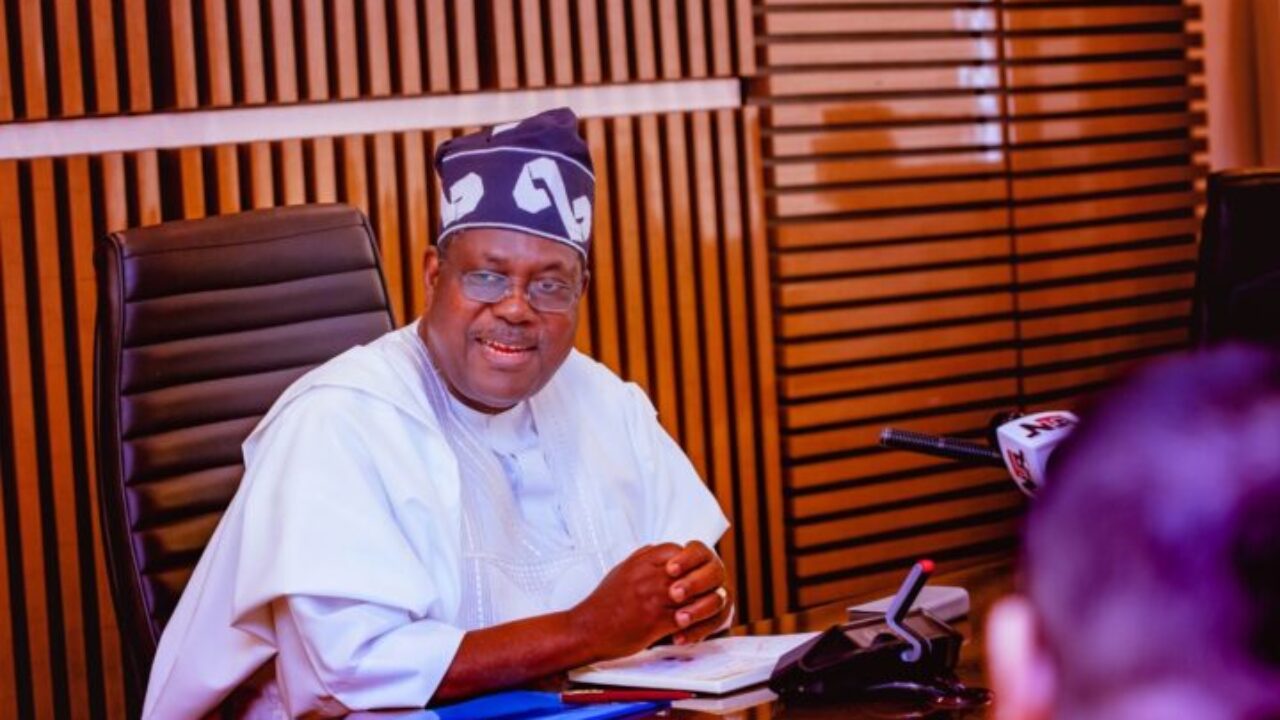
Secretary to the Government of the Federation (SGF), Senator George Akume, disclosed this on Wednesday while speaking on the evolution of violent extremism, including the Boko Haram and ISWAP insurgency as well as banditry. He noted that although many people attribute these crises to religion, the initial motivations were largely economic.
Akume maintained that Nigeria had significantly weakened insurgent groups before the latest statements emerging from Washington, warning that such remarks, though possibly well-intended, risk empowering extremist factions who thrive on distorted international narratives.
He stressed that what Nigeria needs from global partners, especially the United States, is enhanced collaboration through intelligence sharing, technology, and equipment, not public statements that misrepresent the country’s security realities.
The SGF dismissed claims of a Christian genocide, including in his home state of Benue. He explained that Boko Haram and ISWAP have historically attacked both churches and mosques, killing Christians, Muslims, and traditional worshippers. He added that violent groups in the North-West are driven primarily by economic motives, not religion.
According to him:
> “The current misrepresentation of the crisis as ‘genocide against Christians’ fuels religious tension, emboldens extremist and criminal factions seeking to exploit sectarian narratives, creates diplomatic friction, and undermines Nigeria’s efforts to strengthen international security partnerships.”
Akume reaffirmed that Nigeria is a secular nation, constitutionally prohibited from adopting any religion as state doctrine. He also emphasised that President Bola Ahmed Tinubu’s appointments reflect the country’s religious diversity, with equal representation of Christians and Muslims in the Federal Executive Council and the National Security Council.
He further linked the roots of extremism to the 2011 collapse of Libya and instability in Egypt, which opened trafficking corridors that allowed weapons to flow through AQIM routes into the Sahel and into Nigeria, strengthening Boko Haram, ISWAP, and later banditry groups.
Speaking on the North-West crisis, Akume said credible analyses identify economic factors such as competition for land and water, cattle rustling, illegal mining, kidnapping-for-ransom, and rural extortion as the main drivers of continued violence.
He also referenced the Yelewata attack in Guma Local Government Area of Benue State, where over 100 people were reportedly killed. He noted that President Tinubu promptly dispatched relief materials and ordered a survey of destroyed homes to support reconstruction.
Akume insisted that the Nigerian Armed Forces remain highly capable and have reclaimed previously occupied territories from terrorists. He stressed that Nigeria does not need foreign combat troops, but rather advanced intelligence, surveillance technology, and equipment, within a framework of partnership, not external prescriptions.
He called on Nigerians across political, ethnic, and religious divides to unite against violent extremism, saying:
> “Now is the time to speak with one strong and united voice to confront a common enemy and eradicate terrorists, bandits, and insurgents from our national borders.”
Akume also reaffirmed the Federal Government’s commitment to strengthening diplomatic ties with the U.S., rooted in mutual respect, shared democratic values, and a joint responsibility for regional and global stability.

National
 News MasterUpdated 3 months Ago2 Mins read
Alleged Christian Genocide: U.S. Comments Encouraging Violent Groups in Nigeria – FG
News MasterUpdated 3 months Ago2 Mins read
Share



Related Articles

National
FG Launches “Nigeria Beyond Oil and Gas” Alliance to Drive Economic Diversification
The Federal Government has unveiled the Nigeria Beyond Oil and Gas Alliance...
National
Tinubu Commissions Projects in Adamawa, Urges Governors to Prioritize Citizens’ Welfare
President Bola Tinubu on Monday urged state governors to prioritize the welfare...
National
Real-Time Result Transmission Non-Negotiable for Credible 2027 Polls – Ezekwesili
Former Minister of Education and founder of the FixPolitics Initiative, Obiageli Ezekwesili,...
National
NASS Approves N1.504tr 2026 Budget for Nigerian Army
A joint committee of the National Assembly has expressed satisfaction with the...



Leave a comment