A fresh global assessment by World of StatHistics has ranked Nigeria among the world’s hardest-working countries, underscoring the demanding work culture common in many developing nations, particularly across Africa. The ranking, which analysed average weekly working hours in 167 countries, offers insight into how much time workers devote to their jobs worldwide.
Nigeria placed 86th on the global list, recording an average of 39.6 working hours per week. This puts the country ahead of several advanced economies, including the United States, United Kingdom, Japan, Canada, and most European nations. Although Nigeria did not feature in the top 50, the data highlights the intensity of work driven by economic pressures, widespread informal employment, and limited social safety nets.
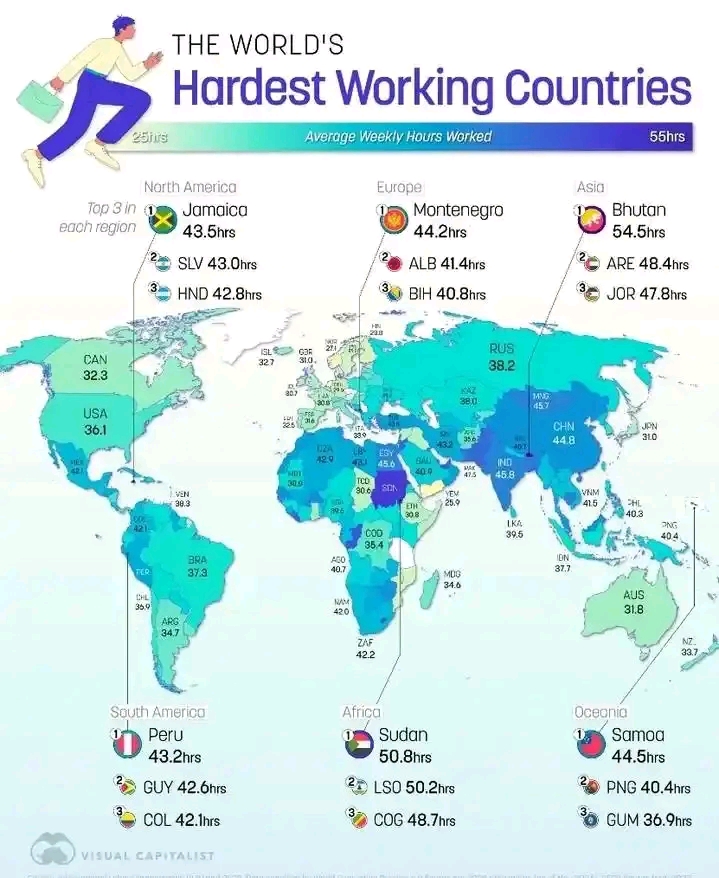
African and Asian countries dominated the upper end of the ranking, reflecting economies where labour-intensive sectors, minimal automation, and economic necessity often result in longer working hours. Bhutan topped the global chart with an average of 54.5 hours per week, followed by Sudan, Lesotho, and the Republic of Congo, while the United Arab Emirates completed the top five.
Several African nations ranked prominently in the upper half, including Liberia, Egypt, Burkina Faso, Senegal, Zimbabwe, Sierra Leone, Benin, Zambia, and South Africa. Analysts say this trend mirrors the continent’s reliance on manual labour, agriculture, small-scale trading, and informal sector jobs.
Nigeria’s mid-table position still places it above many industrialised countries where shorter working hours are supported by stronger labour protections, higher productivity, and advanced technology. For example, the UK and Japan recorded average working weeks of about 31 hours, while Canada stood at 32.3 hours.
Within Nigeria, however, long working hours are often split across multiple jobs, self-employment, and informal economic activities. Many Nigerians extend their working time to cope with inflation, unemployment, and rising living costs, particularly in major cities such as Lagos, Abuja, Aba, and Port Harcourt.
Experts caution that longer hours do not necessarily lead to higher productivity or better living standards. In many developing economies, extended work time is linked to low wages, weak labour rights, and economic survival rather than efficiency. Nigeria’s ranking reflects resilience and hard work but also exposes deep structural challenges that force citizens to work longer for limited returns.
At the bottom of the ranking are mostly European and developed nations, including the UK and Japan, which ranked last with 31 hours per week, alongside Estonia, Spain, Australia, Belgium, and Ghana. These countries benefit from stronger labour laws, paid leave, automation, and higher output per worker.
For Nigeria, the findings serve as both praise and caution. While the workforce remains energetic and committed, experts argue that attention should shift toward improving productivity, wages, job security, and working conditions. As global debates increasingly focus on work-life balance and efficiency, Nigeria’s position highlights the urgency of reforms that ensure hard work leads to improved quality of life.

National
 News MasterUpdated 2 months Ago2 Mins read
Global Study Ranks Nigeria 86th Among World’s Hardest-Working Nations as Africa Tops the Charts
News MasterUpdated 2 months Ago2 Mins read
Share





Related Articles

National
Monarch Urges Kanu’s Release, Tinubu’s Aide Rejects Comparison with Igboho
Calls for the release of the detained leader of the Indigenous People...

National
Tinubu Appoints Gov Uba Sani as Renewed Hope Ambassador, Deputy DG for Party Mobilisation
President Bola Ahmed Tinubu has appointed the Governor of Kaduna State, Uba...
National
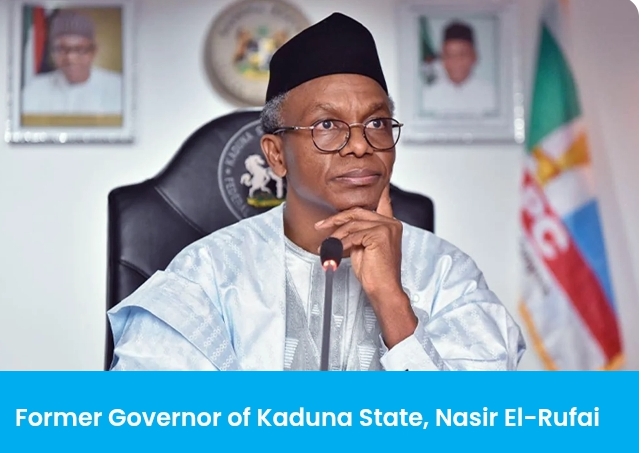
EFCC Grills El-Rufai for Second Consecutive Night
Former Kaduna State Governor, Nasir El-Rufai, has spent a second night in...

National
NBA Denies Sharing $2,000 with SANs
The Nigerian Bar Association (NBA) has refuted claims that $2,000 was distributed...




Leave a comment