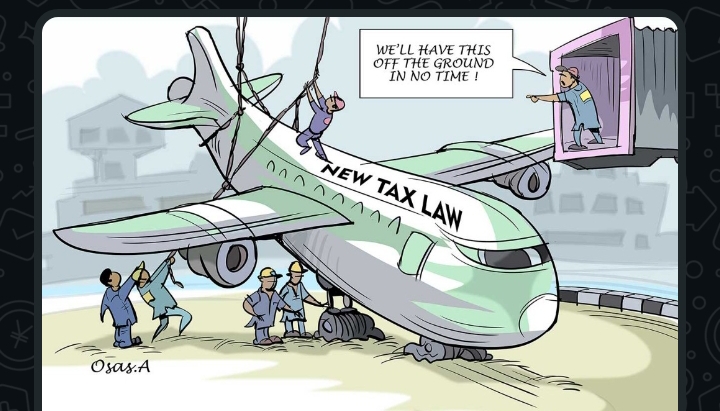
As the Federal Government moves closer to implementing its new tax reform laws on January 1, 2026, growing opposition, allegations of legislative tampering and deep public mistrust are casting a shadow over what was intended to be a landmark fiscal overhaul.
From initial anxiety to outright agitation, the proposed tax regime has become mired in controversy. Claims that some provisions of the laws were altered after being passed by the National Assembly and signed by President Bola Tinubu, alongside calls by opposition figures for a suspension of implementation, have further unsettled stakeholders.
Although the Federal Government insists that preparations are complete, the public mood suggests otherwise. Allegations of post-passage alterations to the laws, particularly versions circulated by the Federal Ministry of Information, have raised serious questions about legality, legislative integrity and oversight. Some lawmakers have alleged that clauses appearing in the gazetted copies were never approved by parliament, fuelling fears of constitutional breaches.
Concerns had already been building even before the latest controversy, especially after the Federal Inland Revenue Service (FIRS) signed a memorandum of understanding with France’s Direction Générale des Finances Publiques. While the agreement was described as a move to strengthen capacity, tax administration and digital processes, critics questioned the wisdom of exposing sensitive taxpayer data to foreign entities amid strong local fintech capacity.
Opposition to the reforms has since intensified. The National Opposition Movement (NOM), led by figures including former Vice President Atiku Abubakar, former Senate President David Mark and Labour Party presidential candidate Peter Obi, has urged the Federal Government to suspend the rollout of the tax laws. The group warned that introducing an “aggressive tax regime” at a time of widespread economic hardship would worsen Nigerians’ living conditions.
At a press conference in Abuja, NOM spokesperson Chille Igbawua accused the government of concentrating excessive powers in revenue authorities without adequate safeguards. He argued that automated enforcement, penalties and account access mechanisms could be abused in a system already plagued by weak oversight, adding that a tax system citizens fear more than they trust signals a fundamental governance failure.
Despite the backlash, the tax reform package signed into law by President Tinubu on June 26, 2025, represents the most comprehensive overhaul of Nigeria’s tax framework in decades. The four new laws aim to modernise tax administration, consolidate outdated statutes, improve compliance, enhance digitalisation and reduce dependence on volatile oil revenues.
Supporters argue that the reforms mark a paradigm shift by broadening the tax base rather than overburdening existing taxpayers, particularly by bringing in players from the digital and informal sectors. Provisions exempting low-income earners and small businesses from certain taxes have also been praised as progressive.
However, confidence in these promised benefits was shaken when a group of lawmakers alleged that substantive provisions were inserted or modified after legislative approval. During plenary, Abdussamad Dasuki raised the issue as a matter of privilege, citing discrepancies between the harmonised bills passed by both chambers and the versions gazetted by the executive. The lawmakers claimed the changes went beyond clerical corrections and introduced new coercive powers without parliamentary consent.
Meanwhile, the Federal Inland Revenue Service has continued to post record revenue figures in recent years, collecting N21.7 trillion in 2024 and over N20 trillion in the first eight months of 2025. FIRS Chairman, Zacch Adedeji, has expressed confidence that the reforms could help Nigeria achieve an ambitious 18 per cent tax-to-GDP ratio by 2026.
Some economists agree the reforms could simplify compliance, support small businesses and improve revenue generation. Yet others warn that higher corporate taxes and persistent governance failures could deter investment and worsen the cost of living.
Underlying much of the resistance is a deep trust deficit. Experts note that corruption, budget padding, abandoned projects and poor fiscal discipline have eroded public confidence in how tax revenues are managed. Without visible improvements in transparency, accountability and service delivery, many argue that even well-designed tax reforms will continue to face resistance.
While government officials and policy experts maintain that the reforms are necessary and long overdue, critics insist that complementary governance and institutional reforms are essential if the new tax regime is to deliver meaningful benefits. As implementation day approaches, the success of the reforms may ultimately depend less on the laws themselves and more on restoring public trust and ensuring credible, transparent execution.

National
 News MasterUpdated 2 months Ago3 Mins read
Controversy trails new tax era as reform pains reopen old wounds
News MasterUpdated 2 months Ago3 Mins read
Share



Related Articles
National
Defence Minister Calls for Careful Consideration of Mandatory Military Service
The Minister of Defence, General Christopher Musa, has advocated a measured and...
National
2027 Electoral Battle Shifts to INEC as Tinubu Signs Amended Electoral Act
Abuja – President Bola Tinubu’s signing of the Electoral Act (Amendment) Bill...
National
NBA Denies Alleged $2,000 Payments to SANs in Maiduguri
The Nigerian Bar Association (NBA) has refuted claims that $2,000 was given...
National
CJN Warns New Judges on Economic and Governance Implications of Their Decisions
Abuja – Chief Justice of Nigeria (CJN), Justice Kudirat Olatokunbo Kekere-Ekun, has...



Leave a comment