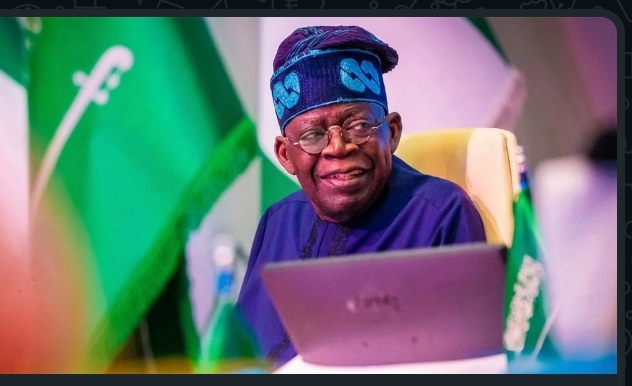
President Bola Ahmed Tinubu has pledged a comprehensive reset of Nigeria’s security architecture, announcing increased funding for defence and a tougher stance against armed groups while presenting the 2026 budget to the National Assembly.
Speaking on Friday, the president said his administration would channel the largest portion of government spending to defence and security, following widespread criticism over the handling of the country’s multiple security challenges. Nigeria continues to grapple with a prolonged jihadist insurgency in the North-East, rampant banditry and mass kidnappings in the North-West, and recurring clashes between farmers and herders in parts of the North-Central region.
Tinubu recalled that he recently declared a nationwide security emergency and ordered large-scale recruitment into the police and armed forces to curb rising insecurity, including mass abductions that have targeted schoolchildren.
According to him, security spending would be increased to enhance the “fighting capability” of the military and other security agencies through the recruitment of additional personnel and the acquisition of modern equipment and technology.
In the budget, the president earmarked ₦5.41 trillion for defence and security. He also vowed to usher in what he described as a new era of criminal justice, declaring that all acts of violence by armed groups or individuals operating outside state authority would henceforth be treated as terrorism.
“Under this new architecture, any armed group or gun-wielding non-state actors operating outside state authority will be regarded as terrorists,” Tinubu said, listing bandits, militias, armed gangs, armed robbers, violent cult groups and foreign-linked mercenaries. He added that those involved in political or sectarian violence would also fall under the same classification.
Security experts have warned of growing collaboration between bandit groups and jihadist factions from the North-East, noting that such alliances have expanded insecurity into the North-West and parts of the North-Central region.
On the economic front, Tinubu defended his administration’s reform agenda, describing the measures as necessary though painful. He said inflation had eased for eight consecutive months, dropping to 14.45 per cent from 24.23 per cent in March.
The president also projected an improvement in fiscal stability, stating that the budget deficit is expected to decline to 4.28 per cent of Gross Domestic Product next year, compared with about 6.1 per cent in 2023 when he assumed office.

National
 News MasterUpdated 2 months Ago1 Mins read
Tinubu promises security overhaul, allocates largest budget share to defence
News MasterUpdated 2 months Ago1 Mins read
Share


Related Articles
National
FG Warns Against Misuse of Veterinary Drugs
The Federal Government has raised alarm over the growing misuse of veterinary...
National
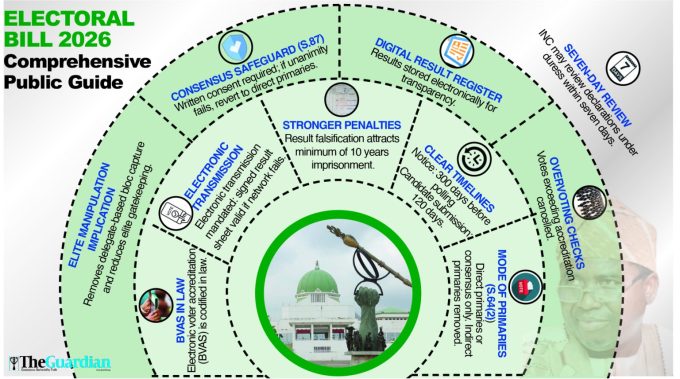
Electoral Act 2026: How Tinubu’s Swift Assent Could Influence 2027 Polls
President Bola Ahmed Tinubu’s prompt signing of the amended Electoral Bill into...
National
Defence Minister Calls for Careful Consideration of Mandatory Military Service
The Minister of Defence, General Christopher Musa, has advocated a measured and...
National
2027 Electoral Battle Shifts to INEC as Tinubu Signs Amended Electoral Act
Abuja – President Bola Tinubu’s signing of the Electoral Act (Amendment) Bill...


Leave a comment