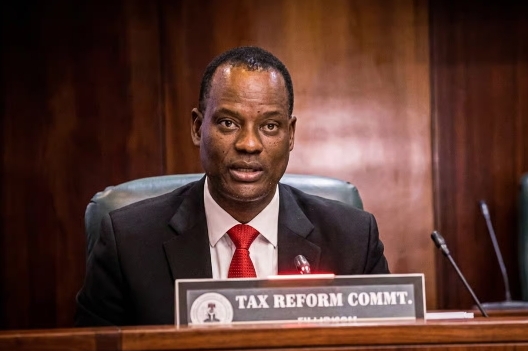
Chairman of the Presidential Committee on Fiscal Policy and Tax Reforms, Taiwo Oyedele, has said the Federal Government will not jeopardise Nigeria’s future by shielding individuals and organisations that have avoided paying taxes for years.
Oyedele made the remark while speaking at the January business breakfast organised by the Franco-Nigerian Chamber of Commerce and Industry (FNCCI) in Lagos, where he addressed the growing resistance to ongoing tax reforms and the country’s weak revenue performance.
He noted that Nigeria’s tax collection remains far below its potential when compared with countries of similar size. According to him, South Africa generated more than N60 trillion from personal income tax alone in 2024, an amount higher than Nigeria’s total tax revenue from all sources combined.
While acknowledging South Africa’s higher per capita income, Oyedele stressed that Nigeria could significantly improve its personal income tax collection if reforms are properly implemented.
“If you take the top 60 million Nigerians by income, it will be comparable to South Africa’s per capita income,” he said.
Oyedele questioned why Nigeria’s revenue figures remain so low, adding that even if the country could not raise N60 trillion, it should at least be able to collect N30 trillion. However, he revealed that Nigeria generated less than N3 trillion from personal income tax, describing the situation as unacceptable.
He explained that the wide gap in tax revenue is one of the reasons the reforms are facing opposition from certain quarters.
“The people fighting these reforms are not telling you why. It is because they made money for so long and never paid taxes,” Oyedele said.
He added that the government is committed to building a system where no one will be above the law, insisting that the reforms are necessary despite the discomfort that comes with paying taxes.
“We will not compromise the future of the country because what is at stake is much bigger than any of us,” he stated.
President Bola Tinubu signed four tax reform bills into law on June 26, 2025, and the new tax laws are scheduled to take effect from January 1, despite calls for a halt in implementation.

National
 News MasterUpdated 2 months Ago1 Mins read
FG won’t protect tax defaulters at expense of Nigeria’s future – Oyedele
News MasterUpdated 2 months Ago1 Mins read
Share





Related Articles
National
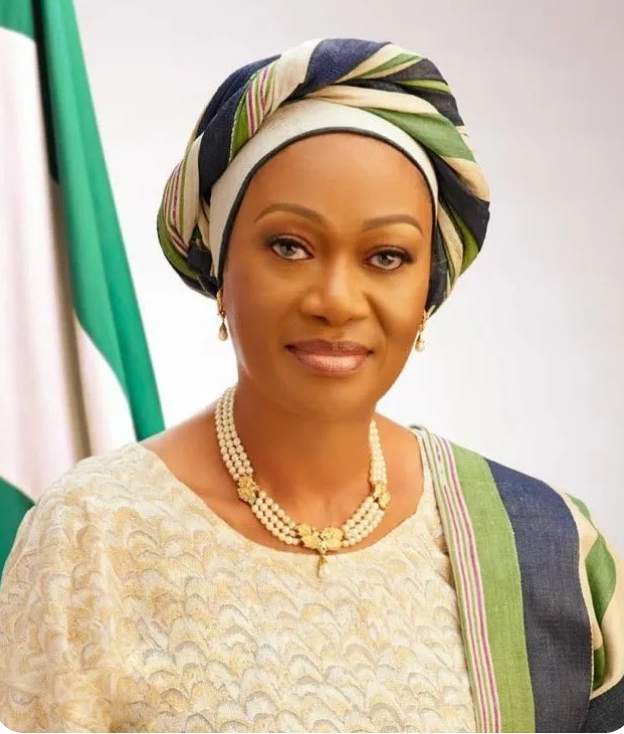
Oluremi Tinubu to Deliver Sermon at Lambeth Palace During UK State Visit
First Lady of Nigeria, Senator Oluremi Tinubu, is scheduled to deliver a...
National
CREDICORP Launches “Fly Now, Pay Later” to Ease Domestic Travel Costs
The Nigerian Consumer Credit Corporation (CREDICORP) has introduced a “Fly Now, Pay...

National
Nigeria Secures £746 Million UK Deal to Modernize Lagos Ports
Lagos, Nigeria – Nigeria has secured a £746 million financing agreement with...
National
FG Allocates N73.4bn for TB Drugs, Expands Diagnostic Testing Nationwide
The Federal Government has set aside approximately N73.4 billion to procure tuberculosis...




Leave a comment