The Chairman of the Federal Civil Service Commission (FCSC), Prof. Tunji Olaopa, has called on Nigerian universities to rediscover their core essence in order to make meaningful contributions to national development.
Olaopa made this appeal on Friday while serving as chairman of the 2026 Convocation Lecture at the Federal University of Agriculture (FUNAAB), Abeokuta, Ogun State.
He explained that the true purpose of education, particularly university education, goes far beyond the current focus on awarding certificates for employment. According to him, university training should primarily equip graduates with the skills to live as complete human beings and positively contribute to society.
Olaopa stressed that redefining the essence of university education has become urgent, especially in view of Nigeria’s alarming youth unemployment figures.
He noted that the statistics suggest universities are not meeting expectations in preparing young people for productive lives.
“They are not only unemployed and unemployable, they are also to be found in the worst of crimes and countercultural tendencies and activities,” he warned.
To further underscore his argument, Olaopa referenced the ideas of scholar Wendel Berry, who described universities as institutions meant to “make humanity,” producing not just trained workers but fully developed individuals and responsible members of culture.
Olaopa said the foremost duty of education is to help students become fully human, reconnect with their shared humanity, and embrace the lifelong process of learning.
“When we learn, we do not only do it towards the end of the acquisition of skills and competences… but also towards learning to live and relate together,” he said, adding that this ethical component must be central to university learning.
He also pointed out that education should help reduce divisions in society caused by religion, ethnicity, gender, or social status, while preparing individuals to anticipate challenges and limitations in life.
Calling for a paradigm shift, Olaopa urged the deepening of university autonomy to shield institutions from political interference and allow them to generate initiatives aligned with their constitutional mandate.
He further emphasized the importance of sustainable financing models, driven through governing councils, to strengthen university independence and effectiveness.
According to him, funding must also support stronger university-industry partnerships and public-private collaborations, especially in research and development aimed at driving national growth.
Olaopa noted that this responsibility is even greater for specialised institutions like FUNAAB, which are expected to contribute directly to economic and development policies.
He also highlighted the recurring challenge of industrial disputes involving the Academic Staff Union of Universities (ASUU), urging a more developmental approach to resolving conflicts rather than adversarial trade disputes that often disrupt academic progress.
Olaopa concluded that Nigeria’s tertiary institutions must reposition themselves as centres for human capital development and national transformation.

Uncategorized
 News MasterUpdated 2 months Ago2 Mins read
Olaopa Urges Universities to Refocus on True Purpose of Education
News MasterUpdated 2 months Ago2 Mins read

Share






Related Articles
Uncategorized
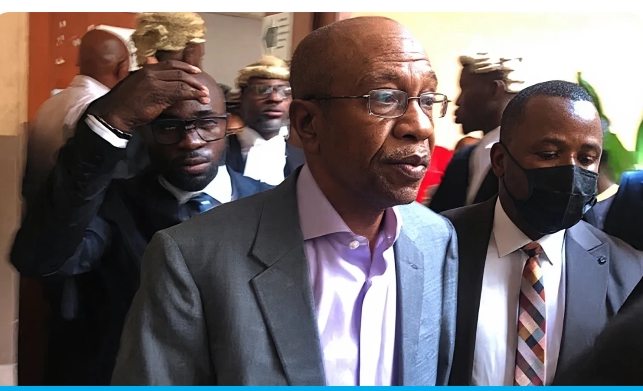
Court Fines EFCC N500,000 Over Delays in Emefiele’s Trial
An Abuja High Court has fined the Economic and Financial Crimes Commission...

Uncategorized
Energy Expert Raises Alarm Over Failing Power System in Nigeria
Energy economist Obianuju Ezenwanne has warned that Nigeria’s electricity sector is under...

Uncategorized
Police Arrest Suspect Over Fatal Clash in Ibadan Community
The Oyo State Police Command has arrested a suspect following a violent...

Uncategorized
Building Lives Before Buildings: The Inspiring Story of Pastor Dr. Chioma Ibezim
Pastor Dr. Chioma Ibezim, the Founder of the Singles and Married National...




Leave a comment