Pressure intensified on the National Assembly yesterday as the Senate prepared to harmonise the Electoral Act amendment bill today amid growing protests and sharp disagreements over the mandatory real-time electronic transmission of election results ahead of the 2027 general elections.
Former Labour Party presidential candidate, Mr Peter Obi, activist Aisha Yesufu and several civil society organisations staged a protest at the entrance of the National Assembly, demanding that results be transmitted directly from polling units to the Independent National Electoral Commission’s (INEC) Result Viewing (IReV) portal. Security operatives barred the protesters from entering the complex.
The demonstration came as the Senate and the House of Representatives moved to reconcile differences in their versions of the amendment bill. While the House of Representatives endorsed mandatory real-time electronic transmission of results, the Senate adopted a conditional approach, leaving the decision largely to INEC’s discretion, a move that has sparked public criticism.
Civil society groups, lawyers, election observers and professional bodies warned that vague provisions could undermine electoral transparency and fuel post-election disputes. They urged lawmakers to adopt clear, enforceable clauses guaranteeing compulsory electronic transmission of results.
However, analysts remain divided over INEC’s capacity to implement real-time transmission nationwide before 2027. A former Resident Electoral Commissioner in Enugu State, Dr Emeka Ononamadu, argued that INEC has the technical capability and infrastructure to support mandatory electronic transmission, citing the successful deployment of the Bimodal Voter Accreditation System (BVAS) during past elections.
Ononamadu blamed legal uncertainty created by a Supreme Court ruling on the IReV portal for the controversy, insisting that electronic transmission enhances transparency by preventing manipulation between polling units and collation centres.
In contrast, Mr Lawrence Oyekanmi, spokesman to the immediate past INEC Chairman, Prof Mahmood Yakubu, cautioned against mandating real-time transmission for the 2027 polls. He explained that while IReV allows public viewing of polling unit results, it is not an electronic collation system and cannot support real-time transmission without electronic voting, which is not currently recognised under Nigerian law.
Oyekanmi warned that introducing mandatory and real-time transmission into the law could prove impracticable given existing legal and infrastructural limitations.
At the protest ground, Obi said the demonstration was peaceful and aimed at ensuring transparent elections. “We are asking for a simple thing, a transparent electoral process that secures the future of our country and our children,” he said.
Civil society leaders, including members of the Nigerian Civil Society Situation Room and ActionAid Nigeria, warned against diluting the bill’s provisions. They insisted that Nigerians would continue to mobilise until mandatory transmission is guaranteed.
Meanwhile, the Nigerian Guild of Editors (NGE) expressed concern over the Senate’s stance, warning that it could erode public trust and discourage voter participation. In a statement signed by its President, Eze Anaba, and General Secretary, Onuoha Ukeh, the Guild urged lawmakers to align with global best practices by approving compulsory and immediate electronic transmission of results.
Also weighing in, senior lawyers Dr Olisa Agbakoba and Mr Ebun-Olu Adegboruwa (SAN) called on the National Assembly to provide explicit statutory backing for electronic transmission. They warned that continued legal ambiguity would prolong election litigation and weaken electoral credibility.
As lawmakers reconvene today to harmonise the bill, public attention remains fixed on whether the National Assembly will adopt mandatory real-time transmission as part of efforts to strengthen Nigeria’s electoral process and restore voter confidence.

National
 News MasterUpdated 5 hours Ago2 Mins read
Protests Mount as Senate Moves to Harmonise Electoral Act on Result Transmission
News MasterUpdated 5 hours Ago2 Mins read
Share






Related Articles
National
Fresh Borrowings Loom as 2026 Budget Projects N25.27 Trillion Deficit
Nigeria is set to continue borrowing to finance its expanding budget deficit,...
National
Ondo Commends Tinubu Over Troop Deployment to Insecurity-Hit Communities
The Ondo State Government has praised President Bola Ahmed Tinubu for deploying...
National
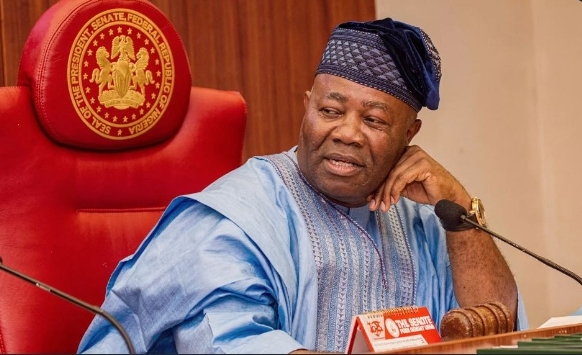
Akpabio Explains Senate’s Stance on Electronic Transmission of Election Results
Senate President, Senator Godswill Akpabio, has clarified that the Senate did not...

National
No Customer Loses Deposits in Failed Banks – NDIC
The Nigeria Deposit Insurance Corporation (NDIC) has reassured customers of insured commercial...




Leave a comment