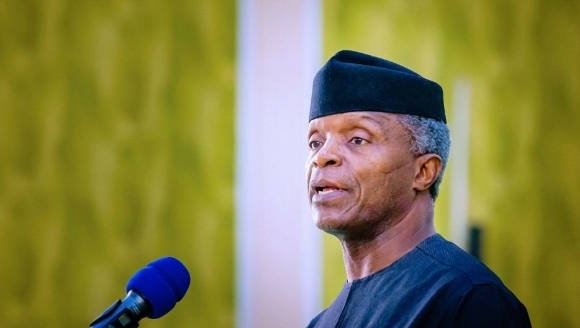
Former Vice President, Prof. Yemi Osinbajo, has expressed concern over how Nigerians perceive Supreme Court rulings in electoral matters, noting that while such decisions are constitutionally final, they must also inspire public confidence to strengthen democracy.
Speaking at a fireside chat during the 2026 Nigerian Bar Association Section on Legal Practice (NBA-SLP) conference, Osinbajo acknowledged that Supreme Court judgments in election disputes are not subject to appeal. However, he stressed that their finality does not automatically make them unquestionable in the eyes of the public.
He cautioned that the judiciary must avoid creating the impression that it imposes outcomes on voters, adding that inconsistencies and disregard for legal precedent in electoral rulings could erode trust.
According to him, the credibility of the judiciary goes beyond legal correctness and must include transparency, consistency, and clear reasoning, especially in politically sensitive cases. He called for improvements in judicial processes through better appointments, strict adherence to precedent, and stronger accountability measures.
Meanwhile, the Chief Justice of Nigeria (CJN), Justice Kudirat Kekere-Ekun, urged lawyers to maintain high ethical standards while adapting to the changing realities of legal practice.
She gave the charge at the same conference, themed “Evolving Trends: Nigerian Legal Practice, Global Perspectives.” While acknowledging that legal practitioners deserve fair compensation, she stressed that such earnings must be guided by integrity, responsibility, and a commitment to justice.
Kekere-Ekun warned against a growing trend where legal practice is driven by technicalities rather than the protection of clients’ rights or the advancement of sound legal principles. She said such an approach risks turning the profession into mere “transactional advocacy” instead of principled interpretation of the law.
“The lawyer occupies a unique position as both an advocate for the client and a minister in the temple of justice,” she said, adding that the profession’s long-term credibility depends on ethical courage and intellectual honesty.
She also encouraged lawyers to embrace innovation and technology, including artificial intelligence and digital tools, without compromising ethical values or the human aspect of justice. According to her, collaboration between the Bench and the Bar is essential to building a legal system that is both responsive and aligned with global best practices, while remaining rooted in Nigeria’s realities.
In the same vein, Lagos State Governor Babajide Sanwo-Olu called on legal practitioners to adopt innovation, technology, and entrepreneurial thinking to remain competitive in a fast-changing global legal environment.
Represented by the Attorney-General and Commissioner for Justice, Lawal Pedro (SAN), the governor described Lagos as Nigeria’s commercial hub and a centre for legal innovation. He noted that hosting the conference in the state was both intentional and symbolic.
Sanwo-Olu commended the NBA-SLP for sustaining its annual conference, describing it as a vital platform for shaping the future of legal practice in Nigeria.

National
 News MasterUpdated 2 hours Ago2 Mins read
Finality of Supreme Court Decisions Must Earn Public Trust – Osinbajo
News MasterUpdated 2 hours Ago2 Mins read
Share





Related Articles
National
Akpabio Commissions Key Projects in Lagos, Urges States to Embrace Modern Development
Senate President Godswill Akpabio has called on states across Nigeria to take...

National
Two Years On, Calls Grow for Release of Okuama Detainees
Human rights lawyer and activist, Frank Tietie, has urged the Nigerian military...

National
World Bank Warns Rising Poverty Could Undermine Nigeria’s Economic Future
The World Bank has raised concerns that widespread multidimensional poverty in Nigeria...

National
Why Electricity Supply Worsens Between February and April in Nigeria
Nigeria’s electricity supply predictably declines between February and April each year, and...




Leave a comment