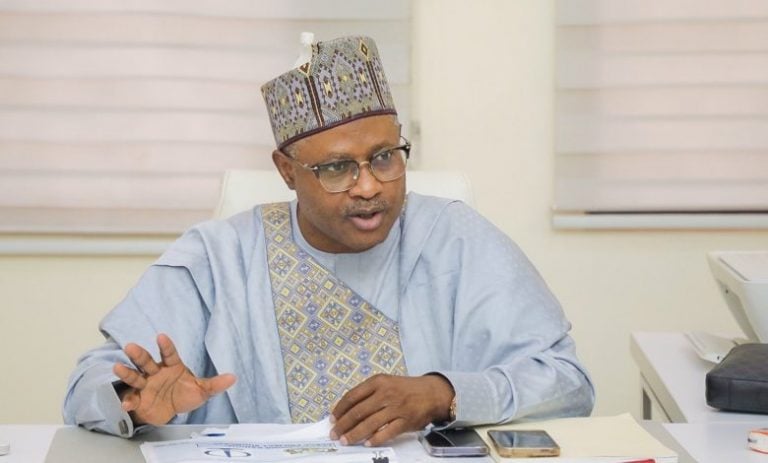
Kaduna State Governor, Uba Sani, has earmarked N100 million for each of the state’s 255 political wards in the proposed 2026 budget, describing the initiative as the most direct community-driven intervention the state has implemented in decades.
Sani announced the plan on Friday during a special town hall meeting in Kaduna, where the state government presented the draft 2026 budget ahead of its submission to the House of Assembly.
The administration is proposing a N985.9 billion spending plan for the 2026 fiscal year—an increase of 24.73 per cent compared to the 2025 budget—while allocating N80.2 billion to repay local and foreign debts inherited from previous governments.
Explaining the rationale behind the N100m-per-ward allocation, the governor said the idea stemmed from public submissions and complaints gathered during last year’s consultations, where communities highlighted long-standing development gaps. He noted that 12 of the state’s 23 local government areas had not benefited from even one kilometre of new road construction in 12 years under past administrations.
Sani said the new approach marks a departure from the traditional top-down budgeting system to a more inclusive ward-by-ward development model.
“Decisions on how each ward’s N100m will be used will no longer be made by people on the high table. The funds belong to the communities and will be directed strictly by their priorities through structured citizen engagement,” he said.
According to him, each ward will now identify and prioritise its most urgent needs—such as feeder roads, healthcare facilities, water projects, farm-to-market routes, security infrastructure, or economic initiatives. He emphasised that the allocation is guided by fairness and inclusivity.
“Development must reach every ward, regardless of who they voted for, their background, or their religion. Kaduna must work for everyone. The 2026 budget is your budget, and the N100m is for you to decide,” Sani added.
Presenting further details, Commissioner for Planning and Budget, Mukhtar Monrovia, said the government has prioritised fiscal discipline and has avoided taking new loans since coming into office. He noted that rising obligations from previously contracted debts continue to strain the state’s finances, making timely repayments essential.
He disclosed that the proposed budget includes N286.2bn for recurrent expenditure and N699.7bn for capital projects, to be financed through an opening balance of N150bn, projected recurrent revenue of N584.3bn, and expected receipts totalling N251.6bn.
Stakeholders at the town hall meeting—including traditional rulers, religious leaders, youth representatives, and civil society groups—praised the administration for embracing transparency and empowering communities to shape budget priorities directly. They also commended ongoing efforts to improve security across the state.
Politics
 News MasterUpdated 11 months Ago2 Mins read
Uba Sani Unveils N100m Per Ward in Kaduna’s 2026 Budget, Shifts to Community-Led Development
News MasterUpdated 11 months Ago2 Mins read
Share


Related Articles
Politics
ORU WEST DESERVES BETTER, NO COMMUNITY WILL BE LEFT BEHIND — DCN OBIOMA OKORIE
Hon. Deacon Obioma Okorie, aspirant for Oru West State Constituency for the...
Politics
Abia’s Future in Focus: Mascot Uzor Kalu Emerges Voice of Reason Amid Abia APC Political Tension
“In the end, peace is not merely the absence of conflict, but...
Politics
Abia’s Future in Focus: Mascot Uzor Kalu Emerges Voice of Reason Amid Abia APC Political Tension
“In the end, peace is not merely the absence of conflict, but...
Politics
ADC Faces Crucial Test as Supreme Court Ruling Looms Over 2027 Ambitions
The African Democratic Congress (ADC) is at a defining crossroads as the...



Leave a comment