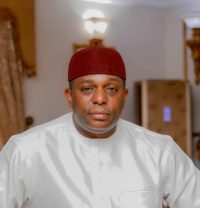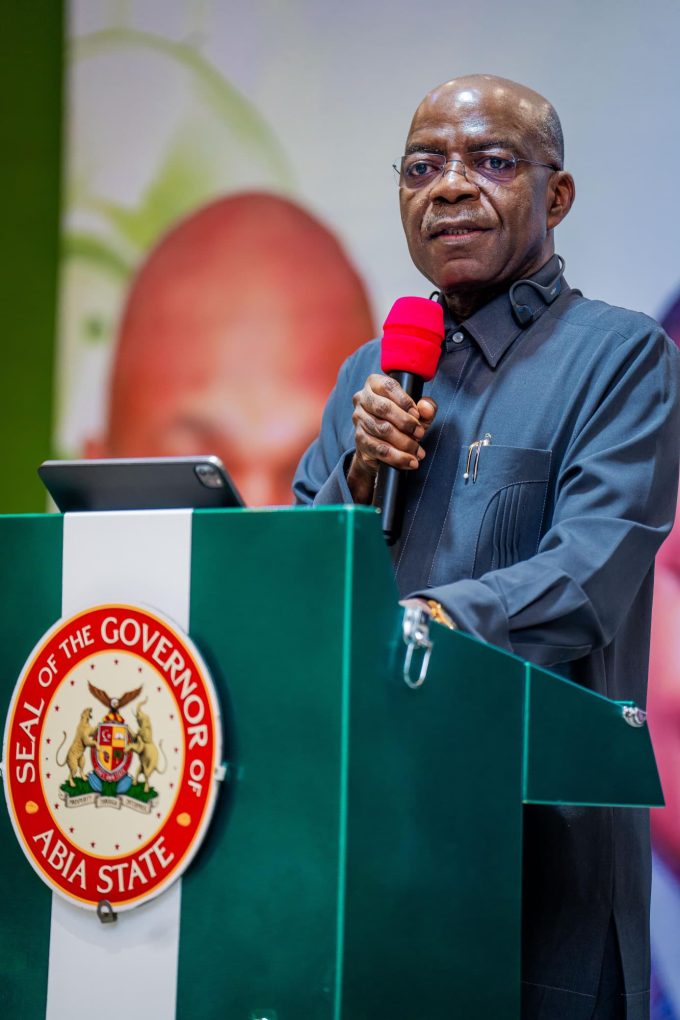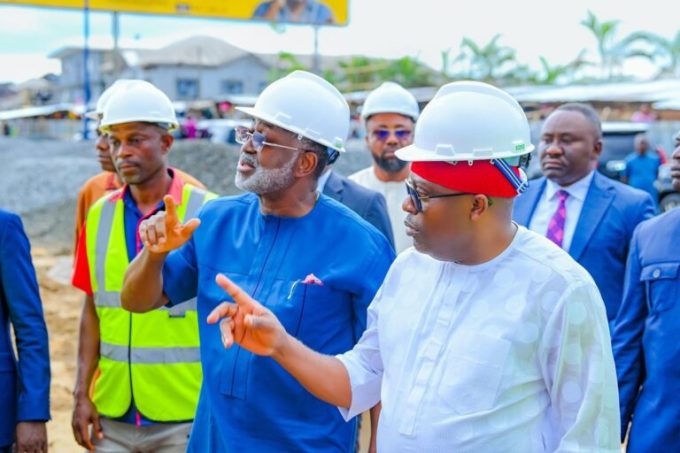

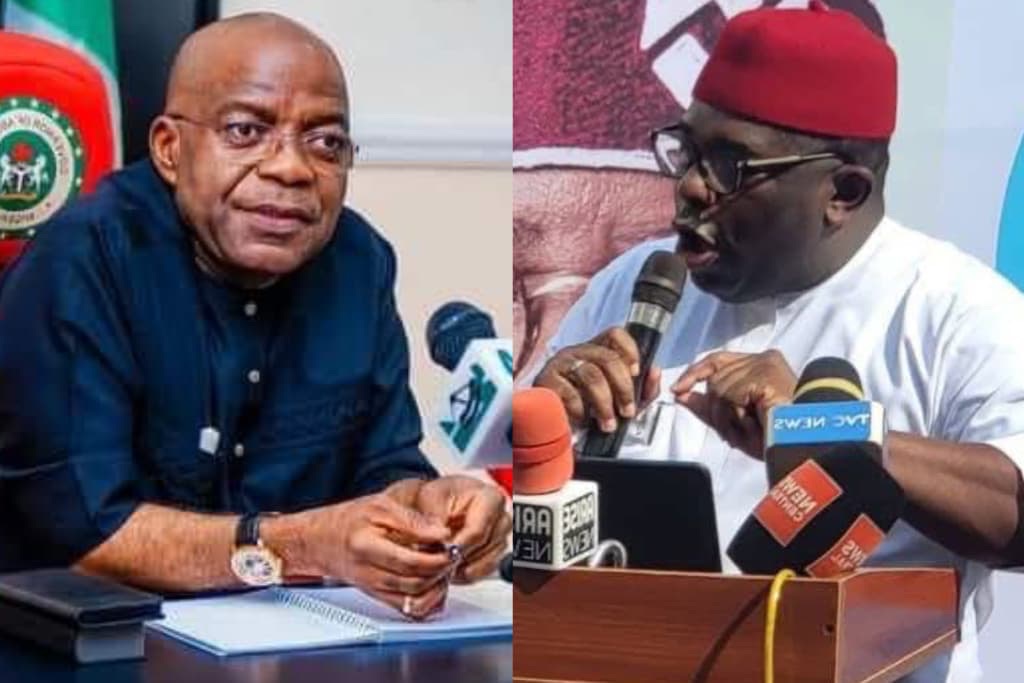
Chief Mascot Uzor Kalu has taken a firm stand on Governor Alex Otti’s newly present 2026 budget, describing it as an overreach and an economic roadmap built without a foundation.
Governor Otti, on Tuesday, unveiled a budget surpassing one trillion naira, the first of such magnitude in the entire South East. But according to Chief Mascot Uzor Kalu, what should have been a bold stride has instead become a gamble without credible economic underpinnings.
Speaking with commanding clarity, Chief Kalu stated that a trillion-naira budget for a state that publicly admits to receiving 20 billion naira monthly raises grave concerns about fiscal integrity, sustainability, and sincerity. He explained that to fund a budget of this scale, the administration would require an average monthly inflow of at least 83 billion naira, a threshold that lacks both economic foundation and a realistic revenue framework within Abia’s current financial architecture.
Chief Kalu recalled that Governor Otti had already stretched the limits of prudence in the 2025 fiscal year. The administration initiated a 752 billion naira budget, only to return midyear seeking an additional 150 billion naira in supplementary funding, pushing the total 2025 expenditure plan to 900 billion naira. This pattern, according to him, reflects a troubling trend of oversized proposals, mismatched revenue expectations, and a leadership style that seems compelled by political optics rather than grounded economic judgment.
Chief Mascot Uzor Kalu further questioned how Governor Otti funded the massive gap in the 2025 fiscal year after initiating a 752 billion naira budget and later adding 150 billion, yet without corresponding social amenities such as functioning public water supply, improved road networks across the rural communities, upgraded hospitals or clinics in the rural areas, or expanded electricity access to the rural areas. No single youth development program, no woman/mother/ family program to justify such heavy spending. He noted that if the governor openly admits that the state receives only 20 billion naira monthly, Abians deserve clarity on how he intends to raise the colossal revenue required for the 2026 budget and where he sourced the funds for his 2025 budget. Chief Kalu argued that, given widespread assumptions that the administration borrowed between 300 and 500 billion this year alone, the public must know whether Governor Otti is preparing to plunge the state into another round of massive borrowing in 2026, thereby deepening Abia’s debt burden.
Chief Mascot Uzor Kalu clarified that he is not opposed to a budget that is noteworthy and aggressive. Still, he insisted that such a budget must be balanced, traceable, and visibly reflected in tangible development across Abia. He noted that there are no projects on the ground that justify the enormous sums being announced, raising pressing questions about where the money is coming from and where it is truly going. He stressed that whenever a government borrows, it must clearly demonstrate how the funds were spent and provide a transparent roadmap for repaying those debts, maintaining that these distinctions must be documented for accountability and posterity.
In his words, “Abia cannot be governed with fantasies and fictional figures. Governance is not a theatre for inflated ambitions. It is the solemn duty of aligning needs with capacity, desires with reality, and development with credible resources.”
Calling for transparency, sincerity, and a more grounded approach, Chief Mascot Uzor Kalu urged Governor Otti to provide a clear breakdown of where such monumental revenue will be sourced, how debts will be managed, and what economic buffers have been established to protect the state from fiscal implosion.
He emphasized that Abia needs a realistic, sustainable, and accountable fiscal plan, and that this is part of the Governor’s campaign promises, not grandiose budgets that raise expectations, inflate liabilities, and ultimately burden future administrations.
Chief Mascot Uzor Kalu concluded by urging Abians to remain vigilant, insisting that the state’s destiny should not be mortgaged to the altar of political showmanship or experimental economics.