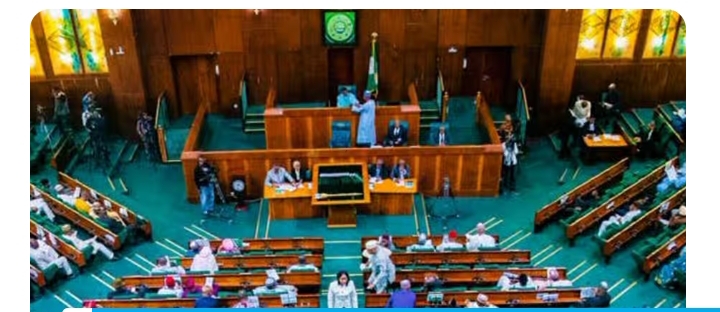
The House of Representatives has passed the Electoral Act (Amendment) Bill, 2025, but rejected a proposed provision that sought to criminalise vote-buying during party primaries.
The controversial clause would have imposed a two-year jail term, without an option of fine, on anyone found guilty of financially or materially inducing delegates to influence the outcome of party primaries, congresses or conventions.
Specifically, Clause 89(4), introduced at the amendment stage, stated that any person who induces a delegate for the purpose of swaying the outcome of party primaries commits an offence punishable by two years’ imprisonment without an option of fine.
However, during the clause-by-clause consideration of the bill at the Committee of the Whole, presided over by Deputy Speaker Benjamin Kalu, lawmakers overwhelmingly voted against the provision. Its rejection effectively removes criminal sanctions for inducement at party primaries from the amendment bill.
Briefing National Assembly correspondents after the passage of the bill, Chairman of the House Committee on Electoral Matters, Adebayo Balogun, said the House opted for targeted amendments rather than a complete repeal of the Electoral Act 2022, as many far-reaching proposals failed to gain broad legislative support.
Balogun explained that the bill was initially conceived to repeal the 2022 Act and replace it with a new electoral law, in line with efforts to consolidate gains from recent elections and address emerging challenges in the electoral process.
He noted, however, that several major proposals, including early voting, voting by inmates, replacing the Permanent Voters’ Card (PVC) with alternative accreditation methods, and changes to electoral timelines, did not secure sufficient backing at the committee stage.
“In legislative practice, repealing an existing law and enacting a new one is appropriate only where the proposed changes fundamentally alter the identity of the principal Act,” Balogun said.
He added that the additional amendments introduced reflect robust debate and the seriousness with which lawmakers approached the bill. According to him, the changes are aimed at strengthening the existing electoral framework, addressing identified gaps and improving implementation without destabilising the current law.
Balogun assured Nigerians that the committee carried out its work transparently, engaging key stakeholders including the Independent National Electoral Commission (INEC), security agencies, political parties, civil society organisations, professional bodies and development partners.
While acknowledging that some innovative proposals, such as punitive measures against vote-buying at party primaries, were not adopted, he said such ideas remain part of ongoing national discourse and could be reconsidered as broader consensus emerges.

National
 News MasterUpdated 10 months Ago2 Mins read
Reps pass Electoral Bill 2025, reject clause criminalising vote-buying at primaries
News MasterUpdated 10 months Ago2 Mins read
Share






Related Articles

National
Nigeria Moves Against South Africa Over Killing of Citizens, Demands Accountability
The Federal Government has intensified diplomatic pressure on South Africa following the...

National
Reps Approve Bill for New Federal Medical Centre in Ikwuano, Awaits Senate Approval
The House of Representatives has passed a bill sponsored by Hon. Obi...

National
FG Targets Malnutrition with New 10-Year Nutrition Policy
The Federal Government has taken a major step toward tackling malnutrition following...

National
Kalu’s Lawyers Reject Petition Seeking Revocation of Law School Certificate
Legal representatives of the Deputy Speaker of the House of Representatives, Benjamin...




Leave a comment