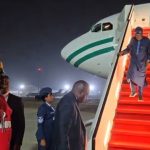
The World Bank’s Managing Director of Operations, Anna Bjerde, has commenced a three-day official visit to Nigeria aimed at supporting the country’s drive to translate ongoing economic reforms into faster growth, expanded energy access and large-scale job creation.
The visit, which began on Sunday, February 1, 2026, comes as the Federal Government intensifies efforts to stabilise the macro-economy, attract private investment and boost productivity across critical sectors.
Central to Bjerde’s mission is consultation on the World Bank Group’s upcoming Country Partnership Framework (CPF) for Nigeria. The framework will serve as a strategic roadmap focused on job creation, improved electricity access and private sector-led economic growth.
During her stay, Bjerde is expected to meet with senior government officials, private sector stakeholders and civil society representatives to gather input on four key pillars of the CPF: strengthening the business environment, developing human capital, enhancing economic and social resilience, and mobilising private capital.
The World Bank said discussions would explore how reforms in the power sector, agriculture, digital infrastructure and financial markets can accelerate employment opportunities and promote inclusive growth, especially as Nigeria faces rising unemployment and increasing living costs.
Nigeria’s contribution to global development priorities will also feature in the engagements. Flagship initiatives such as Mission 300, a joint World Bank Group and African Development Bank programme aimed at connecting 300 million Africans to electricity by 2030 will be reviewed.
Special attention will be placed on Nigeria’s US$750 million Distributed Access through Renewable Energy Scale-up (DARES) project, which seeks to provide clean and reliable electricity to more than 17.5 million Nigerians through mini-grids and solar home systems.
Agriculture and food security are also expected to dominate discussions, particularly through the AgriConnect initiative, designed to transform smallholder farming into a commercially viable source of jobs, higher incomes and export growth.
Progress in power sector reforms, digital connectivity, social protection programmes and human capital development will equally be assessed.
Bjerde is scheduled to meet Vice President Kashim Shettima, Minister of Finance and Coordinating Minister of the Economy Wale Edun, Central Bank Governor Olayemi Cardoso, and Lagos State Governor Babajide Sanwo-Olu.
She is accompanied by top World Bank executives, including Ousmane Diagana, Vice President for Western and Central Africa; Ethiopis Tafara, Vice President for Africa at the International Finance Corporation (IFC); and Ed Mountfield, Vice President of the Multilateral Investment Guarantee Agency (MIGA), highlighting the Group’s coordinated approach to development finance and private investment.
Nigeria currently has an active World Bank portfolio valued at over US$16 billion, supporting projects in education, health, social protection, energy and infrastructure nationwide.
The IFC’s investment exposure in Nigeria exceeds US$1.2 billion, focusing on energy access, MSME financing, agribusiness, manufacturing and sustainable job creation.
The visit underscores continued international engagement with Nigeria’s reform agenda, amid growing expectations for tangible improvements in economic growth, employment and living standards.

National
 News MasterUpdated 8 months Ago2 Mins read
World Bank Operations Chief Visits Nigeria to Advance Jobs and Energy Reforms
News MasterUpdated 8 months Ago2 Mins read

Share



Related Articles

National
Nigeria Moves Against South Africa Over Killing of Citizens, Demands Accountability
The Federal Government has intensified diplomatic pressure on South Africa following the...
National
Reps Approve Bill for New Federal Medical Centre in Ikwuano, Awaits Senate Approval
The House of Representatives has passed a bill sponsored by Hon. Obi...
National
FG Targets Malnutrition with New 10-Year Nutrition Policy
The Federal Government has taken a major step toward tackling malnutrition following...

National
Kalu’s Lawyers Reject Petition Seeking Revocation of Law School Certificate
Legal representatives of the Deputy Speaker of the House of Representatives, Benjamin...




Leave a comment