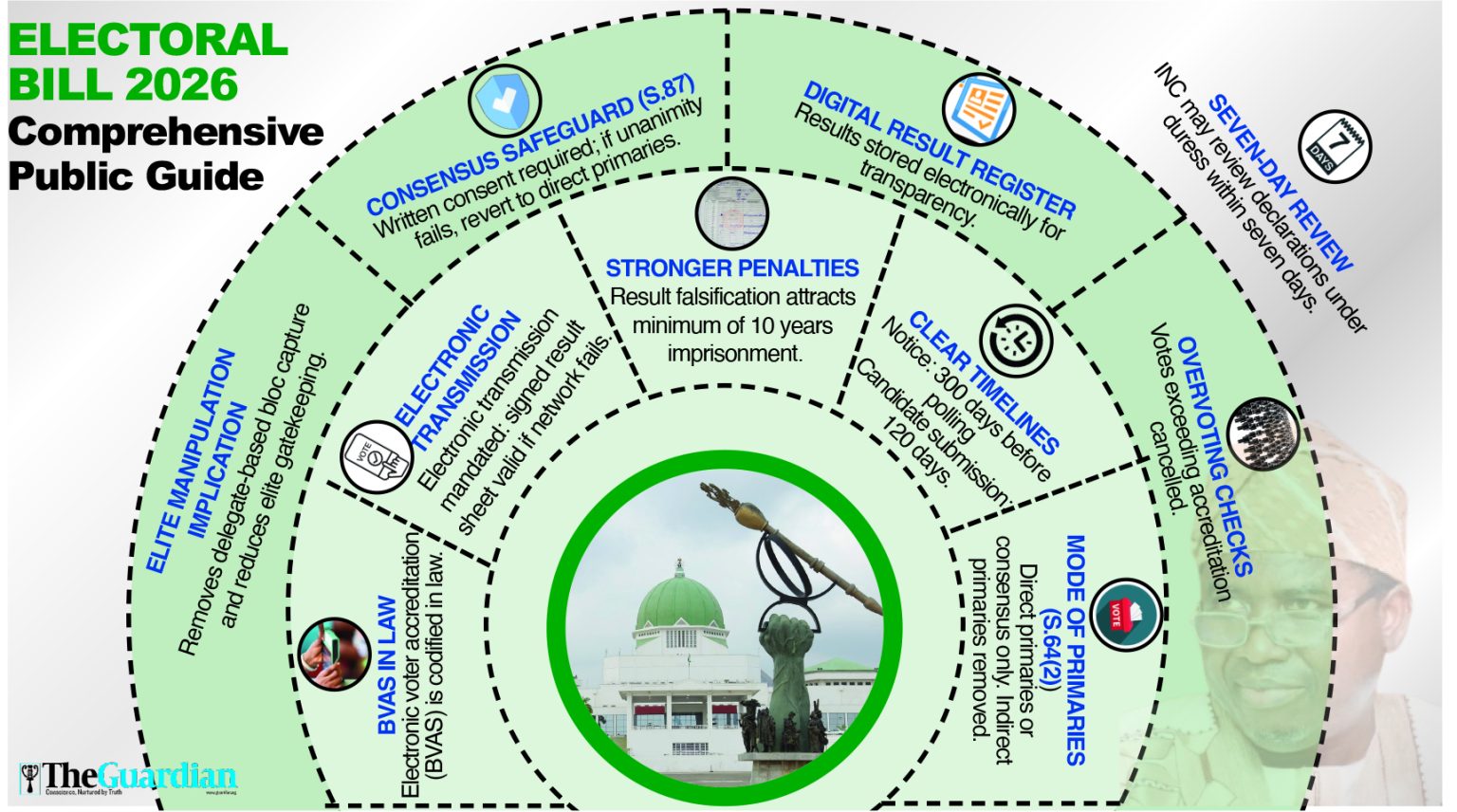
Abuja – President Bola Tinubu’s signing of the Electoral Act (Amendment) Bill 2026 yesterday formally concluded the legislative process on contentious electoral reforms but sparked fresh controversy ahead of the 2027 general elections. The responsibility now shifts to the Independent National Electoral Commission (INEC) to implement provisions that critics say could affect transparency and public confidence in the vote.
The signing ceremony at the State House, Abuja, attended by top government officials and principal officers of the National Assembly, followed weeks of legislative deliberations, consultations, and public debate.
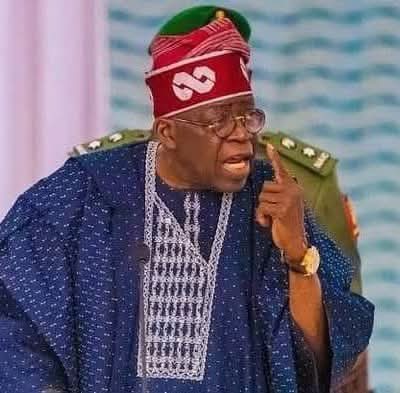
Speaking after assenting to the bill, President Tinubu praised the National Assembly for what he described as a rigorous and patriotic process. He stressed that while technology plays a supporting role, manual voting and counting remain central to Nigeria’s elections, with electronic transmission serving only to complement—not replace—human oversight.
“No matter how good a system is, it is managed by people, promoted by people, and finalised by people,” Tinubu said. “Essentially, we are looking at the transmission of manual results, and we must avoid glitches. Democracy will flourish and continue to nurture prosperity and stability in Nigeria.”
However, critics decried the swift signing, arguing that it left insufficient time to address contentious issues, particularly the removal of mandatory electronic transmission of results from polling units. The Peoples Democratic Party (PDP) described the amendment as a “betrayal” of Nigerians, accusing the National Assembly of undermining electoral transparency and ignoring public demand for secure electronic collation.
“The sudden somersault by the House of Representatives and the anti-democratic stance of the Senate strike at the heart of democracy and electoral integrity,” PDP National Publicity Secretary Ini Ememobong said. The party also criticized restrictions on party primaries, arguing they interfere with political party autonomy.
The Labour Party caucus in the House of Representatives similarly condemned the “hurried” assent. Caucus leader Afam Ogene questioned whether the executive had sufficient time to review the bill, warning that the move could compromise the credibility of future elections.
Social Democratic Party (SDP) presidential candidate Adewole Adebayo accused the President of prioritizing political interests over the national good, calling the law “atrocious” and signaling a potential constitutional challenge. He warned that the process demonstrated “one of the worst legislative abuses” in recent memory.
Civic groups also raised concerns. The Movement for Credible Elections (MCE) warned that the removal of explicit “real-time” transmission language from the law, along with vague fallback provisions, could undermine transparency. The group threatened nationwide mobilisation to resist any electoral framework that fails to guarantee mandatory electronic transmission of results from polling units.
Meanwhile, Minister of the Federal Capital Territory Nyesom Wike praised the amendment, dismissing criticisms as politically motivated and describing it as a step toward strengthening Nigeria’s democratic architecture.
Civic advocate Akindeji Aromaye of Enough is Enough Nigeria (EiE Nigeria) noted that while the new law contains some improvements—such as allowing voters to download their Permanent Voter Card (PVC) online—it also retains loopholes that could affect electoral integrity. He highlighted concerns over shortened timelines for releasing election funds, the removal of certain identification documents from the voter registration list, and ambiguities in the electronic transmission clause, urging INEC to publish clear protocols to avoid post-election disputes.
With the 2027 elections still months away, the debate over electronic transmission and other reforms signals that electoral credibility will remain a central issue. Implementation by INEC, civic vigilance, and potential legal challenges are expected to shape the outcome of Nigeria’s next general election.

National
 News MasterUpdated 7 months Ago2 Mins read
2027 Electoral Battle Shifts to INEC as Tinubu Signs Amended Electoral Act
News MasterUpdated 7 months Ago2 Mins read
Share






Related Articles
National
Nigeria Moves Against South Africa Over Killing of Citizens, Demands Accountability
The Federal Government has intensified diplomatic pressure on South Africa following the...
National
Reps Approve Bill for New Federal Medical Centre in Ikwuano, Awaits Senate Approval
The House of Representatives has passed a bill sponsored by Hon. Obi...
National
FG Targets Malnutrition with New 10-Year Nutrition Policy
The Federal Government has taken a major step toward tackling malnutrition following...

National
Kalu’s Lawyers Reject Petition Seeking Revocation of Law School Certificate
Legal representatives of the Deputy Speaker of the House of Representatives, Benjamin...




Leave a comment