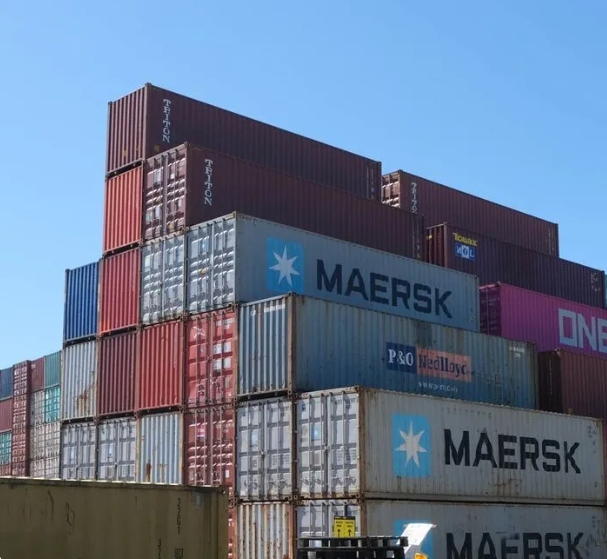
Lagos, Nigeria, Exporters and marine professionals have warned that a severe shortage of shipping containers and foreign lines bypassing Nigerian ports are threatening the momentum of the nation’s $44.06 billion export sector. Cargoes have been piling up at terminals since December 2025, with some facilities now rejecting new loads.
Bunmi Olumekun, President of the Association of West African Exporters and Marine Professionals (AWAEMAP), told Okay News:
“Shipping companies are no longer bringing vessels to Nigeria to carry exports. They prefer ports in Cotonou. You often see ships arrive just to discharge imports and leave empty, instead of transporting Nigerian goods.”
Despite a $3.76 billion year-on-year increase in exports in 9M 2025, Olumekun says the sector is facing disruption even amid gains under the Tinubu administration. Perishable goods are rotting at terminals lacking space or vessels, recreating pre-pandemic congestion, with containers queuing on access roads and Export Processing Terminals holding cargo for two to three weeks.
Lawal Wasiu, Managing Director of LWL Concept, cited the Iran–US war as a major factor:
“Some shipping lines canceled consignments to the Middle East, and terminal operators have stopped accepting export containers,” he explained.
Transporters are also hesitant to drop empty containers due to delays, further worsening scarcity. Meanwhile, foreign shipping lines are reportedly using regional conflicts as justification to avoid Nigerian ports, favoring neighboring Benin instead. Exporters are now calling on the Federal Government to intervene to protect non-oil revenue growth.
Olumekun acknowledged progress under the current administration but warned: “Foreign interests are trying to cripple our exports.” Terminal operators, shipping firms, and exporters continue to exchange blame over customs clearances, vessel schedules, and other arbitrary practices that undermine SMEs.
The crisis threatens to reverse recent naira gains from export growth, hitting farmers, manufacturers, and traders as global disruptions exacerbate bottlenecks in Africa’s busiest port gateway.

National
 News MasterUpdated 6 months Ago1 Mins read
Exporters Raise Alarm as Container Shortage Chokes Lagos Ports
News MasterUpdated 6 months Ago1 Mins read
Share





Related Articles

National
Nigeria Moves Against South Africa Over Killing of Citizens, Demands Accountability
The Federal Government has intensified diplomatic pressure on South Africa following the...

National
Reps Approve Bill for New Federal Medical Centre in Ikwuano, Awaits Senate Approval
The House of Representatives has passed a bill sponsored by Hon. Obi...
National
FG Targets Malnutrition with New 10-Year Nutrition Policy
The Federal Government has taken a major step toward tackling malnutrition following...

National
Kalu’s Lawyers Reject Petition Seeking Revocation of Law School Certificate
Legal representatives of the Deputy Speaker of the House of Representatives, Benjamin...




Leave a comment