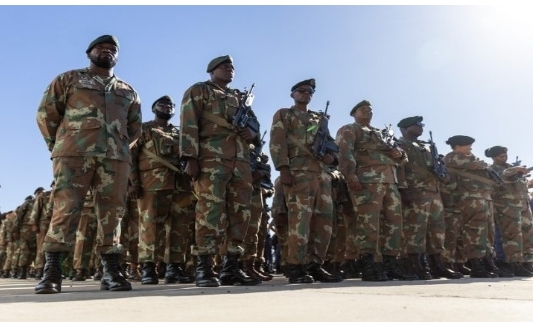
As the South African National Defence Force (SANDF) continues its deployment in gang-affected communities across the Western Cape, concerns persist over whether a military presence alone can tackle the deeper causes of violence.
In Manenberg on the Cape Flats, a resident’s experience highlights the complex social issues fueling crime and what may be needed to create lasting change.
Daily life in the area is frequently disrupted—not only by sirens but also by ongoing violence. This week, authorities intensified efforts to stabilise the situation, with soldiers and armoured vehicles becoming a visible presence under Operation Prosper, aimed at curbing gang activity.
Despite the intervention, high levels of unemployment and poverty remain a major concern. Thirty-one-year-old Ronique Wilson, a lifelong resident, believes these underlying issues are at the heart of the crisis.
She explains that living in poverty makes it difficult for people to remain hopeful, especially when basic needs like food and safety are uncertain. According to her, many families—particularly single-parent households—struggle without access to emotional or psychological support, making a comprehensive, community-wide response essential.
Wilson’s own upbringing was marked by hardship and instability. After her mother went missing, she was raised by her grandmother in difficult conditions. Growing up in such an environment, she says, often forces people into survival mode, where vulnerability can feel dangerous.
Despite these challenges, she persevered. With the help of a bursary, Wilson studied psychology at the Cornerstone Institute. Additional support from a community organisation provided her with a stipend and her first laptop, helping her complete her studies.
Today, she works as a psychosocial counsellor, supporting young people facing similar struggles. For her, it is a meaningful full-circle moment to provide the kind of help she never had growing up.
Wilson is now calling for more long-term solutions in Manenberg, including rehabilitation centres, expanded after-school programmes, and mentorship opportunities for young people. She notes that many families cannot afford rehabilitation services, leaving vulnerable youths without the support they need.
While she welcomes the presence of the military, Wilson insists it is only part of the solution. She advocates for the deployment of trauma counsellors alongside security forces, arguing that many individuals involved in crime are themselves dealing with unresolved trauma.
As Operation Prosper continues, the real test will be whether it can go beyond enforcement and address the root causes of violence. In communities like Manenberg, the struggle is not only against crime on the streets, but also against poverty, trauma, and the daily fight to maintain hope.

Featured
 News MasterUpdated 6 months Ago2 Mins read
Manenberg’s challenges go beyond crime, says resident
News MasterUpdated 6 months Ago2 Mins read
Share





Related Articles

Featured
ARTICLE: Service Beyond the Ballot: Chief Mascot Uzor Kalu’s Enduring Commitment to the People
Leadership is not defined solely by electoral victory or the office one...

Featured
Supreme Court Set to Rule on PDP and ADC Leadership Disputes Today
Nigeria’s political landscape is on edge as the Supreme Court prepares to...

Featured
Mass Demonstrations in South Africa Highlight Rising Tensions Over Foreign Nationals
Large-scale demonstrations broke out across several major cities in South Africa as...

Featured
Article: Fixing Nigeria Starts with Fixing the States by Dr Uche Ogah
By Uche Ogah Nigeria’s development challenge is not merely a national dilemma....




Leave a comment