In 2025, Nigeria continued to rely mainly on imported petrol, with foreign suppliers accounting for about 62 per cent of the country’s total Premium Motor Spirit consumption. Domestic refineries, including the Dangote Petroleum Refinery, increased local output but were still unable to fully meet national demand.
Total petrol consumption for the year was roughly 18.97 billion litres, of which imported fuel made up around 11.85 billion litres. Domestic refining contributed about 7.54 billion litres, or roughly 38 per cent of the supply, reflecting progress but not yet a reversal of import dependence.
The Dangote facility, which began commercial distribution late in 2024, supplied most of the locally refined petrol in 2025, averaging between 17 million and 32 million litres per day. Despite this, annual output remained slightly below the government’s targeted benchmark, highlighting ongoing challenges in scaling up domestic refining capacity.
Monthly data showed fluctuations in consumption and supply, with imports dominating most months. While domestic output rose significantly toward the end of the year, imports still exceeded local production overall, underscoring the continued role of importers in keeping Nigeria’s petrol market supplied.
The pattern reflects structural gaps in Nigeria’s downstream petroleum sector and highlights the need for further expansion of refining capacity if the country is to reduce its reliance on imported fuel in the coming years.

Business
 News MasterUpdated 5 hours Ago1 Mins read
Nigeria Remains Import-Dependent as Petrol Imports Outpace Domestic Refineries in 2025
News MasterUpdated 5 hours Ago1 Mins read

Share




Related Articles

Business
How Onitsha Trader’s ‘Christian Genocide’ Claims Shaped US Airstrikes on Nigeria
A tool merchant based in Onitsha, Anambra State, Emeka Umeagbalasi, has unexpectedly...
Business
Nigeria Raises NALDA Budget to ₦25bn to Boost Agricultural Growth
Nigeria’s Federal Government has significantly increased the funding for the National Agricultural...

Business
Nigeria’s 2026 Budget Sets Aside Less Than 1 % for Poverty Reduction
Nigeria’s Federal Government has proposed a N58.47 trillion budget for 2026, but only...
Business
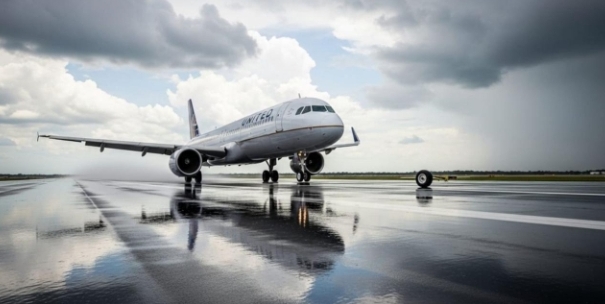
United Airlines Plane Suffers Nose Gear Failure During Orlando Landing
A United Airlines flight from Chicago to Orlando experienced a dramatic landing...




Leave a comment