Nearly a decade after the Federal Government launched an ambitious railway modernisation programme, the multibillion-dollar initiative is facing mounting criticism over design shortcomings, weak execution, vandalism and poor financial returns.
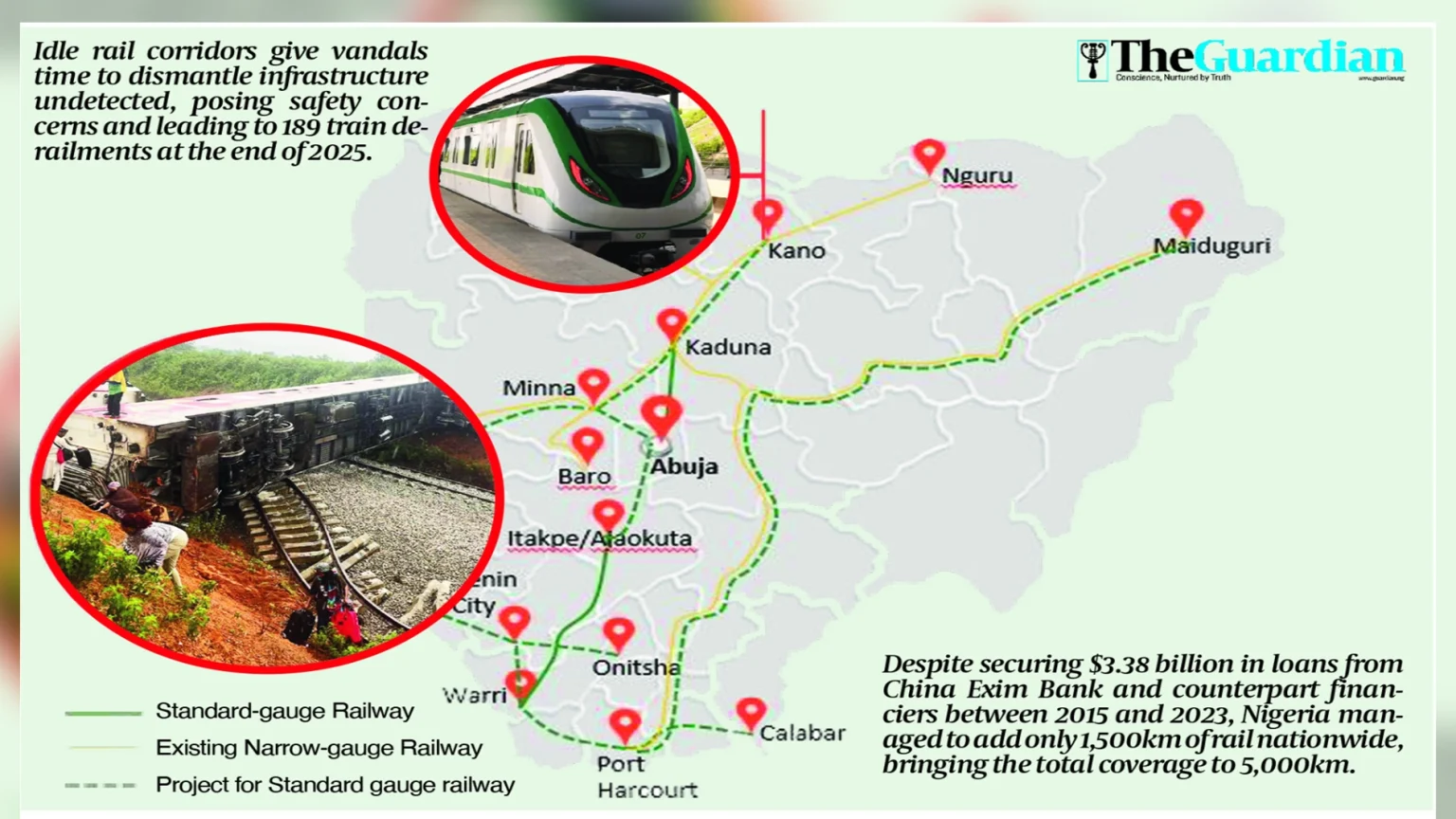
Although about $3.38 billion was secured from foreign lenders, particularly the China Exim Bank, to fund standard gauge projects between 2015 and 2023, the promise of affordable, efficient inter-state rail transport remains largely unfulfilled for many Nigerians.
Despite the heavy borrowing, only about 1,500 kilometres of new rail lines were added to the inherited 3,500km network, bringing total coverage to roughly 5,000km. Government continues to service the loans, while several projects remain incomplete, underutilised or stalled.
Muted Oversight, Slow Progress
Since 2023, progress has appeared uncertain. Relevant agencies, including the Nigerian Railway Corporation (NRC) and the Ministry of Transportation, have offered limited updates. Although the Senate constituted a 12-member ad hoc committee led by Adams Oshiomhole to investigate Chinese-funded projects executed under the previous administration, its report, due in December 2025, has yet to be publicly presented.
Revenue figures also raise concerns. Data from the National Bureau of Statistics (NBS) show that the NRC generated N17.04 billion between 2022 and 2024 from passenger tickets, cargo and other services. During the same period, the corporation received budgetary allocations totalling about N59.6 billion, over three times its internally generated revenue.
In 2023, the NRC transported approximately 2.18 million passengers, while 929,553 passengers were moved in the first quarter of 2025 alone. Freight volumes have also fluctuated, with 317,244 tons moved in 2023 and 181,520 tons recorded in the first quarter of 2025.
Billions Spent, Projects Stalled
Major projects funded through loans and counterpart funding include the Lagos–Ibadan standard gauge ($1.2bn), Abuja–Kaduna ($874m), Kaduna–Kano ($1.3bn), Abuja Light Rail Phase 1 ($823m) and the Itakpe–Ajaokuta–Warri line ($121m). While some have been completed and are operational, others remain unfinished or inactive.
Additional large-scale proposals—such as the Lagos–Calabar coastal rail project and the Abuja–Itakpe–Baro–Warri line—have either stalled or are yet to commence fully, raising fresh questions about financial sustainability and prioritisation.
Experts Question Model
Industry stakeholders argue that structural weaknesses in policy design contributed to the sector’s struggles.
Managing Director of Planet Projects Ltd, Abiodun Otunola, said the modernisation programme was flawed from inception because it prioritised passenger rail expansion without building a strong freight backbone capable of generating sustainable revenue.
He noted that passenger rail services globally often depend on subsidies and rarely cover operating costs, especially in low-income economies. According to him, Nigeria copied rail models from developed countries without the necessary financial strength, industrial base or technical capacity.
“Passenger rail cannot repay billions of dollars in loans without freight support,” he said, adding that heavy reliance on imported rail materials inflated costs due to foreign exchange exposure.
Otunola also attributed persistent vandalism to inadequate security investment, estimating that protecting rail corridors would cost a fraction of total project value.
Similarly, transport expert Dr George Banjo said Nigeria failed to implement a viable cost-benefit analysis before securing the loans. He stressed that globally, passenger rail systems operate under Public Service Obligation (PSO) frameworks, where governments subsidise services, a model Nigeria has not consistently applied.
He added that limited transparency around operating costs and loan details makes it difficult to assess financial sustainability.
Missed Planning Opportunities
Transport analyst Yinka Aderibigbe linked current challenges to the abandonment of the 20-Year Railway Modernisation Masterplan introduced in 2005. He said consistent implementation of that roadmap could have yielded better outcomes by 2025.
However, he expressed optimism about reforms under the NRC’s current Managing Director, Kayode Opeifa, who assumed office in 2025. Proposed reforms include amendments to the Railway Act, corridor rehabilitation and greater private-sector participation.
Aderibigbe noted that rail development remains capital-intensive and requires stronger collaboration between federal and state governments as well as investors. He added that a reported $4 billion proposal by a Japanese firm signals continued global interest in Nigeria’s rail potential.
Funding and Security Key Challenges
Opeifa recently identified inadequate funding, infrastructure gaps, vandalism and revenue leakages as major constraints facing the corporation. He emphasised that no developed nation achieved economic growth without a functional railway system and called for broader investment partnerships.
While acknowledging improvements in some corridors, stakeholders maintain that without better planning, transparency, freight integration and sustained funding, the $3.4 billion rail overhaul risks underperforming and deepening Nigeria’s debt burden.

Featured
 News MasterUpdated 2 hours Ago3 Mins read
Design Flaws, Vandalism Threaten $3.4bn Rail Modernisation Drive
News MasterUpdated 2 hours Ago3 Mins read
Share
Related Articles
Featured
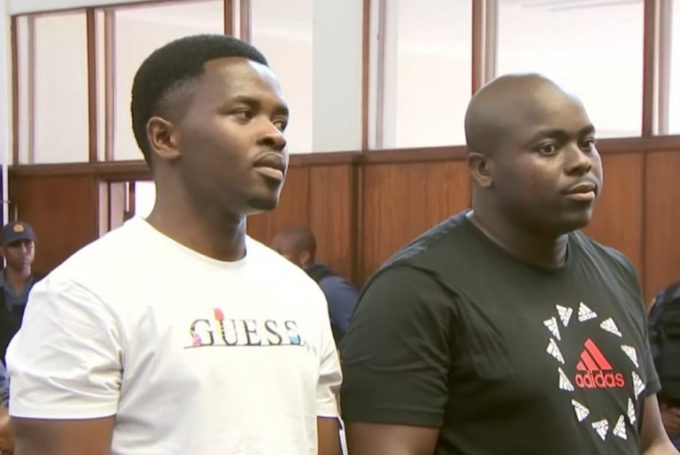
Ndimande Brothers to Seek Bail in AKA Murder Case
Siyabonga and Malusi Ndimande, accused of orchestrating the murders of rapper Kiernan...
Featured
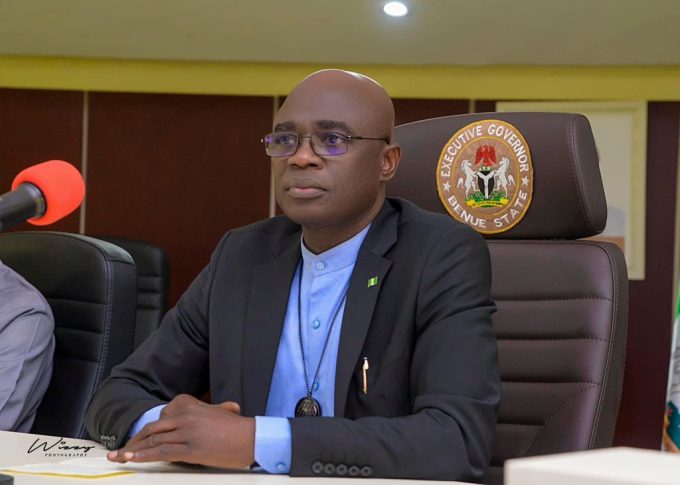
Governor Alia Pledges to Restore Peace to Benue’s Sankera Region Amid Rising Tensions
Benue State Governor, Hyacinth Alia, has reassured residents of the Sankera region...
Featured
Attorney General of the Federation, Fagbemi, Takes Charge of Malami’s Prosecution, Promises Unbiased Legal Process
The Attorney General of the Federation (AGF), Abubakar Fagbemi, has officially taken...
Featured
Dele Momodu Criticizes Government’s Rising Debt, Says Tinubu Administration Has Borrowed More Than All Previous Governments Combined
In a recent statement, renowned Nigerian journalist and public figure, Dele Momodu,...


Leave a comment