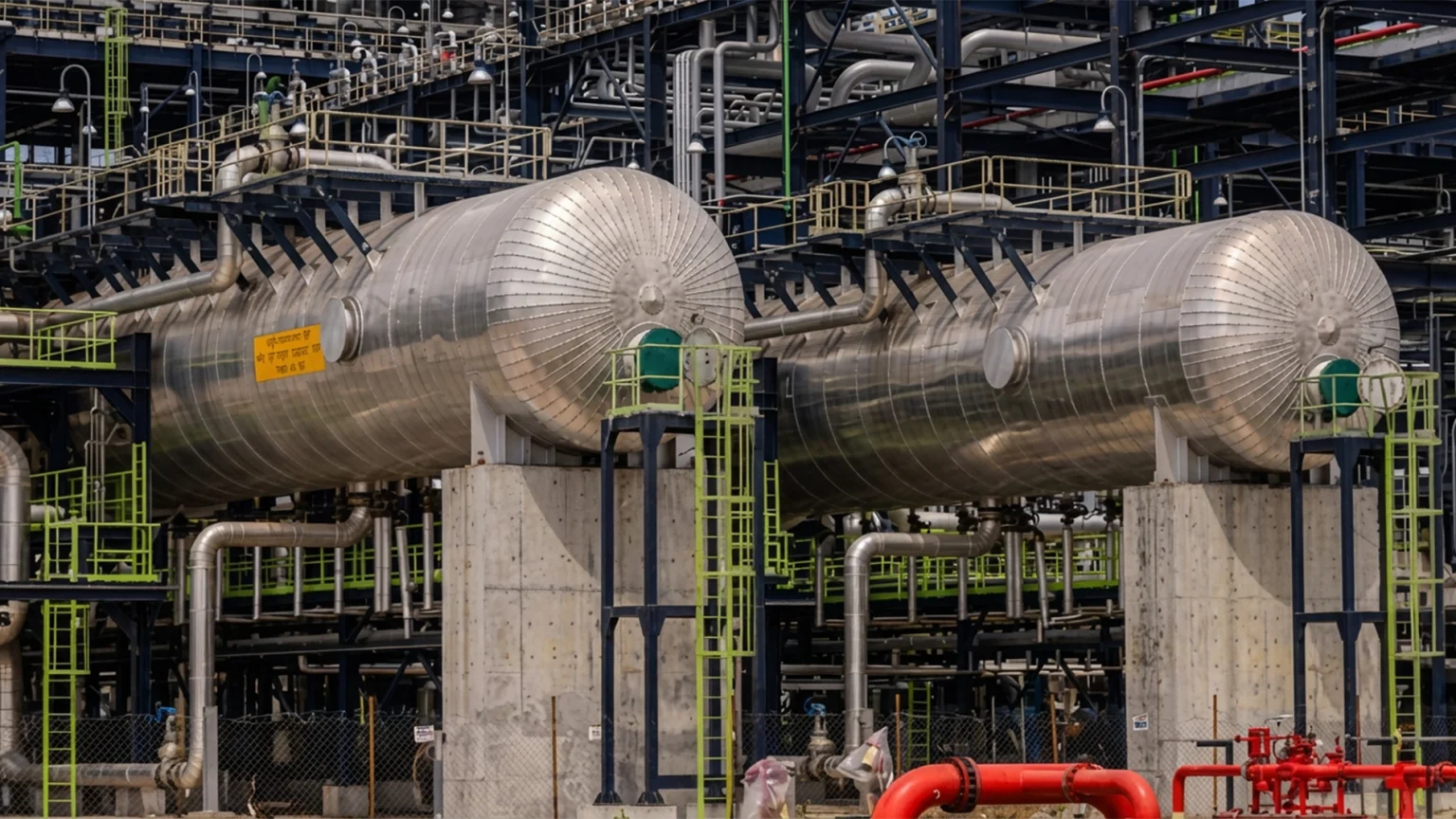
Petrol prices in Nigeria could rise to around N1,400 per litre this week as fuel marketers await a possible review of the ex-depot price of Premium Motor Spirit (PMS) by the Dangote Refinery amid rising global crude oil prices and supply concerns.
Industry sources said petrol loading activities at the refinery slowed on Sunday, triggering speculation that a new price adjustment could be announced soon. The development comes as international crude oil prices surge due to escalating tensions in the Middle East, which has tightened supply and pushed global energy markets into volatility.
With pump prices already averaging about N1,200 per litre in several parts of the country, marketers warn that further increases in crude oil prices — which are approaching $100 per barrel — could push retail petrol prices significantly higher.
The Petroleum Products Retail Outlets Owners Association of Nigeria (PETROAN) confirmed that its members were unable to load petrol from the Dangote facility on Sunday.
PETROAN National President, Dr Billy Gillis-Harry, said marketers were waiting for clarity on the refinery’s next pricing decision.
According to him, uncertainty in global crude oil prices makes it difficult to predict the direction of petrol prices in Nigeria.
Industry stakeholders at the Major Energies Marketers Association of Nigeria (MEMAN) also indicated that loading activities were slowed as operators anticipated a possible price review.
Similarly, the Nigerian Association of Road Transport Owners (NARTO) said tanker drivers were not loading products at the refinery, noting that only a few marketers, including MRS and NNPC Retail, were reportedly able to lift products.
Energy analyst Jide Pratt warned that relying heavily on a single major supplier exposes the market to supply and pricing risks. He also noted that the refinery has faced challenges securing adequate local crude oil supply, forcing it to import crude at higher costs.
However, the Dangote Group denied reports that loading had stopped.
The company’s Chief Corporate Communications Officer, Anthony Chiejina, dismissed the claims, insisting that operations were ongoing and that product pricing would continue to reflect prevailing international market conditions.
Petrol prices remain above N1,000 in Lagos
Checks across several filling stations in Lagos showed petrol prices remain above N1,000 per litre, with rates varying depending on location and supply chain.
At a Mobil station along LASU–Isheri Road, petrol sold for N1,015 per litre, while Petrocam dispensed fuel at N1,050 per litre.
Similarly, MRS stations in parts of Alimosho sold petrol between N1,030 and N1,040, while Mobil outlets at Alaguntan and Iyana Ipaja sold at N1,015 and N1,057 respectively.
Other stations, including Heyden outlets in Iyana Ipaja and along the Oshodi–Abeokuta Expressway, sold petrol at about N1,035 per litre, while Northwest station in Maryland dispensed fuel at N1,030 per litre.
Data from MEMAN shows that the ex-depot price of petrol in Lagos currently ranges between N940 and N1,000 per litre, reflecting increasing cost pressures across the downstream petroleum sector.
Motorists feel the pressure
Motorists say the fluctuating prices are already affecting daily transportation costs.
A commercial driver operating along the Iyana Ipaja–Oshodi route, Ibrahim Lawal, said transport fares may increase again if petrol prices continue rising.
“Fuel is already above N1,000 per litre in many stations. Each time the price goes up, transport fares also increase, but passengers are already struggling,” he said.
Another motorist, Saheed Adeyemi, complained about the inconsistency in prices across filling stations.
“Some stations sell for N1,030 while others sell for N1,050 or more. We now drive around looking for cheaper stations to buy fuel,” he said.
Rising global prices increase energy costs
Recent market data shows Brent crude trading around $85 per barrel, while Nigeria’s Bonny Light crude remains above $83 per barrel — levels historically associated with higher refined fuel prices.
The Dangote refinery also noted that Nigerian crude currently trades $3 to $6 above Brent, and when freight costs of about $3.50 per barrel are added, the total landing cost may reach $88 to $91 per barrel.
The company disclosed that it currently receives about five crude cargoes monthly from the Nigerian National Petroleum Company Limited (NNPC), far below the 13 cargoes required to maintain optimal domestic production levels.
The shortfall forces the refinery to source additional crude from international markets at prevailing foreign exchange rates, further exposing the domestic fuel market to currency fluctuations.
Diesel and aviation fuel costs surge
Meanwhile, rising global energy prices are expected to significantly increase operating costs for businesses.
Estimates based on market data suggest that Nigerian manufacturers may spend about N620 billion on diesel in March, as companies rely more on generators amid unstable electricity supply.
Diesel prices have climbed from about N929 per litre in late February to around N1,428 per litre.
The aviation sector is also feeling the pressure, with aviation fuel rising from N965 per litre to about N1,785 per litre within 10 days.
Given that Nigerian airlines consume roughly three million litres of aviation fuel daily, the industry could spend about N166 billion on jet fuel in March, almost double earlier projections.
Experts defend Dangote refinery pricing
Energy experts have defended the Dangote Refinery’s pricing structure, arguing that increases are largely driven by global crude oil prices and logistics costs rather than deliberate price manipulation.
They explained that the refinery’s coastal delivery price is about N948 per litre, while the gantry or ex-depot price is around N995 per litre, reflecting different distribution arrangements.
Energy analyst David Okon said the refinery has already absorbed part of the rising costs to cushion the impact on consumers.
He noted that when petrol previously sold for N774 per litre, crude oil was about $68 per barrel, but with crude now nearing $95 per barrel, maintaining the old price is no longer sustainable.
Experts added that improved domestic crude supply to the refinery would help stabilise petrol prices and strengthen the benefits of local refining in the long run.

Business
 News MasterUpdated 3 hours Ago4 Mins read
Petrol price may climb to N1,400/litre as Dangote refinery loading uncertainty fuels market concerns
News MasterUpdated 3 hours Ago4 Mins read
Share





Related Articles

Business
NELFUND Expands Support, Helping Students Nationwide Access Higher Education
The Nigerian Education Loan Fund (NELFUND) has expanded its reach, providing financial...
Business
Nigeria Seeks Overseas Oil Supplies to Stabilize Petrol Prices
Nigeria’s state‑owned oil company is moving to secure crude oil from foreign...

Business
Ramadan: Kano Government Distributes Aliko Dangote’s Food Palliatives to Vulnerable Residents
Hundreds of vulnerable residents in Kano, including street beggars and less privileged...
Business
Shareholders May Lose Dividends as CBN Moves to Curb Insider Lending Abuse
The Central Bank of Nigeria (CBN) has introduced stricter measures to tackle...




Leave a comment