Renewed terrorist attacks across Nigeria have heightened security concerns, even as the United States takes precautionary measures and the Federal Government insists the situation remains under control.
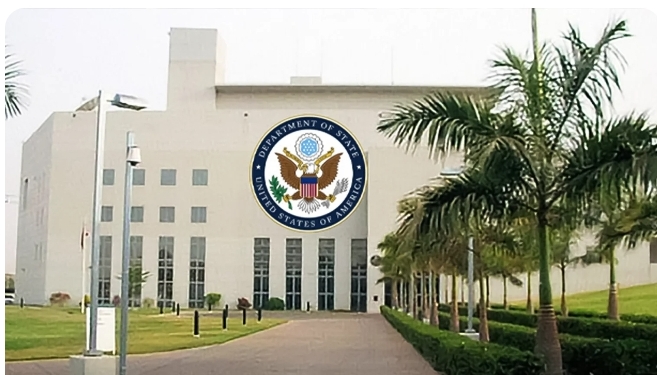
The U.S. Embassy in Abuja has suspended visa appointments following security warnings, asking affected applicants to await further instructions. However, visa services at the U.S. Consulate in Lagos continue as normal. This move comes after Washington ordered the withdrawal of non-essential staff and their families from Abuja and issued a travel advisory urging its citizens to reconsider visiting Nigeria due to risks such as terrorism, kidnapping, crime, and civil unrest.
The advisory also flagged several states across the North, South-East, and South-South as high-risk areas, citing the presence of extremist groups and rising violent crimes. Despite stopping short of a total travel ban, the U.S. warned that attacks could occur in public places, while healthcare services remain limited in some areas.
Meanwhile, Nigeria’s security situation worsened with a deadly attack on a military base in Benisheikh, Borno State. Insurgents linked to Boko Haram and ISWAP reportedly killed a senior army commander, Brigadier General Oseni Braimah, along with several soldiers, and destroyed military equipment during the assault.
President Bola Tinubu expressed grief over the killings, describing the fallen troops as heroes who made the ultimate sacrifice. He praised their bravery and urged the military to remain resolute, assuring that their sacrifices would not be in vain.
The Defence Headquarters confirmed the attack, noting that troops fought back and forced the attackers to retreat, though it acknowledged casualties without giving exact figures.
Across northern Nigeria, violence has surged in recent days, with reports indicating that dozens of civilians and security personnel have been killed in separate attacks in states such as Kebbi and Niger. Security analysts warn that militant groups linked to Al-Qaeda and the Islamic State are expanding their reach.
Despite these developments, the Federal Government dismissed concerns raised by the U.S. advisory, describing it as a routine precaution rather than a reflection of widespread insecurity. Officials maintained that most parts of the country remain stable and that security agencies are making progress in tackling threats.
However, opposition figures have criticised the government’s handling of the crisis. Former Vice President Atiku Abubakar accused President Tinubu of “absentee leadership,” claiming he has not shown sufficient presence or urgency in responding to recent attacks. He also questioned the president’s limited public engagements during official visits, arguing that the country needs visible and decisive leadership amid growing insecurity.
As Nigeria moves closer to the 2027 general elections, the rising wave of violence and differing narratives from local and international actors continue to fuel debate over the country’s security outlook.

Uncategorized
 News MasterUpdated 5 hours Ago2 Mins read
Fresh Attacks Raise Security Concerns as U.S. Tightens Measures, FG Downplays Fears
News MasterUpdated 5 hours Ago2 Mins read
Share






Related Articles
Uncategorized
AllSpins: Spin Fast, Win Fast – The Ultimate Quick‑Hit Casino Experience
Kun etsit adrenaliinia täynnä olevaa pelattavaa, joka sopii kahvitaukoon, AllySpin casino nousee...
Uncategorized
Avia Masters : Gaming express pour le joueur moderne
Avia Masters s’est taillé une place dans l’arène saturée des crash‑games en...
Uncategorized
Ogah to Emetu On Birthday: Your Loyalty and Commitment Continue to Inspire Confidence in Leadership
Former Minister of State for Mines and Steel Development and the president,...
Uncategorized
U.S. Issues Updated Travel Alert, Advises Citizens to Avoid Certain Nigerian States
The United States government has revised its travel advisory for Nigeria, warning...




Leave a comment