
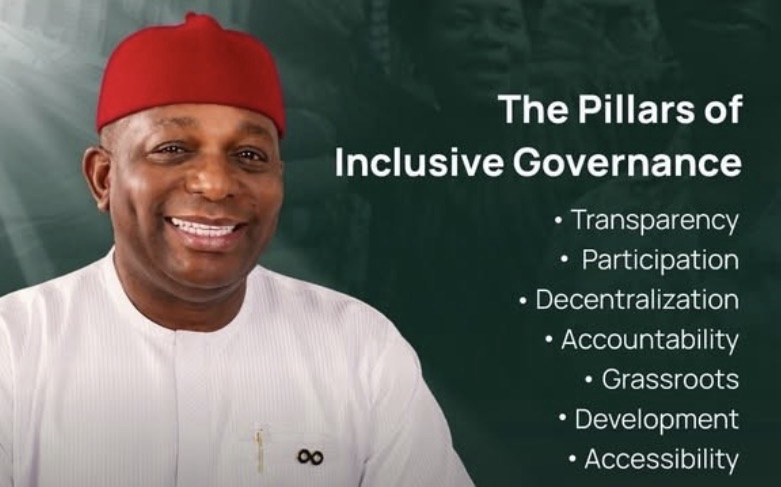
Abia 2027 Governorship Election Aspirant, Chief Mascot Uzor Kalu, has called for a more inclusive and people oriented system of governance in Abia State, insisting that the true benefits of government must be felt directly by the people and not remain hidden within government offices.
Chief Kalu made the remarks while addressing concerns surrounding governance, economic realities, and public engagement in the state. He stressed that development should not only be measured by infrastructure projects but also by the improvement in the living conditions of ordinary citizens.
According to him, “Ndi Abia, we will not hide the true benefits of good governance in the government offices and leave you feeling disconnected and excluded from decisions that directly affect your lives.”
The former lawmaker noted that while infrastructural projects are important, governance must equally focus on the welfare of the people. He argued that economic growth without visible economic development in the lives of citizens defeats the essence of leadership.
“Even as infrastructure is retrofitted, our lives too should be better off. Also, economic growth should be accompanied by economic development and it should be evident in the lives of Abians,” he stated.
Chief Kalu questioned the affordability of basic necessities in the state, particularly electricity and housing, amid rising economic hardship. “How many Abians today can afford the steady electricity? How many Abians can afford the skyrocketing costs of rent?” he asked.
The Abia 2027 Governorship Election Aspirant further emphasized the need for leaders who are accessible, responsive, and willing to engage citizens respectfully. He maintained that governance should be participatory and transparent.
“Abians do not deserve a governor that wouldn’t answer questions kindly, wouldn’t engage or listen. Let us open the door to the Government House so that leadership can truly be by the people,” he added.
Chief Mascot Uzor Kalu concluded by urging Abians to collectively shape the future of the state through unity, dialogue, and inclusive leadership. “Let us make the rules together. Let us build our state together, leaving nobody behind,” he said.