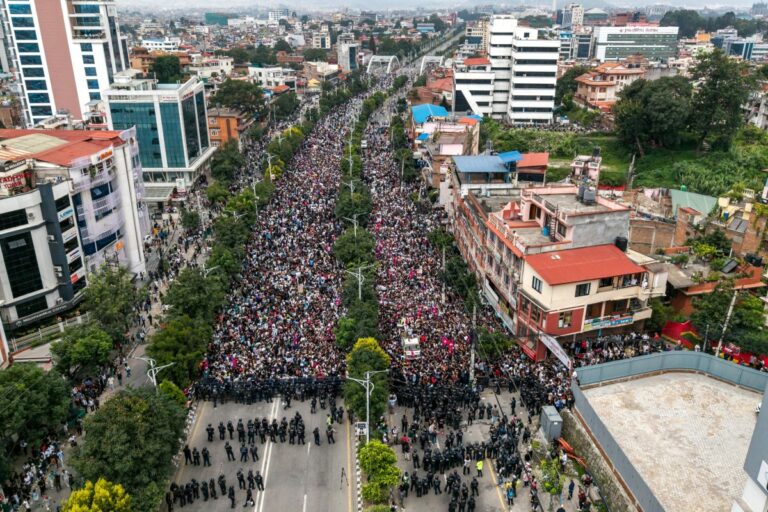
Nepal has lifted its social media ban, just a day after violent youth-led protests against the restrictions and widespread corruption left at least 19 people dead.
By Tuesday, major platforms including Facebook, YouTube, and X were back online, with the government announcing an inquiry into one of the most brutal crackdowns on demonstrators in recent years.
“The social media platforms have been reopened, which was one of the key demands of Gen Z protesters,” Communication Minister Prithvi Subba Gurung told AFP, adding that the government was ready for dialogue.
Despite a curfew in several cities, anger spilled into the streets as protesters torched government buildings, vandalized properties of politicians, and burned tyres while demanding accountability for the killings. “Nearly 20 people were murdered by the state — that shows the scale of police brutality,” said 23-year-old student Yujan Rajbhandari, who had joined the demonstrations.
Amnesty International reported that security forces used live ammunition, while the UN called for a swift and transparent probe. Hospitals were overwhelmed with hundreds of injured, with medical staff struggling after tear gas seeped into treatment areas.
Prime Minister KP Sharma Oli expressed sorrow over the deaths and confirmed that his government was never in favor of blocking social media. Following an emergency cabinet meeting that saw the interior minister resign, Oli promised an investigation and pledged to ensure unrestricted access going forward.
The social media blackout, which began Friday, fueled frustration in a country already grappling with high unemployment and economic struggles. Viral TikTok videos contrasting the lavish lifestyles of politicians’ children with the hardship of ordinary citizens further ignited public anger.
The Kathmandu Post described the unrest as more than just a fight over social media, calling it a generational demand for trust, accountability, and freedom. For many young Nepalis, digital rights are seen as inseparable from personal freedom — and silencing online voices meant silencing their generation.

Featured
 News MasterUpdated September 9, 20251 Mins read
Nepal Lifts Social Media Ban After Deadly Protests Leave 19 Dead
News MasterUpdated September 9, 20251 Mins read
Share



Related Articles
Featured
ARTICLE: Service Beyond the Ballot: Chief Mascot Uzor Kalu’s Enduring Commitment to the People
Leadership is not defined solely by electoral victory or the office one...
Featured
Supreme Court Set to Rule on PDP and ADC Leadership Disputes Today
Nigeria’s political landscape is on edge as the Supreme Court prepares to...
Featured
Mass Demonstrations in South Africa Highlight Rising Tensions Over Foreign Nationals
Large-scale demonstrations broke out across several major cities in South Africa as...
Featured
Article: Fixing Nigeria Starts with Fixing the States by Dr Uche Ogah
By Uche Ogah Nigeria’s development challenge is not merely a national dilemma....



Leave a comment