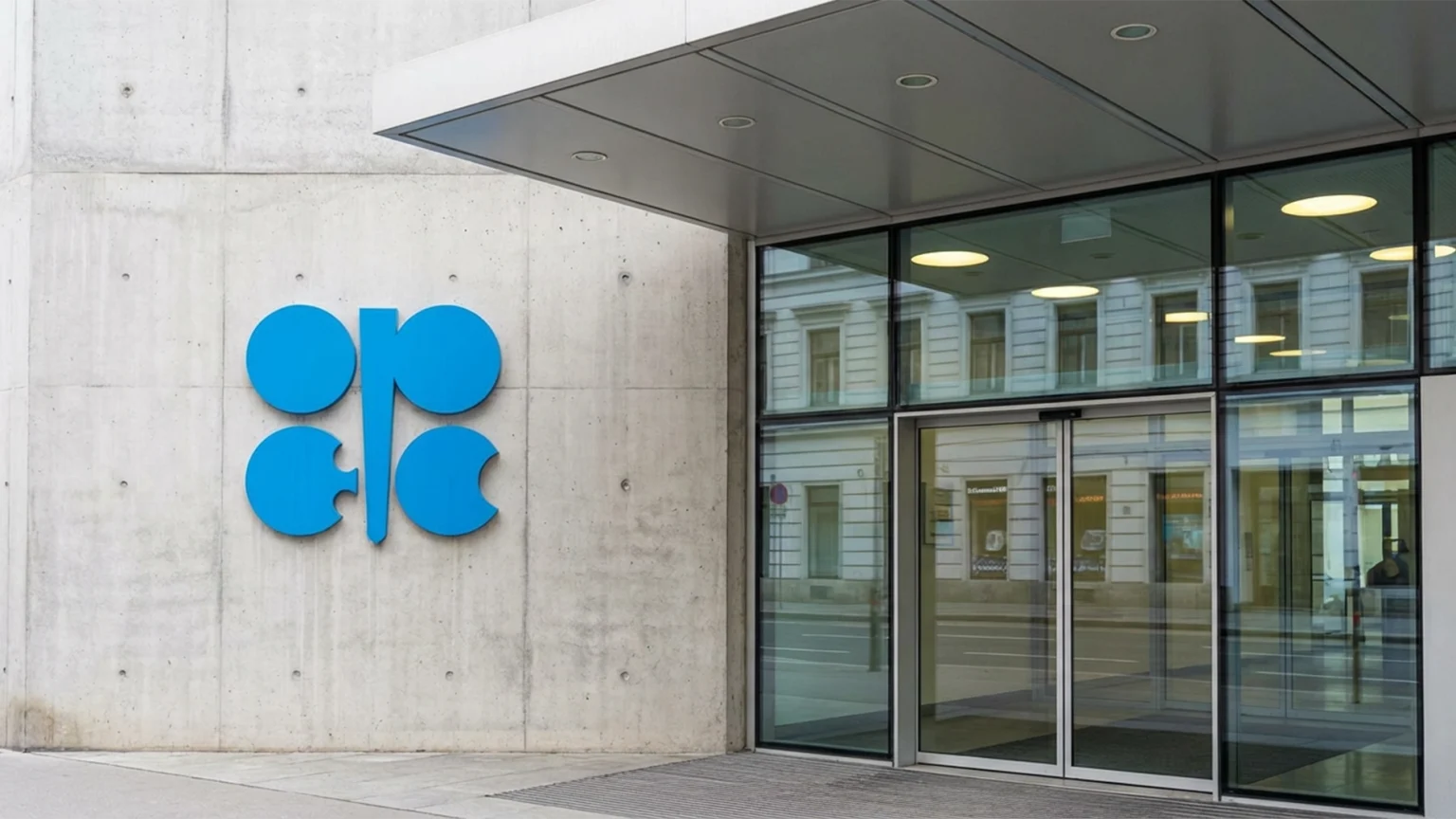
Eight major members of the OPEC+ alliance have agreed to gradually increase oil production starting in April, citing steady global economic conditions and “healthy market fundamentals.”
During a virtual meeting, Saudi Arabia, Russia, Iraq, the United Arab Emirates, Kuwait, Kazakhstan, Algeria, and Oman reviewed global supply and demand before deciding to partially roll back additional voluntary production cuts first announced in April 2023.
The group approved a production adjustment of 206,000 barrels per day (bpd) for April 2026. This marks the initial step in easing a voluntary reduction of 1.65 million bpd that has been in place for nearly three years.
In a statement, the alliance said that low oil inventories and stable economic prospects support a cautious return of supply to the market. The members also emphasized that the 1.65 million bpd cut could be restored “in part or in full” depending on market developments and that adjustments could be paused or reversed if necessary.
OPEC data show that Nigeria, for instance, fell short of its crude oil production quota, producing an average of 1.401 million bpd, below the stipulated 1.5 million bpd for member countries.
The 1.65 million bpd reduction introduced in April 2023 was complemented by an additional 2.2 million bpd voluntary cut announced in November 2023. Both measures aimed to stabilize prices amid global economic uncertainty and fluctuating demand.
Analysts say the decision reflects confidence among OPEC+ members that controlled supply has supported prices without creating excessive stockpiles. Brent crude prices have remained firm in recent months, aided by disciplined output management and strong demand from Asia.
The producers stressed that the adjustment does not signal a full return to pre-cut production levels. They reaffirmed their commitment to the 2022 Declaration of Cooperation, the framework binding OPEC members and non-OPEC allies such as Russia, with compliance monitored by the Joint Ministerial Monitoring Committee (JMMC).
Countries that overproduced since January 2024 are expected to fully compensate for the excess, with compensation plans reviewed monthly.
OPEC+, which accounts for roughly 40% of global crude supply, has frequently adjusted output since the COVID-19 pandemic in response to demand fluctuations, geopolitical tensions, and inflationary pressures.
The eight countries will continue monthly meetings to assess market conditions, production compliance, and compensation levels, with the next meeting scheduled for 5 April 2026. Energy markets will now closely watch whether this phased increase signals a sustained recovery or remains a tentative step contingent on global economic stability.

Featured
 News MasterUpdated 7 months Ago1 Mins read
OPEC+ Agrees Gradual Increase in Oil Production from April
News MasterUpdated 7 months Ago1 Mins read
Share





Related Articles
Featured
ARTICLE: Service Beyond the Ballot: Chief Mascot Uzor Kalu’s Enduring Commitment to the People
Leadership is not defined solely by electoral victory or the office one...
Featured
Supreme Court Set to Rule on PDP and ADC Leadership Disputes Today
Nigeria’s political landscape is on edge as the Supreme Court prepares to...

Featured
Mass Demonstrations in South Africa Highlight Rising Tensions Over Foreign Nationals
Large-scale demonstrations broke out across several major cities in South Africa as...
Featured
Article: Fixing Nigeria Starts with Fixing the States by Dr Uche Ogah
By Uche Ogah Nigeria’s development challenge is not merely a national dilemma....




Leave a comment