Nigeria is witnessing a notable recovery in foreign exchange inflows, signaling a gradual but meaningful improvement in investor confidence after years of economic uncertainty. Analyst Sami Tunji explores how the Central Bank of Nigeria’s (CBN) reforms have fueled this rebound, the risks that could undermine it, and the steps needed to convert inflows into sustained, inclusive economic growth.
Recent data from the FMDQ Exchange shows total inflows into Nigeria’s FX market climbed to $5.15 billion in October, up from $3.18 billion in September—a 62.2% month-on-month increase and the highest level in five months. The recovery follows efforts by CBN Governor Olayemi Cardoso to restore market credibility, including clearing a $7 billion FX backlog, unifying exchange-rate windows, and ending opaque interventions that had deterred investors. Both the World Bank and IMF have lauded these steps as crucial to rebuilding confidence in the economy.
For years, investors faced FX shortages, repatriation challenges, and policy inconsistency. The recent inflow surge suggests a reassessment of Nigeria’s risk profile. “Nigeria appears to be back in business as long-awaited economic reforms take shape,” said a Portfolio Manager at East Capital. Analysts, however, caution that while encouraging, these gains are still in the early stages.
Capital Importation Rises, But FDI Remains Weak
The October inflow spike aligns with broader capital importation trends. The National Bureau of Statistics reported total Q1 2025 inflows of $5.642 billion, a 67.12% year-on-year increase and up 10.86% from Q4 2024. Portfolio investments dominated, accounting for over 92% of the total, while foreign direct investment (FDI) lagged at just $126.29 million—a 70% decline from Q4 2024.
This reliance on short-term, high-yield investments such as government bonds and treasury bills highlights a structural concern: inflows are not translating into industrial growth, job creation, or infrastructure development. Analysts warn that portfolio-driven capital is volatile and susceptible to sudden reversals, underscoring the need to attract more long-term FDI.
Banks and Debt Markets Benefit
The banking sector has emerged as a primary beneficiary, receiving over half of all Q1 2025 capital inflows, supporting the government’s $1 trillion economic growth ambition. Strong investor appetite has also enabled Nigeria to successfully raise $2.25 billion in Eurobond issuance, reflecting confidence in fiscal and monetary reforms, including the removal of fuel subsidies and naira devaluation.
CBN Governor Cardoso emphasized that stability and predictable economic policies are key to sustaining investor confidence. “Investors naturally gravitate to markets with stability and predictability,” he said. He added that commercial banks must now take a more active role in FX market intermediation to ensure that these gains translate into long-term prosperity for Nigerians.

Business
 News MasterUpdated 3 months Ago2 Mins read
Nigeria’s FX Inflows Surge Amid Reforms, But Long-Term Investment Still Lagging
News MasterUpdated 3 months Ago2 Mins read

Share



Related Articles

Business
Customs Transfers Nearly 160,000 Litres of Confiscated Petrol to Regulatory Authority
A large volume of petrol intercepted during anti-smuggling operations has been formally...
Business
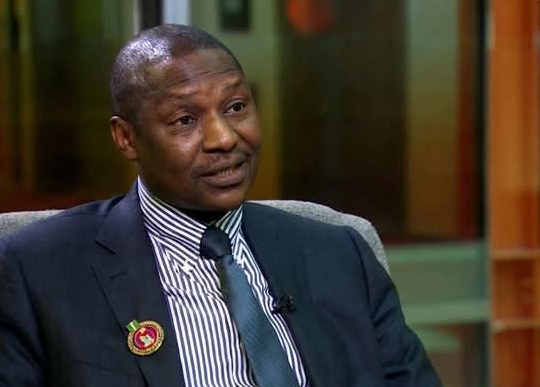
Music Rights Body Accuses Malami of Orchestrating Billion-Naira Levy Scam
The Copyright Society of Nigeria (COSON) has voiced serious concerns over what...
Business
Naira Rockets to Two-Year High as Market Gains Momentum
The Nigerian naira has surged to its highest level in nearly two...
Business
Investors Fret as Oil Surges Amid US-Iran Tensions
Global financial markets weakened this week as mounting tensions between the United...




Leave a comment