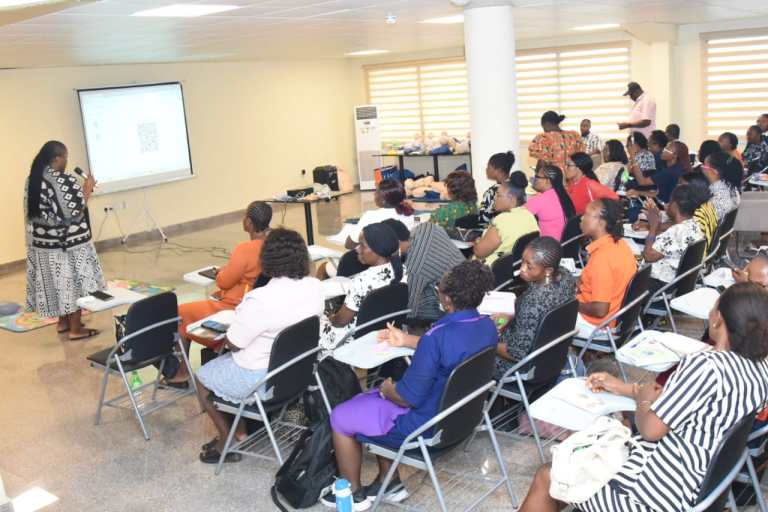
The Abia State Government has commenced a statewide Basic Life Support (BLS) training programme for health professionals, aimed at reducing preventable deaths and strengthening emergency response across primary healthcare centres in the state.
The programme, sponsored by the state government in collaboration with the Abia State Diaspora Commission, targets frontline health workers and is designed to equip them with practical, life-saving skills, particularly in cardiopulmonary resuscitation (CPR) and emergency care.
Speaking at the opening session in Umuahia on Tuesday, the Commissioner for Health, Prof. Enoch Uche, said the initiative reflects Governor Alex Otti’s commitment to safeguarding lives through continuous training and capacity building for healthcare workers, especially at the grassroots.
According to Prof. Uche, the current administration is charting a new course for the health sector by ensuring that human resources are adequately equipped with hands-on, life-saving skills to deliver quality care wherever they are deployed.
He described the participants as the pioneer batch who would be expected to cascade the knowledge and skills acquired to colleagues in their respective health facilities.
“His Excellency has taken it upon himself to insist that our people, particularly those involved in healthcare delivery, are properly equipped to take care of patients wherever they work,” Prof. Uche said.
He urged participants to take the training seriously, noting that they would serve as trainers to others in their facilities.
The commissioner further disclosed that the programme would be complemented with internationally recognised certification and the deployment of modern emergency equipment to primary healthcare centres and general hospitals to ensure effective application of the skills acquired.
“With the certification and the tools being provided at primary healthcare centres and general hospitals, participants will be able to practise what they have learned. It will not be a situation where you learn something and return without the necessary equipment to apply it,” he explained.
Prof. Uche described the skills being taught as critical, stressing that they could mean the difference between life and death. He recounted a personal experience of losing a colleague to cardiac arrest due to the absence of basic emergency facilities and trained personnel in a rural health centre.
He noted that such avoidable incidents informed the state government’s resolve to ensure that no resident loses their life due to lack of basic emergency care, particularly in rural communities.
“People have died simply because there were no basic facilities or trained personnel to respond to cardiac arrest in rural areas. His Excellency has made it clear that this should not happen in Abia State, and that is why we are here,” he said.
The commissioner emphasised that beyond providing modern equipment, training, adequate manpower and proper organisation are essential to improving healthcare delivery, adding that these considerations informed the state’s partnership with relevant stakeholders.
Also speaking, the Chairman of the Abia State Diaspora Commission, Mr. Okechukwu Agbara, said the initiative underscores the administration’s understanding that a healthy population is the foundation of a prosperous society. He commended Governor Otti for prioritising the healthcare needs of Abians.
Agbara highlighted the importance of CPR and effective emergency response, describing the training as timely and critical, and noting that such skills are mandatory for healthcare professionals in many countries.
He explained that the partnership with the Diaspora Commission was designed to bring global best practices in healthcare to Abia State and urged participants to pay close attention and master CPR techniques, chest compressions and resuscitation procedures.
Earlier, the training lead, Assistant Professor of Family Medicine, Dr. Odinaka Anyanwu (USA), alongside Dr. Nnenna Ihekoromadu, Founder of Quantus Medical Foundation, Texas, USA, said the BLS training would improve emergency response at the grassroots, enhance patient survival rates and further advance the Otti administration’s healthcare reforms.
The programme featured intensive practical sessions on emergency and life-saving techniques.

Health
 News MasterUpdated 2 months Ago2 Mins read
Abia Launches Statewide Basic Life Support Training for Health Workers
News MasterUpdated 2 months Ago2 Mins read
Share




Related Articles
Health
Fact Foundation Equips Borno Health Workers with Geospatial Tools for Smarter Service Delivery
Health data officers in Maiduguri have completed a specialised technology training programme...
Health
“Lassa Fever Claims Lives of Health Workers Amid Rising Infections”
Nigeria’s disease control authority has raised alarm over a rise in Lassa...
Health
Rising Emergency Room Deaths Raise Alarm Over Nigeria’s Healthcare System
Nigerians are expressing growing concern as reports of patient deaths in hospital...
Health
Over 1.5 Million Children Vaccinated in Enugu’s One-Week Measles-Rubella Drive
Enugu State has successfully vaccinated over 1.5 million children in just one...



Leave a comment