Concerns are mounting that the South-East states may struggle to realise their nearly N6 trillion combined budgets for 2026 if the lingering Monday sit-at-home culture across the region is not fully reversed.
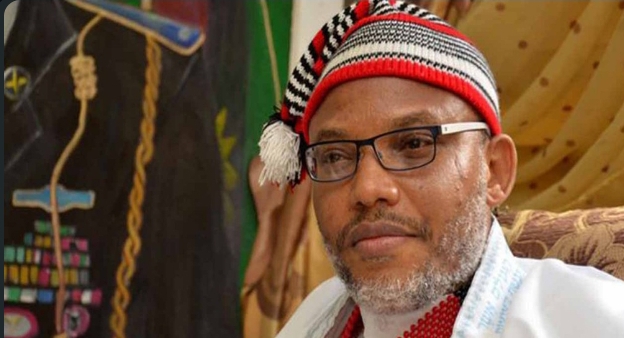
Despite claims that the weekly sit-at-home order, initially imposed by the Indigenous People of Biafra (IPOB) to demand the release of its detained leader, Mazi Nnamdi Kanu, had been suspended, checks indicate that economic activities in many parts of the region remain largely subdued on Mondays.
The directive, which officially began on August 9, 2021, has continued to cast a long shadow over the region’s economy. This year, the five South-East governors plan to spend about N5.7 trillion, with a significant portion earmarked for infrastructure and economic revival.
Enugu State has the largest budget at N1.62 trillion, followed by Imo with N1.44 trillion. Abia and Ebonyi have approved budgets of N1.02 trillion and N884 billion respectively, while Anambra’s N757 billion appropriation is the smallest among the five states.
While the states are relying on increased public spending to stimulate growth, they are also counting heavily on internally generated revenue (IGR). Collectively, the states project about N1.3 trillion in IGR this year, more than four times the roughly N300 billion realised in the previous year and about 36 per cent of the total IGR of all states and the Federal Capital Territory in 2024.
Enugu alone expects to generate N870 billion internally, while Abia targets N223.4 billion, Imo N44.3 billion, Ebonyi N97.16 billion and Anambra N60 billion. Analysts note that meeting these targets would require each state to raise at least N65 billion monthly, N17 billion weekly or about N2.3 billion daily.
However, observations from the first two Mondays of the year showed that many businesses, markets and offices remained closed or operated at skeletal levels, raising doubts about the full return of commercial activities.
Stakeholders argue that state governments must send strong signals that peace and security have been restored to encourage businesses that relocated to neighbouring states and Lagos to return. Over the years, insecurity and repeated disruptions have forced many traders and investors to leave the region, weakening the local revenue base.
Despite the conclusion of the trials of Kanu, who was sentenced to life imprisonment in November over terrorism-related charges, and that of self-styled Biafra Prime Minister, Simeon Ekpa, who was jailed in Finland, the sit-at-home culture persists, fuelling public fear and reinforcing perceptions of insecurity.
A commercial lawyer, Declan Ibekwe, urged governors to intensify efforts to restore normal economic activities, stressing that Mondays are critical to business survival.
“Missing Mondays is like missing the entire week,” he said, noting that fear of movement has curtailed inter-state travel and spending. According to him, the absence of synergy among the states, where civil servants resume work in some capitals while others remain shut, undermines regional economic recovery.
Similarly, a management consultant, Dr Jude Onwumere, described the budgets as ambitious and capital-intensive, warning that any disruption to daily economic activities could derail revenue projections.
“There should be no wasted day. If people are still sitting at home on Mondays, governments will struggle to collect revenue for activities that never happened,” he said, adding that the private sector, which drives much of the region’s IGR, must operate without disruption for the budgets to be achieved.
However, rights activist and Executive Director of the Civil Liberties Organisation (CLO), Ibuchukwu Ezike, argued that the continued observance of sit-at-home reflects deeper political sentiments that cannot be easily extinguished, insisting that the protest remains influential despite official assurances.
In the same vein, the leader of the Movement for the Actualisation of the Sovereign State of Biafra (MASSOB), Uchenna Madu, said the sit-at-home had become entrenched and should be factored into government planning.
South-East governors have repeatedly warned that the practice costs the region billions of naira weekly, with estimates of losses running as high as N10 billion every Monday. Although measures such as increased security deployment and free transportation for civil servants have yielded some improvements, many residents and businesses still stay away from work.
With the ambitious fiscal plans for 2026 now underway, analysts say fully restoring confidence, security and uninterrupted economic activity, especially on Mondays, will be critical to achieving the South-East’s revenue and development goals.

National
 News MasterUpdated 2 months Ago3 Mins read
Lingering sit-at-home threatens South-East’s N5.7 trillion fiscal ambitions
News MasterUpdated 2 months Ago3 Mins read
Share




Related Articles
National
House of Reps Moves to Create Nigerian Fintech Regulatory Commission
The House of Representatives has initiated legislative steps to establish a Nigerian...
National
DSS Arrests Suspect Over Alleged Assassination Attempt on Obi, Oyegun
The Department of State Services (DSS) has arrested a suspect allegedly linked...
National
Stakeholders Urge Swift Passage of National Research and Innovation Fund Bill
Stakeholders in Nigeria’s science and technology sector have called for the speedy...
National
FG Begins February Salary Payments, Blames Technical Glitch for Delay
The Federal Government has started disbursing February 2026 salaries to workers paid...




Leave a comment