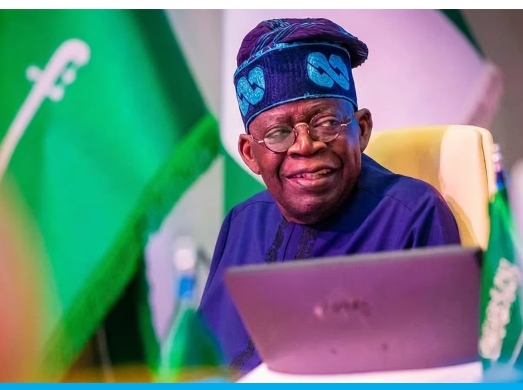
A chieftain of the All Progressives Congress (APC) in Abia State, Prince Paul Ikonne, has said the growing nationwide mobilisation of Ndigbo in support of President Bola Ahmed Tinubu ahead of the 2027 general election is aimed at ending political isolation, safeguarding economic interests, and restoring the South-east to the centre of national power.
Ikonne, a former Executive Secretary and Chief Executive Officer of the National Agricultural Land Development Authority (NALDA), said South-east political leaders have adopted a deliberate strategy to campaign for President Tinubu across the country, stressing that political relevance and economic survival depend on alignment with the federal government.
Speaking on Politics Tonight on TVC on Tuesday, Ikonne disclosed that the mobilisation goes beyond the South-east, with targeted efforts to reach Igbos living in other parts of Nigeria.
According to him, Imo State Governor Hope Uzodinma has constituted a team, of which he is a member, to visit states with significant Igbo populations to sensitise them on the importance of supporting President Tinubu’s re-election bid in 2027.
“This is not just about votes from the South-east. We are engaging Igbos across the country to explain why supporting President Tinubu is in our collective interest,” he said.
Ikonne noted that the South-east’s strong economic presence nationwide makes cooperation with the government at the centre essential.
“Igbos are traders and businesspeople spread across Nigeria. Aligning with the centre protects our businesses and future. No Igbo person wants the region to remain outside the corridors of power,” he added.
He attributed the wave of defections to the APC in the South-east to this strategic recalibration, arguing that even a 90 per cent vote delivery from the region would be inadequate given the scale of political realignment.
“With the calibre of leaders now joining the APC in the South-east, anything less than overwhelming support would fall short of expectations,” Ikonne said.
Using Abia State as an example, he claimed that the Peoples Democratic Party (PDP) structure in the state has largely collapsed into the APC, a trend he said is being replicated across the region.
“What this shows is that votes previously lost are being recovered. Political structures are aligning, and the numbers will follow,” he stated.
Ikonne further argued that the renewed engagement of the South-east in national politics has weakened opposition parties in the region, particularly the Labour Party and its 2023 presidential candidate, Peter Obi.
He also dismissed the political influence of Abia State Governor Alex Otti, describing him as politically isolated.
“Our governor is minus one. He does not even have a functional party structure and has effectively distanced himself from Peter Obi,” Ikonne said.
He maintained that the endorsement of President Tinubu by serving and former governors, ex–Senate Presidents, ministers and other prominent South-east political figures signals a deliberate return of the region to the mainstream of national politics.
“The calibre of leaders backing this endorsement reflects a strong consolidation of political structures in favour of President Tinubu,” he said.
Ikonne rejected claims that the APC lacks credibility in the South-east, describing the party as the preferred destination for politicians seeking relevance and influence.
“The Igbos are not fools. No Igbo person wants to repeat the same mistake twice,” he said.
He also brushed aside criticisms of President Tinubu by the Senator representing Abia South Senatorial District, Eyinnaya Abaribe, claiming the lawmaker has lost political relevance and faces a difficult re-election battle.

National
 News MasterUpdated 2 months Ago2 Mins read
2027: Why Ndigbo Are Mobilising Nationwide Support for Tinubu – Ikonne
News MasterUpdated 2 months Ago2 Mins read
Share

Related Articles
National
House of Reps Moves to Create Nigerian Fintech Regulatory Commission
The House of Representatives has initiated legislative steps to establish a Nigerian...
National
DSS Arrests Suspect Over Alleged Assassination Attempt on Obi, Oyegun
The Department of State Services (DSS) has arrested a suspect allegedly linked...
National
Stakeholders Urge Swift Passage of National Research and Innovation Fund Bill
Stakeholders in Nigeria’s science and technology sector have called for the speedy...
National
FG Begins February Salary Payments, Blames Technical Glitch for Delay
The Federal Government has started disbursing February 2026 salaries to workers paid...


Leave a comment