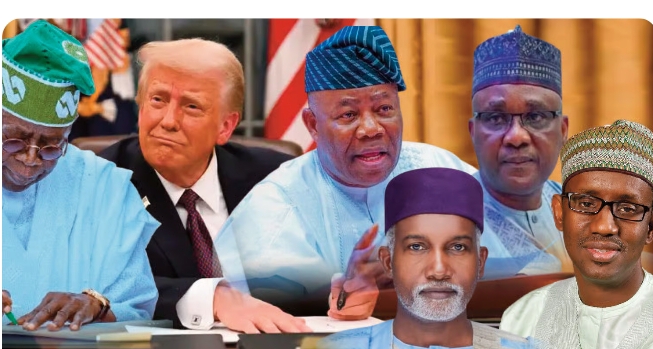
A controversial $9 million lobbying contract in the United States has drawn intense scrutiny to the administration of President Bola Ahmed Tinubu, with critics describing the move as evidence of diplomatic paralysis, misplaced priorities and growing desperation amid Nigeria’s worsening security and economic challenges.
The deal, reportedly aimed at managing Nigeria’s international image, has instead fuelled debate over why the country is relying on costly foreign lobbyists more than a year after recalling all its ambassadors without appointing replacements. Analysts argue that the vacuum in Nigeria’s diplomatic representation has weakened its ability to defend national interests abroad, forcing the government to outsource core diplomatic functions.
Documents filed under the United States’ Foreign Agents Registration Act (FARA) reveal that the Federal Government engaged DCI Group, a Washington-based lobbying and public relations firm with close links to former U.S. President Donald Trump. The contract, dated December 17, 2025, was reportedly facilitated through Aster Legal, a Kaduna-based law firm acting on behalf of the National Security Adviser, Nuhu Ribadu.
Under the agreement, Nigeria is to pay $750,000 monthly for an initial six-month period, amounting to $4.5 million, with an automatic renewal clause that could raise the total value to $9 million. Records attached to the filing indicate that the initial $4.5 million was paid upfront in December 2025. Either party may terminate the contract with 60 days’ notice.
The stated purpose of the engagement is to help the Nigerian government communicate its efforts to protect Christian communities and to sustain U.S. support for counter-terrorism operations against jihadist groups in West Africa. However, foreign policy experts say the move highlights the cost of Nigeria’s prolonged diplomatic vacuum following the recall of ambassadors in September 2023.
Although the Tinubu administration appointed 14 consuls-general in April 2024, no substantive ambassadors have been deployed to key global capitals, including Washington. Former diplomats note that, in international relations, rank and seniority matter, and the absence of ambassadors has reduced Nigeria’s influence at critical decision-making levels.
Opposition parties have been swift in condemning the deal. The African Democratic Congress (ADC) described the contract as a reflection of misplaced priorities, arguing that spending billions of naira on lobbying abroad is unjustifiable at a time when Nigerians are grappling with insecurity, poverty and rising living costs. The party said the move amounted to an admission of diplomatic failure and warned that paid lobbying could not mask governance shortcomings or resolve security crises at home.
The Peoples Democratic Party (PDP) also faulted the arrangement, calling it deceptive and embarrassing. The party questioned why a government with a full Ministry of Information and extensive media machinery would resort to hiring a foreign firm to manage its image. It demanded clarity on whether the contract was captured in the 2025 budget, why it was executed through a private law firm, and what performance benchmarks were set for the engagement.
According to the PDP, no public relations effort can override the daily realities faced by Nigerians, insisting that genuine improvements in security and governance are the only sustainable ways to improve the country’s global image.
Foreign policy analysts echoed similar concerns. Ambassador Gani Lawal, President of the Association of Foreign Relations Professionals, said the deal was the price of neglecting Nigeria’s diplomatic infrastructure. He described the lobbying contract as a temporary emergency response rather than a long-term solution, stressing that diplomacy should not be outsourced indefinitely.
Public affairs analyst Frank Tietie went further, describing the move as an act of desperation and a sign of weak confidence in Nigeria’s diplomatic institutions. He argued that the government was operating from a position of inferiority in responding to allegations of targeted violence against Christians and had turned to lobbyists to influence U.S. policy from within Washington after direct engagements failed to yield results.
Another analyst, Oladimeji Fabiyi, said the contract exposed the administration’s lack of readiness for governance, noting that ambassadors are meant to serve as the country’s first line of defence in shaping international perception. He criticised the timing of the expenditure, arguing that such sums could have been channelled into education, infrastructure and social services.
Civil society groups have also weighed in. The Human Rights Writers Association of Nigeria (HURIWA) described the deal as wasteful and hypocritical, questioning why the government would deny allegations of targeted killings while simultaneously paying lobbyists to explain its protection efforts. The group urged the deployment of ambassadors and a stronger commitment to transparency and effective diplomacy.
The controversy is further complicated by the political profile of DCI Group, whose senior figures have strong ties to Donald Trump and the Republican Party. Analysts say these connections are central to the firm’s appeal, particularly as Nigeria faces heightened criticism from the U.S., including its recent redesignation as a “country of particular concern” over alleged religious persecution, claims Nigeria has consistently rejected.
The lobbying saga comes as the United States announced the suspension of immigrant visa processing for citizens of Nigeria, Ghana and 73 other countries, adding to concerns about Nigeria’s standing in Washington.
For many observers, the $9 million deal has become more than a dispute over cost. It has evolved into a broader indictment of Nigeria’s foreign policy direction, diplomatic preparedness and the consequences of delayed decision-making in an increasingly demanding global environment.

National
 News MasterUpdated 2 months Ago3 Mins read
Absence of Ambassadors, Claims of Desperation Trail FG’s $9m U.S. Lobbying Deal
News MasterUpdated 2 months Ago3 Mins read
Share


Related Articles
National
House of Reps Moves to Create Nigerian Fintech Regulatory Commission
The House of Representatives has initiated legislative steps to establish a Nigerian...
National
DSS Arrests Suspect Over Alleged Assassination Attempt on Obi, Oyegun
The Department of State Services (DSS) has arrested a suspect allegedly linked...
National
Stakeholders Urge Swift Passage of National Research and Innovation Fund Bill
Stakeholders in Nigeria’s science and technology sector have called for the speedy...
National
FG Begins February Salary Payments, Blames Technical Glitch for Delay
The Federal Government has started disbursing February 2026 salaries to workers paid...


Leave a comment