The recent surge in cement prices across Nigeria has been largely attributed to the Federal Government’s new tax regime, rising logistics costs and continued dependence on imported inputs, industry stakeholders have said. Experts warn that the development could have far-reaching short-, medium- and long-term implications for housing delivery and infrastructure development nationwide.
Operators in the cement industry said the widening tax net, higher effective tax rates and multiple levies imposed by federal and state authorities have significantly raised production costs, which are ultimately transferred to builders, developers and end-users.
Cement manufacturing, one of Nigeria’s most capital-intensive industries, requires substantial investment in plants, energy systems, haulage and maintenance. Under the new tax framework, manufacturers now contend with increased corporate tax exposure, stricter compliance requirements and numerous statutory charges, including customs duties, value-added tax (VAT), education tax and various regulatory levies.
Industry executives noted that the cumulative tax burden has risen sharply over the past year, even as firms grapple with foreign exchange volatility and high energy and logistics costs. The impact is particularly severe for manufacturers that rely on imported inputs such as gypsum, spare parts and specialised equipment, all priced in foreign currency before taxes are applied.
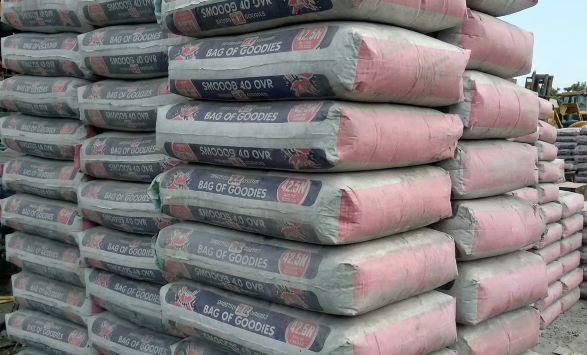
As a result, cement producers say they have limited capacity to absorb the additional costs. In January, manufacturers reportedly increased the price of a 50kg bag of cement by about ₦500, pushing prices to between ₦11,000 and ₦11,500 nationwide, compared to ₦10,000–₦10,500 in late 2025.
Prices are highest in Abuja, Lagos and Ogun States, where a bag sells for up to ₦11,500, while parts of the South-East record prices of about ₦11,000, depending on brand and proximity to production plants.
Developers say the rising cost of cement—one of the largest inputs in construction—is tightening budgets, delaying project starts and forcing design adjustments. Built environment professionals warn that the trend is worsening housing affordability, as slow housing supply growth continues to trail demand in major urban centres.
Beyond taxation, sustained demand from infrastructure projects, currency instability and the cost of imported inputs have also contributed to high cement prices. These pressures are being passed on to homebuyers and tenants through higher house prices and rents.
Experts caution that unless fiscal policies are reviewed, construction activity could slow further, exacerbating Nigeria’s housing deficit and infrastructure gap. They describe a self-reinforcing cycle in which higher cement prices raise construction costs, developers delay new projects, housing supply shrinks and prices remain elevated.
Calls for policy adjustment
Economists and industry experts argue that the timing of the new taxes is problematic, coming as the construction sector struggles with high inflation and weakened consumer purchasing power. They warn that heavy taxation of production-intensive sectors during a fragile recovery could suppress output, raise prices and reduce employment.
Suggested remedies include targeted tax relief for critical building materials, temporary tax holidays, reduced VAT on cement and incentives for local input sourcing. Analysts also advocate tax harmonisation to eliminate duplication between federal and state agencies, thereby reducing compliance costs.
In the long term, experts say encouraging local gypsum mining and processing, alongside investments in energy and logistics infrastructure such as rail freight and alternative fuels, could help ease cost pressures.
Industry reactions
A former President of the Nigerian Institute of Builders (NIOB), Mr. Kunle Awobodu, linked the price increases directly to the new tax regime, noting that both ongoing and future projects would be affected. Similarly, Dr. Yemi Adelakun, CEO of NISH Affordable Housing Limited, said sustained price increases could impact real estate development and public infrastructure works.
Adelakun urged the Federal Government to urgently address factors driving up prices and proposed structured engagement between cement producers and developers, including direct bulk purchases from manufacturers to reduce volatility.
Competition concerns
Meanwhile, a policy brief by Agora Policy argued that persistently high cement prices are driven more by weak competition and market dominance than by production costs. The think tank noted that although Nigeria achieved cement self-sufficiency as early as 2012 and has excess installed capacity, prices remain high and profit margins among dominant producers are substantial.
Agora Policy called on regulators, particularly the Federal Competition and Consumer Protection Commission (FCCPC), to prioritise the cement sector, strengthen oversight and restore competition to support affordable housing delivery and sustainable economic growth.
Analysts warn that without decisive policy action, rising cement prices could stall housing projects, stretch public budgets and further widen Nigeria’s housing deficit.

Uncategorized
 News MasterUpdated 4 hours Ago3 Mins read
New Tax Regime Drives Up Cement Prices, Deepens Housing Woes
News MasterUpdated 4 hours Ago3 Mins read
Share






Related Articles

Uncategorized
T’Bellz Returns With Soulful Street-Pop EP Back on Track
“Bad boy from Africa!!”, the opening line of T’Bellz’s latest extended play,...

Uncategorized
IPOB Announces Permanent End to Monday Sit At Home in South East
The Indigenous People of Biafra has declared a total and permanent cancellation...

Uncategorized
Abia Implements Adjusted Minimum Wage for Education Board Staff and Teachers – Kenechukwu Nwosu Confirms
The Abia State Government has commenced payment of the consequential adjusted minimum...

Uncategorized
Theme: Peace That Guards the Heart – Mascot Uzor Kalu
Sunday 8, January 2026 Peace That Guards the Heart Some days feel...




Leave a comment