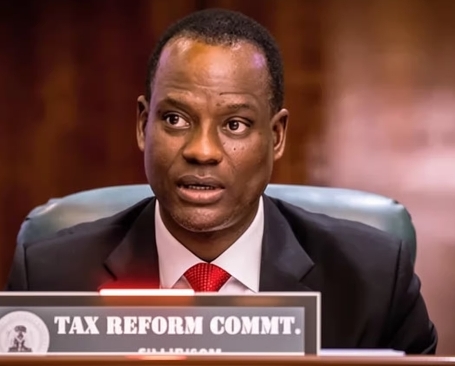
No fewer than 12 states have so far adopted and harmonised the new tax laws with their respective state tax frameworks, the Chairman of the Presidential Committee on Fiscal Policy and Tax Reforms, Taiwo Oyedele, has said.
Oyedele disclosed this while making a presentation at the National Economic Council (NEC) Conference held in Abuja. He revealed that, in addition to the 12 states that have completed the process, 13 states currently have the tax bills before their houses of assembly, while 11 others are at advanced stages of preparing the legislation for submission.
He stressed the importance of harmonising state tax laws with the new national framework to eliminate multiple taxation and create a more efficient and predictable tax environment. According to him, such alignment would improve compliance and boost revenue generation across the federation.
Oyedele also urged state governors to grant full autonomy to their internal revenue services, warning against the continued use of private consultants for routine tax collection. “Let us stop using consultants to collect taxes. It undermines our ability to do what is right,” he said. He explained that the new tax law expressly prohibits the engagement of consultants for the routine functions of tax authorities and mandates the protection of their institutional independence.
The tax reform committee chairman further disclosed plans by the Federal Government to introduce a tax amnesty programme. Addressing NEC members, comprising all state governors and chaired by the Vice President, Oyedele said the proposed voluntary disclosure scheme would allow individuals and businesses with outstanding tax liabilities to regularise their status without facing punitive measures.
“As part of this reform, there is a plan for a voluntary disclosure programme,” he said. “People may admit that they have not been paying their taxes diligently over the years and may not have the capacity to pay immediately. If we don’t clean the past, we are not sure we will get the money going forward. We need your support to adopt a tax amnesty programme that will help people come clean with their past tax compliance.”
Meanwhile, the NEC, in a communiqué issued at the end of the conference, called on governments at all levels to prioritise investment in human capital development, infrastructure and accountability to strengthen public trust and drive inclusive growth.
The council emphasised the need to realign economic policies to promote equity, inclusivity and social cohesion, with particular focus on improving living standards and outcomes in education, health and youth employment. It urged state governments to increase per capita spending in these sectors to enhance human capital outcomes and expand opportunities for economic participation.
According to the communiqué, Nigeria’s persistent underinvestment in education and health, especially when compared with peer countries, requires urgent attention. It called for a significant scale-up of funding for education, healthcare and nutrition.
The NEC also agreed on measures to support domestic production and enhance the competitiveness of the Nigerian economy by encouraging subnational governments to prioritise strategic investment planning.
It further noted the unique nature of Nigeria’s federal system, where constitutional powers are shared across local, state and federal governments, and called for stronger collaboration among all tiers of government. The council also urged federal and state authorities to deepen partnerships with the private sector, civil society organisations and development partners to achieve inclusive and sustainable national development.

Uncategorized
 News MasterUpdated 4 hours Ago2 Mins read
12 States Harmonise Tax Laws as NEC Calls for Greater Investment in Human Capital
News MasterUpdated 4 hours Ago2 Mins read
Share




Related Articles
Uncategorized
Fresh Killings, Abductions Deepen Security Fears Amid Rising Drone Threats
Renewed killings, kidnappings and violent clashes in parts of Nigeria have intensified...

Uncategorized
New Tax Regime Drives Up Cement Prices, Deepens Housing Woes
The recent surge in cement prices across Nigeria has been largely attributed...

Uncategorized
T’Bellz Returns With Soulful Street-Pop EP Back on Track
“Bad boy from Africa!!”, the opening line of T’Bellz’s latest extended play,...
Uncategorized
IPOB Announces Permanent End to Monday Sit At Home in South East
The Indigenous People of Biafra has declared a total and permanent cancellation...



Leave a comment