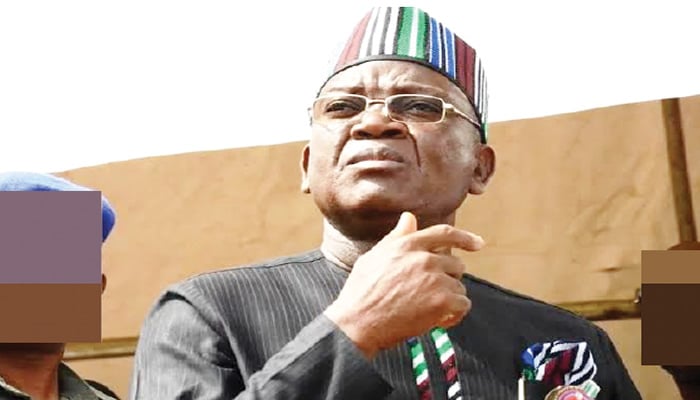
A renewed verbal confrontation has erupted between the camps of former Benue State Governor, Samuel Ortom, and his successor, Governor Hyacinth Alia, over conflicting claims regarding the state’s debt profile and financial disclosures.
The Managing Director of the Benue Investments and Property Company (BIPC), Dr. Raymond Asemakaha, had in a public statement revealed that the Alia administration spends approximately ₦7.4 billion monthly on debt servicing, totaling ₦21.4 billion in the first quarter of 2025.
Asemakaha described the state’s debt burden as “like flying an aircraft into turbulent headwinds,” putting Benue’s domestic debt at ₦122.5 billion and its external debt at $26.4 million, with a debt service ratio of 413 percent. He noted that despite an increase in federal allocations, a significant share of the state’s income still goes toward debt repayment.
“In Q1 2025, ₦21.4 billion was deducted from Benue’s FAAC allocation as loan repayment,” Asemakaha explained, while defending Governor Alia’s fiscal approach. He added that the administration was actively seeking new revenue sources and making infrastructure investments to attract private capital and create jobs.
However, Ortom’s media aide, Terver Akase, swiftly challenged the figures, accusing the Alia government of misrepresenting the state’s debt situation. Akase questioned how Benue could allegedly spend more on debt servicing than the total liabilities earlier declared and demanded full disclosure of all debt details, repayment schedules, and revenue inflows.
“If the Alia government claims Benue spends ₦7.4 billion monthly on debt servicing, why hasn’t it disclosed its monthly FAAC receipts?” Akase queried.
He also highlighted inconsistencies in the data, pointing out that “three months of ₦7.4 billion should total ₦22.2 billion, not ₦21.4 billion,” and described the stated 413 percent debt service ratio as “unrealistic and unverifiable.”
Akase further urged the government to release a transparent debt report covering domestic and external obligations, interest rates, maturities, creditors, and repayment plans, as well as information on expected refunds such as subsidy withdrawals, stamp duty arrears, and SURE-P funds.
The latest exchange deepens the ongoing rift between both camps, as Governor Alia’s administration continues to blame previous governments for Benue’s fiscal woes, while Ortom’s allies accuse the current leadership of using the debt narrative to deflect attention from its own lack of transparency.

Politics
 News MasterUpdated 12 months Ago1 Mins read
Ortom, Alia Camps Clash Over Benue’s Debt Figures and Financial Transparency
News MasterUpdated 12 months Ago1 Mins read
Share



Related Articles

Politics
ORU WEST DESERVES BETTER, NO COMMUNITY WILL BE LEFT BEHIND — DCN OBIOMA OKORIE
Hon. Deacon Obioma Okorie, aspirant for Oru West State Constituency for the...
Politics
Abia’s Future in Focus: Mascot Uzor Kalu Emerges Voice of Reason Amid Abia APC Political Tension
“In the end, peace is not merely the absence of conflict, but...
Politics
Abia’s Future in Focus: Mascot Uzor Kalu Emerges Voice of Reason Amid Abia APC Political Tension
“In the end, peace is not merely the absence of conflict, but...
Politics
ADC Faces Crucial Test as Supreme Court Ruling Looms Over 2027 Ambitions
The African Democratic Congress (ADC) is at a defining crossroads as the...




Leave a comment