A new report by civic organisation BudgIT reveals that Nigerian states spent only N6,981 per person on education and N3,483 per person on health in 2024. The findings were published in the 10th edition of the BudgIT State of States Report, which tracks government spending and budget implementation across the country.
The report shows that states implemented less than 70 per cent of their budgets in both sectors, with no state spending up to N20,000 per capita on education or N10,000 per capita on health.
In education, states collectively budgeted N2.41 trillion for 2024 but only spent N1.61 trillion, achieving an implementation rate of 66.92 per cent. Only nine states—Edo, Delta, Katsina, Rivers, Yobe, Ekiti, Bayelsa, Bauchi, and Osun—spent over 80 per cent of their education budgets, with Edo, Delta, and Katsina surpassing 100 per cent. Despite this, per capita spending remains far below recommended levels.
Health spending paints a similarly grim picture. States budgeted N1.32 trillion but spent just N816.64 billion, achieving a 61.9 per cent implementation rate. Only seven states—Yobe, Gombe, Ekiti, Lagos, Edo, Delta, and Bauchi—spent more than 80 per cent of their health budgets, with Yobe achieving the highest rate at 98.2 per cent. Yet, per capita expenditure on health averaged a mere N3,483, with only a handful of states exceeding N5,000.
The report highlights the urgent need for states to increase investment in these critical sectors, aligning with UNESCO and WHO recommendations to allocate 15–20 per cent of national budgets to education and health.
The BudgIT findings echo recent UNICEF data showing that 18.3 million Nigerian children of school age are out of school, while maternal and infant mortality rates remain high, underscoring the pressing need for improved healthcare and education infrastructure.
The federal government has recently taken steps to expand health coverage, including the Nigerian Insurance Industry Reform Act 2025 and the 2022 mandate for mandatory health insurance under the National Health Insurance Authority (NHIS). However, state-level spending gaps continue to pose significant challenges to national human capital development.
Business
 News MasterUpdated 11 months Ago1 Mins read
States Spent Low on Education and Health in 2024, BudgIT Reveals
News MasterUpdated 11 months Ago1 Mins read
Share



Related Articles

Business
Hon. Amobi Ogah Engages Global Stakeholders at OTC Texas As Nigeria’s Energy Future Comes in Focus
U.S., Texas — Nigeria’s push for innovation and global collaboration in the...

Business
Fear of Oil Glut as NNPCL Raises Crude Prices Across Grades
Concerns are growing over a possible global oil glut as the Nigerian...
Business
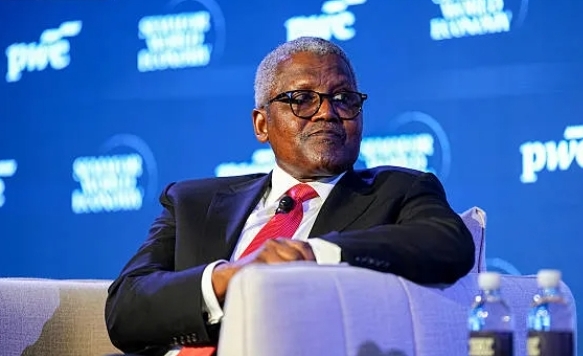
Aliko Dangote’s Wealth Climbs to $34bn After $216m Single-Day Surge
Africa’s richest man, Aliko Dangote, has seen his net worth rise to...

Business
Nigeria’s Petrol Price Drops 15.6% Year-on-Year – NBS
The average retail price of petrol in Nigeria declined by 15.6 per...



Leave a comment