A joint military operation involving the Nigerian Air Force (NAF), the Beninese Army, and suspected French forces successfully repelled a coup attempt in the Republic of Benin yesterday, restoring calm to Cotonou and reinforcing regional resolve against unconstitutional takeovers.
Early Morning Gunfire Sparks Panic
The crisis erupted at dawn when heavy gunfire was reported near the presidential residence in Cotonou. Shortly afterward, a group of soldiers appeared on Benin’s state television announcing they had overthrown President Patrice Talon.
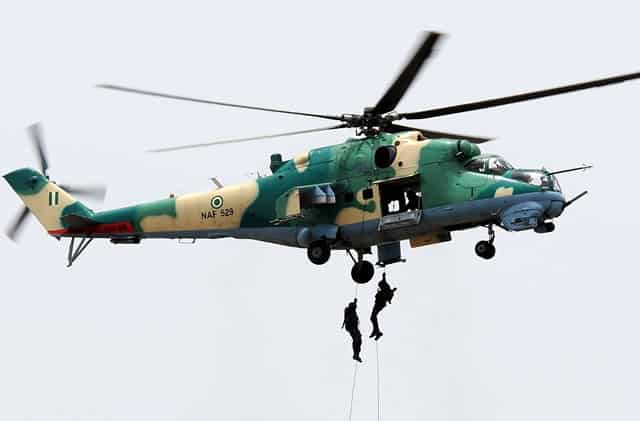
The attempted takeover triggered a rapid and coordinated response from loyalist forces, supported by NAF jets deployed from Lagos and foreign partners believed to include French military assets.
Benin Government Confirms Attempted Coup Foiled
Benin’s Interior Minister, Alassane Seidou, later addressed the nation, confirming that a small faction of soldiers had launched a mutiny aimed at destabilising the state and its institutions.
> “The Beninese Armed Forces and their leadership, true to their oath, remained committed to the republic,” Seidou said.
He added that loyalist troops “retained control of the situation and foiled the attempt.”
A presidential adviser also confirmed that President Talon was in a secure location.
NAF Jets Lead Regional Response
Flight-tracking data revealed that three aircraft entered Benin’s airspace from Nigeria during the counter-operation. Two later returned to Lagos, while the third headed toward the Kainji airbase in western Nigeria. Analysts noted that the formation of the aircraft suggested military coordination.
A French Air Force plane was also spotted circling above Cotonou, though French officials denied rumours that President Talon had taken refuge in their embassy.
Airstrikes Last 30 Minutes
Security sources disclosed that Nigerian fighter jets carried out 30 minutes of precise, coordinated strikes targeting fleeing and regrouping coup elements. The operation was executed under ECOWAS protocols.
A senior Nigerian military officer stressed Nigeria’s commitment to regional peace:
> “Our missions are intelligence-driven and aimed at preventing threats from spilling over into our borders.”
Air Commodore Ehimen Ejodame added that NAF’s actions were conducted “in full adherence to international norms and ECOWAS directives.”
Why the Rebels Struck
The mutineers, led by Lt-Col Pascal Tigri, justified their actions by accusing President Talon of mishandling national security, especially the worsening jihadist violence in northern Benin—an area increasingly targeted by militants linked to ISIS and al-Qaeda.
Their televised statement also cited:
Neglect of fallen soldiers’ families
Cuts to health services, including state-funded dialysis
Rising taxes
Restrictions on political activities
Talon, 67, is due to step down next year after completing his second term, with elections scheduled for April.
Growing Fears Over Democracy in West Africa
The attempted coup in Benin marks the sixth military assault on democracy within ECOWAS since 2020, deepening concerns about political stability in the region.
Nigeria’s Ministry of Foreign Affairs condemned the coup attempt as “unacceptable and retrogressive.”
ECOWAS expressed “dismay,” reaffirming its commitment to defend constitutional order and pledging support to Benin, including deployment of the ECOWAS Standby Force.
Wave of Coups in Africa
Since 2020, six West African states have experienced coups or attempted takeovers:
Mali (2020)
Guinea (2021)
Burkina Faso (2022)
Niger (2023)
Guinea-Bissau (2025)
Benin (2025, attempted)
Overall, Africa has witnessed over 100 coups between 1960 and 2020, with 10 successful coups recorded in the last five years alone.
Experts warn that insecurity, economic hardship, weakened institutions, and corruption continue to create fertile ground for anti-democratic interventions.
Stakeholders Warn Against Shrinking Democracy
Legal and security experts argue that military governments consistently fail to provide stability or development.
Constitutional lawyer Mike Ozekhome, SAN, said:
> “Coups are no longer fashionable globally. Soldiers have shown they are not cut out for governance. The initial excitement is short-lived.”
He urged governments to address citizens’ needs, promote pluralism, support opposition participation, and strengthen democratic institutions to prevent future coups.
Security analyst Sadeeq Abubakar, however, blamed civilian administrations for “demoralising citizens” and warned the region could see more coups unless leaders deliver quality governance.
Dr. Bello Ishaq of ICADAR called for urgent reforms to tackle the root causes of unrest, including corruption, poverty, weak justice systems, and foreign interference.
UN, Nigeria, ECOWAS Stand with Benin
The UN Special Representative for West Africa and the Sahel, Leonardo Santos Simão, condemned the attempted power grab and pledged continued support to Benin in strengthening peace and democratic governance.
Nigeria also reassured Benin of its commitment to regional stability and vowed continued cooperation to safeguard democratic values across West Africa.

National
 News MasterUpdated 10 months Ago3 Mins read
Relief in Cotonou as Nigerian Air Force and Allies Foil Coup Attempt in Benin Republic
News MasterUpdated 10 months Ago3 Mins read
Share






Related Articles

National
Nigeria Moves Against South Africa Over Killing of Citizens, Demands Accountability
The Federal Government has intensified diplomatic pressure on South Africa following the...
National
Reps Approve Bill for New Federal Medical Centre in Ikwuano, Awaits Senate Approval
The House of Representatives has passed a bill sponsored by Hon. Obi...

National
FG Targets Malnutrition with New 10-Year Nutrition Policy
The Federal Government has taken a major step toward tackling malnutrition following...

National
Kalu’s Lawyers Reject Petition Seeking Revocation of Law School Certificate
Legal representatives of the Deputy Speaker of the House of Representatives, Benjamin...




Leave a comment