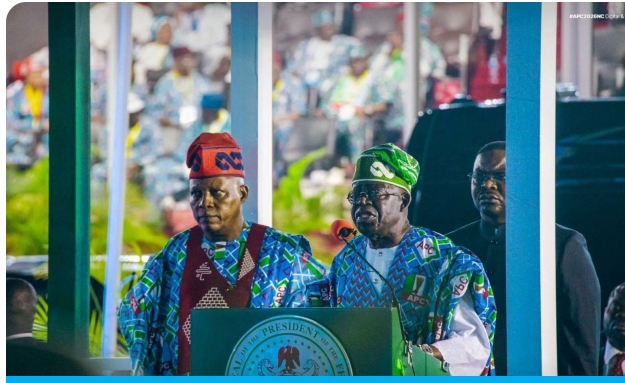
Fresh cracks may be emerging within the All Progressives Congress (APC) as disputes over access to nomination forms threaten to trigger internal conflict ahead of the 2027 general elections.
Several aspirants have accused state governors of taking control of the distribution of expression of interest and nomination forms, allegedly favouring preferred candidates and sidelining others. The development has raised concerns about transparency and fairness within the party’s internal processes.
A presidential aspirant, Chief Osifo Stanley, voiced his frustration in Abuja, claiming he had been unable to obtain the required forms despite repeated attempts. According to him, party officials have yet to provide the necessary account details for payment.
“I’ve made several calls since the weekend, but I still don’t have the account details to purchase the form,” he said.
Investigations suggest that Stanley’s experience is not isolated, as other aspirants for governorship, National Assembly and state assembly positions reportedly face similar challenges. In several states, nomination forms expected to have been distributed are yet to arrive, further fueling suspicion and dissatisfaction.
Sources within the party allege that governors and their loyalists are exerting significant influence over party structures, determining who gets access to forms and, ultimately, who emerges as candidates. This has intensified fears of candidate imposition and weakened internal democracy.
Some party stakeholders warn that the situation could lead to protests, legal battles and even electoral setbacks if not addressed promptly. One chieftain cautioned that restricting access to forms risks alienating party members and deepening divisions.
However, APC officials have dismissed claims of interference. The party clarified that nomination forms are to be obtained at its national headquarters in Abuja, not at the state level. It also insisted that governors, despite being key party leaders in their states, have no authority to manipulate the process.
Meanwhile, the APC has released its timetable for the 2027 elections, with the presidential primary scheduled for May 23, 2026. The sale of nomination and expression of interest forms began on April 25 and will close on May 2, while screening of aspirants is set for May 4 to May 8.
Under the new fee structure, presidential aspirants are required to pay ₦100 million, while governorship forms cost ₦50 million. Forms for Senate, House of Representatives and State Assembly positions are priced at ₦20 million, ₦10 million and ₦6 million respectively. Discounts apply to women, youths and persons living with disabilities.
The release of the timetable comes after earlier delays in providing payment details, which had slowed down the process and heightened concerns among aspirants.
Reacting to the unfolding situation, the Human Rights Writers Association of Nigeria (HURIWA) warned that the growing influence of governors over party structures could undermine internal democracy. The group described the trend as a dangerous concentration of power that may weaken participation and accountability.
HURIWA urged electoral authorities and lawmakers to ensure that party primaries remain transparent and inclusive, warning that failure to do so could erode public confidence in the democratic process.
Amid the controversy, political activities continue to gather pace. In Kano, two aspirants, Abdulsalam Abdulkarim Zaura and Garba Yusuf Abubakar, have already secured APC nomination forms to contest the Kano Central Senatorial seat in 2027, signaling the start of what is expected to be a competitive race.
As the APC moves closer to its primaries, the handling of its internal processes is likely to play a crucial role in shaping party unity and its chances in the next general elections.

Politics
 News MasterUpdated 5 months Ago2 Mins read
APC Faces Internal Tensions as Disputes Over Nomination Forms Deepen Ahead of 2027
News MasterUpdated 5 months Ago2 Mins read
Share



Related Articles
Politics
ORU WEST DESERVES BETTER, NO COMMUNITY WILL BE LEFT BEHIND — DCN OBIOMA OKORIE
Hon. Deacon Obioma Okorie, aspirant for Oru West State Constituency for the...
Politics
Abia’s Future in Focus: Mascot Uzor Kalu Emerges Voice of Reason Amid Abia APC Political Tension
“In the end, peace is not merely the absence of conflict, but...
Politics
Abia’s Future in Focus: Mascot Uzor Kalu Emerges Voice of Reason Amid Abia APC Political Tension
“In the end, peace is not merely the absence of conflict, but...
Politics
ADC Faces Crucial Test as Supreme Court Ruling Looms Over 2027 Ambitions
The African Democratic Congress (ADC) is at a defining crossroads as the...



Leave a comment