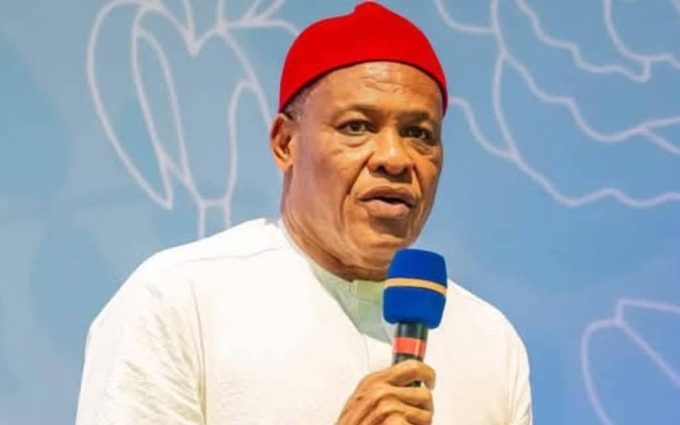

Public affairs analyst and civil society advocate, Edward Abakpa, has called for the removal of the Group Chief Executive Officer of the Nigerian National Petroleum Company Limited (NNPCL), Bashir Ojulari, over the recent agreement signed between the company and Chinese firms aimed at restarting Nigeria’s refineries.
Abakpa reportedly criticised the Memorandum of Understanding signed between NNPCL and two Chinese companies for the rehabilitation and operation of the Port Harcourt and Warri refineries, describing the arrangement as unacceptable and lacking transparency.
The agreement, signed with Sanjiang Chemical Company Limited and Xingcheng Industrial Park Operation and Management Company Limited, is expected to support the completion, operation, and expansion of the Port Harcourt and Warri refineries through a technical equity partnership model.
According to Abakpa, the Federal Government should instead focus on a comprehensive review of the refinery rehabilitation process rather than entering into fresh partnerships after billions of dollars have reportedly been spent on turnaround maintenance over the years.
He reportedly argued that Nigeria’s refining sector has continued to suffer from repeated failures despite huge financial investments, insisting that accountability and transparency must be prioritized in the management of the nation’s refineries.
NNPCL, however, maintained that the Chinese partnership represents a strategic shift from the old contractor based rehabilitation model to a performance driven technical equity arrangement aimed at ensuring operational efficiency and long term sustainability of the refineries.
The national oil company also stated that the partnership would explore opportunities in petrochemicals and gas based industries while helping Nigeria reduce dependence on imported petroleum products.
The development has continued to generate reactions within the oil and gas sector as stakeholders debate the future of Nigeria’s state owned refineries and the best approach to achieving sustainable local refining capacity.