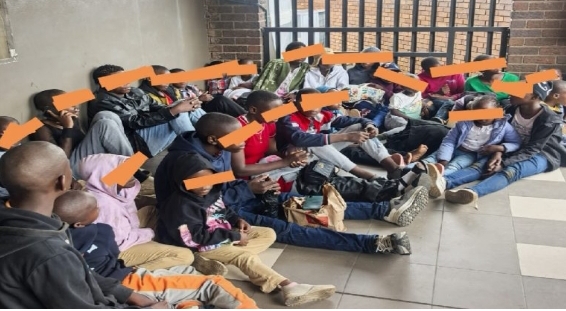
Free State Premier Maqueen Letsoha-Mathae has expressed concern over the possible involvement of government officials in facilitating illegal immigration. Her comments follow the interception of a bus near Bloemfontein last week, which was carrying undocumented Zimbabwean nationals.
The incident has reignited discussions around the effectiveness of South Africa’s border control systems and internal enforcement measures.
According to Letsoha-Mathae, initial interviews suggested that the individuals had travelled directly from Zimbabwe. However, further questioning revealed that many of them had actually come from Musina. Several passengers were found with expired passports, and their accounts of how they entered the country raised doubts, prompting calls for a thorough investigation.
She noted that the Free State’s central location makes it a key transit point for people moving across the country, which is why such interceptions are common in the province.
Meanwhile, civil society group South Africans for Constitutional Reform (SACR) has raised concerns about South Africa’s ability to implement the “First Safe Country Principle,” as outlined in the Draft Revised White Paper on Citizenship, Immigration and Refugee Protection.
The policy, recently approved by Cabinet, proposes that asylum seekers who pass through stable countries before arriving in South Africa should seek asylum in those countries first.
SACR co-founder Princess Mthombeni said there are misconceptions about the policy, with some critics claiming it aims to completely close South Africa’s borders. She clarified that the principle is widely used internationally, but warned that South Africa may struggle to enforce it under current legal frameworks.
Mthombeni explained that the country remains bound by the 1951 United Nations Refugee Convention, which it signed without reservations, as well as constitutional provisions stating that South Africa belongs to all who live in it. These legal obligations, she said, have often been used successfully in court to challenge immigration restrictions.

Featured
 News MasterUpdated 6 months Ago1 Mins read
Free State Premier raises alarm over possible official involvement in illegal immigration
News MasterUpdated 6 months Ago1 Mins read
Share


Related Articles
Featured
ARTICLE: Service Beyond the Ballot: Chief Mascot Uzor Kalu’s Enduring Commitment to the People
Leadership is not defined solely by electoral victory or the office one...
Featured
Supreme Court Set to Rule on PDP and ADC Leadership Disputes Today
Nigeria’s political landscape is on edge as the Supreme Court prepares to...
Featured
Mass Demonstrations in South Africa Highlight Rising Tensions Over Foreign Nationals
Large-scale demonstrations broke out across several major cities in South Africa as...
Featured
Article: Fixing Nigeria Starts with Fixing the States by Dr Uche Ogah
By Uche Ogah Nigeria’s development challenge is not merely a national dilemma....



Leave a comment