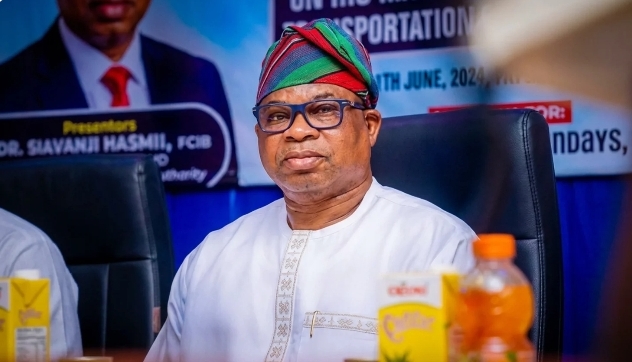
As the 2026 Osun governorship race approaches, the candidacy of Bola Oyebamiji raises a familiar question in Nigerian politics: can proven competence at the technocratic level translate into votes at the ballot box?
Oyebamiji, the APC candidate, brings an extensive résumé to the race, including 28 years in banking and finance, as well as significant public service experience. He served twice as Osun State Commissioner for Finance and later as Managing Director of the National Inland Waterways Authority (NIWA), where he focused on institutional reforms, safety standards, and engagement in global maritime discussions.
However, elections are rarely won on credentials alone. While his track record may resonate in policy circles, the real test lies in connecting with everyday voters whose priorities revolve around issues like cost of living, jobs, and infrastructure. The challenge for Oyebamiji is to translate his experience into a message that speaks directly to these concerns.
A major hurdle remains the controversial half-salary policy implemented during his time as finance commissioner. Critics continue to highlight it as evidence of policies that placed strain on citizens. His supporters, however, argue that the decision was necessary to stabilise the state’s finances during a difficult period, noting that institutions such as the World Bank later acknowledged improvements in fiscal management. Still, for many voters, past hardships may outweigh technical justifications.
Oyebamiji’s tenure at NIWA has added a new dimension to his profile. His experience at the federal level, dealing with infrastructure and regulatory systems, positions him as a candidate with broader administrative exposure and connections that could benefit Osun State. Allies argue that this background strengthens his ability to attract investment and navigate federal partnerships.
Even so, his biggest task may be communication. Translating policy achievements into relatable, everyday benefits is critical in a political environment where voters respond as much to emotional connection as to technical competence. Analysts note that while technocrats often rely on data and performance records, electoral success depends on making those achievements tangible and meaningful to the public.
There are signs, however, that his style could work in his favour. With growing voter fatigue over politics driven by showmanship, some believe there is increasing appetite for leaders who prioritise problem-solving over spectacle. If Oyebamiji can convince voters that his experience will lead to improved infrastructure, stable salaries, and economic growth, his understated approach may become an advantage.
Still, the Osun electorate has historically balanced both substance and style when making decisions. Oyebamiji’s campaign, therefore, must strike that balance, pairing his record with a compelling narrative that resonates across communities.
As the election draws nearer, the outcome will ultimately depend on whether voters see his competence not just as credible, but as relevant to their daily lives.

State News
 News MasterUpdated 5 months Ago2 Mins read
Osun 2026: Can Oyebamiji Turn Experience Into Electoral Support?
News MasterUpdated 5 months Ago2 Mins read
Share



Related Articles

State News
Delta Police Arrest Four Officers Over Fatal Shooting, PRO Describes Incident as Deeply Troubling
The Delta State Police Command has confirmed the arrest of four officers...
State News
Otti’s Chief of Staff Urges Journalists to Uphold Objectivity, Reaffirms Commitment to Good Governance
The Chief of Staff to the Abia State Governor, Pastor Caleb Ajagba,...

State News
Ondo Poly Student Found Dead in Apartment, Police Launch Investigation
A 20-year-old student of Rufus Giwa Polytechnic, Owo (RUGIPO), Ondo State, has...

State News
Fubara Targets January 2027 for Completion of New Modern Market Project in Rivers
Rivers State Governor, Siminalayi Fubara, has announced that the ongoing construction of...




Leave a comment