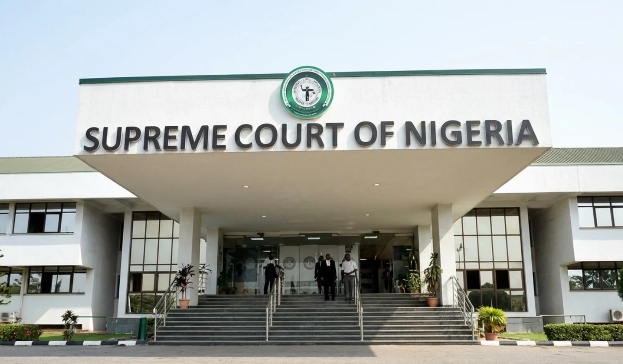
The African Democratic Congress (ADC) is at a defining crossroads as the Supreme Court prepares to deliver a pivotal judgment today on the party’s lingering leadership crisis, an outcome that could shape its readiness for the 2027 general elections.
The apex court is expected to rule on competing claims to the party’s national leadership, with factions aligned to former Senate President David Mark and Nafiu Bala Gombe locked in dispute. The case, scheduled for judgment at 2:00 p.m., stems from conflicting rulings by lower courts over who holds legitimate authority within the party.
Legal experts and political observers say the verdict could determine whether the ADC stabilises in time to effectively participate in the next electoral cycle. Concerns have already been raised that delays in resolving the dispute may jeopardise the party’s chances, especially following moves by the Independent National Electoral Commission (INEC) to withdraw recognition based on an earlier appellate decision.
A senior lawyer involved in the matter had warned that failure to resolve the issue promptly could expose the party to the risk of being excluded from the ballot, potentially disenfranchising its supporters.
Meanwhile, a recent Federal High Court judgment has intensified the situation. Justice Joyce Abdulmalik barred INEC from recognising any congress organised by a disputed caretaker leadership and affirmed the legitimacy of existing state executives. The court also restrained David Mark and others from interfering with the tenure and functions of those elected structures.
The ruling emphasised that political parties must adhere strictly to their constitutions, noting that any breach of due process justifies judicial intervention. It further nullified the appointment of a “congress committee” not recognised under the party’s constitution and upheld the authority of state executives to conduct party congresses.
In response, the ADC said it would review the judgment before deciding its next steps.
Reactions within the party have been mixed. Former presidential candidate Dumebi Kachikwu welcomed the ruling, describing it as a restoration of constitutional order and a rejection of parallel leadership structures. He insisted that the party cannot be controlled through unconstitutional means and expressed confidence that ADC would participate fully in the 2027 elections.
However, founding National Chairman Ralph Nwosu struck a more cautionary tone, warning that excluding the party from the ballot could have serious implications for the electoral process. He also claimed the party is gaining momentum through ongoing coalition efforts and increasing membership.
Amid the legal uncertainty, political activity within the ADC continues to intensify. Former Vice President Atiku Abubakar recently met with former Transport Minister Rotimi Amaechi in Abuja as part of consultations ahead of the party’s presidential primaries. Other aspirants, including Peter Obi, are also engaging key stakeholders across the country.
Outside the party, elder statesman Bode George called for respect for the rule of law and stressed the importance of opposition parties in sustaining democracy. He warned that undermining opposition structures could weaken public trust and democratic stability.
With the Supreme Court’s verdict imminent, the ADC’s internal cohesion and electoral future now hang in the balance, as stakeholders await a decision that could either restore order or deepen the crisis ahead of 2027.

Politics
 News MasterUpdated 6 months Ago2 Mins read
ADC Faces Crucial Test as Supreme Court Ruling Looms Over 2027 Ambitions
News MasterUpdated 6 months Ago2 Mins read
Share






Related Articles

Politics
ORU WEST DESERVES BETTER, NO COMMUNITY WILL BE LEFT BEHIND — DCN OBIOMA OKORIE
Hon. Deacon Obioma Okorie, aspirant for Oru West State Constituency for the...

Politics
Abia’s Future in Focus: Mascot Uzor Kalu Emerges Voice of Reason Amid Abia APC Political Tension
“In the end, peace is not merely the absence of conflict, but...
Politics
Abia’s Future in Focus: Mascot Uzor Kalu Emerges Voice of Reason Amid Abia APC Political Tension
“In the end, peace is not merely the absence of conflict, but...

Politics
Adelabu, Others Secure APC Forms Ahead of Oyo 2027 Governorship Race
Former Minister of Power, Adebayo Adelabu, has taken a formal step toward...




Leave a comment