

The Abia State Government has granted formal approval for the establishment of a Small and Medium Enterprises (SME) Village and Innovation Hub in Aba, in a strategic effort to stimulate economic expansion and reinforce the growth of entrepreneurship within the state.
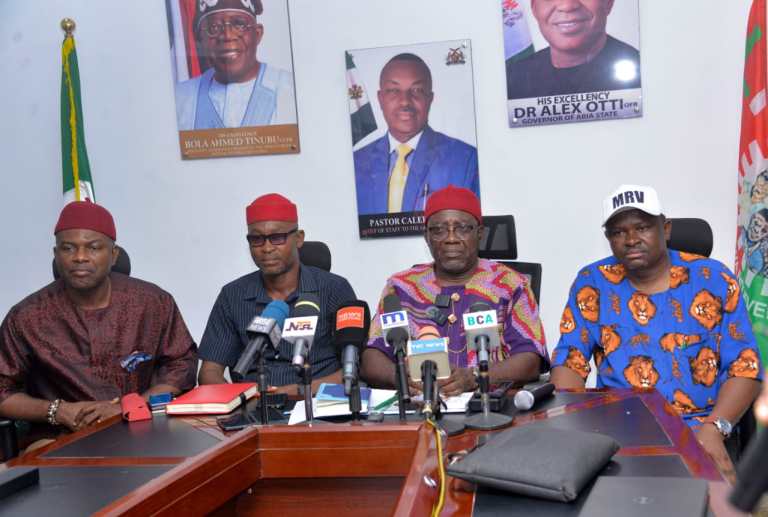
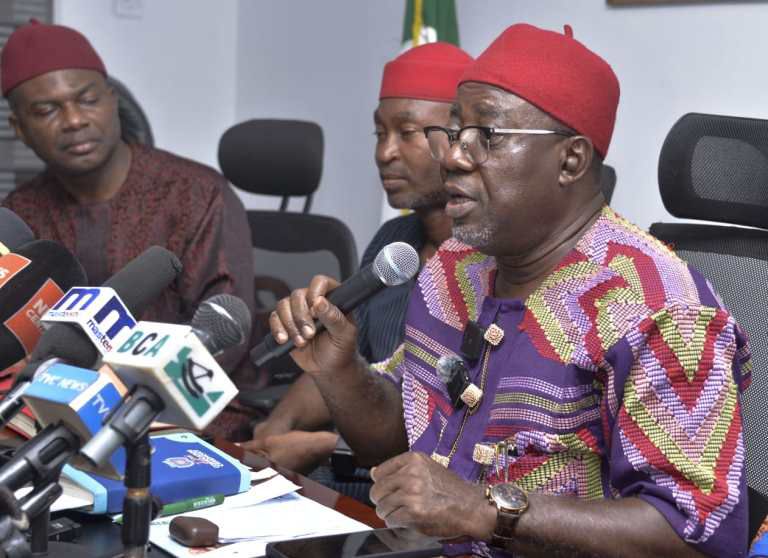
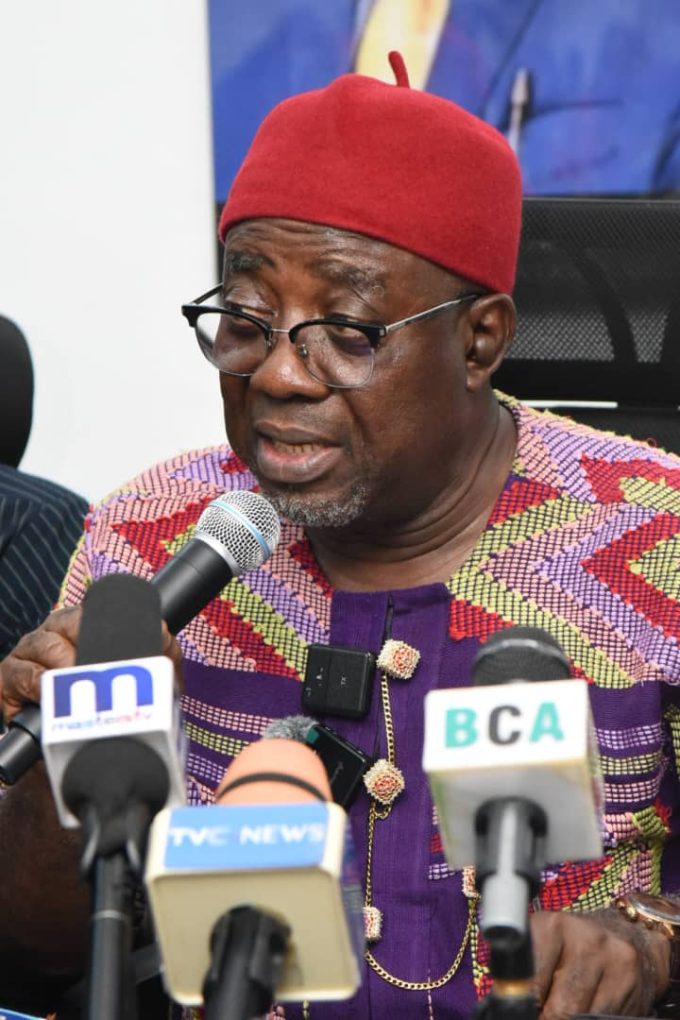
The Commissioner for Information, Prince Okey Kanu, made this known on Tuesday during a press briefing at the Government House in Umuahia, shortly after the State Executive Council meeting chaired by Governor Alex Otti.
Prince Kanu stated that the proposed SME Village represents a deliberate policy initiative targeted at strengthening SMEs as a critical engine of Abia’s economic development.
According to him, the project, upon completion, will provide an organised commercial space for computer merchants, mobile phone dealers, repair technicians, and other categories of small business operators. He added that it would significantly ease congestion in parts of Aba presently overwhelmed by uncontrolled and unregulated trading activities.
The commissioner further disclosed that a one-stop Export Growth Laboratory and Trade Support Facility, situated within the Ogbonnaya Onu Polytechnic premises in Aba, is nearing completion and is expected to be commissioned before the end of February.
He described the initiative as part of the current administration’s broader economic blueprint aimed at fostering an enabling environment for enterprise sustainability, employment generation, and industrial advancement across Abia State.
“These facilities are intended to dismantle the bureaucratic impediments that often confront small businesses, manufacturers and exporters, thereby positioning Aba as a more competitive and globally attractive commercial destination,” Kanu explained.
He noted that once fully operational, the Export Growth Lab would provide support services including business registration processes, NAFDAC certification facilitation, and other trade-related approvals.
In another significant development, Prince Kanu announced that the state government is set to introduce an electronic ticketing system for its recently launched electric bus mass transit programme.
He recalled that the pilot phase of the scheme has provided free transportation services to Abia residents since inception, but clarified that the free rides would be discontinued by the end of February.
“Upon the full rollout of the mass transit scheme, commuters will be required to pay subsidised token fares to ensure the long-term sustainability of the programme,” he stated.
The commissioner explained that the fare structure would be determined through an analysis of prevailing transport market rates, including those of tricycles (keke) and minibuses, while also adopting a distance-based pricing model rather than arbitrary stop-based charges. Government-backed fare moderation, he added, would ensure affordability.
He further revealed that the electronic ticketing framework would eliminate cash transactions and the traditional role of conductors in fare collection.
“The system will incorporate contactless smart cards, prepaid and pay-as-you-go payment options, time-stamped transaction records, and a centralised revenue monitoring dashboard,” he said.
Providing operational statistics from the pilot phase, Prince Kanu disclosed that between December 22 and January 29, the electric bus scheme transported a total of 106,116 passengers, covering an accumulated distance of 74,796.6 kilometres.
He noted that an average of 14 buses were deployed daily, each conveying approximately 3,034 passengers per day, adding that the pilot exercise has offered valuable insights into intra-city and inter-city commuter demand.
The Senior Special Assistant to the Governor on Transportation, Dr Obioma Nwaogbe, said the government is intensifying public sensitisation campaigns, recognising that many residents are more accustomed to cash-based payments.
“Our people are used to paying with cash, which is why we are conducting sensitisation. The world is moving towards digital systems. The card is simply tap-and-pay,” Dr Nwaogbe explained.
He added that vendors would be stationed at bus shelters to assist commuters in loading their transport wallets, while agents would be available to support elderly passengers unfamiliar with electronic payment methods.
Dr Nwaogbe further assured that the introduction of electric buses would not displace existing transport operators such as keke riders, stressing that the initiative is designed to provide commuters with additional options rather than eliminate current services.
He also emphasised that boarding would be orderly, with passengers expected to queue in a structured manner.
The briefing was attended by the Special Adviser to the Governor on Media and Publicity, Mr Ferdinand Ekeoma.













Leave a comment