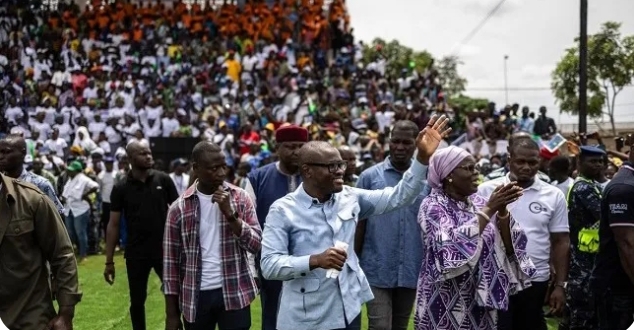
Romuald Wadagni, Benin’s Minister of Finance, has won the country’s presidential election in a decisive landslide, securing 94 percent of the vote, according to provisional results released on Tuesday, April 14, 2026.
The 49-year-old, widely seen as the preferred successor to outgoing President Patrice Talon, defeated his closest rival, Paul Hounkpe, who has since conceded defeat. Hounkpe extended his congratulations and urged citizens to uphold unity and mutual respect despite the overwhelming outcome.
The Independent National Electoral Commission (CENA) reported a voter turnout of 58.75 percent nationwide, although observers noted lower participation in major cities such as Cotonou and Porto-Novo.
Wadagni’s campaign centered on his stewardship of Benin’s economic growth and infrastructure development during his time as Finance Minister. However, the election was not without controversy. Opposition groups and civil society organizations raised concerns over reported irregularities at several polling units, citing around 100 incident alerts. Additionally, the main opposition party, The Democrats, was unable to present a candidate after its leader failed to meet the parliamentary endorsement requirements introduced under recent electoral reforms.
As president-elect, Wadagni faces significant challenges, including addressing income inequality, with over 30 percent of the population living in poverty, and tackling rising security threats linked to jihadist activities in the country’s northern regions.
Following constitutional changes, Wadagni will serve a single seven-year term, with the next general elections scheduled for 2033.

Featured
 News MasterUpdated 6 months Ago1 Mins read
Romuald Wadagni Wins Benin Presidential Election by Wide Margin
News MasterUpdated 6 months Ago1 Mins read
Share



Related Articles
Featured
ARTICLE: Service Beyond the Ballot: Chief Mascot Uzor Kalu’s Enduring Commitment to the People
Leadership is not defined solely by electoral victory or the office one...
Featured
Supreme Court Set to Rule on PDP and ADC Leadership Disputes Today
Nigeria’s political landscape is on edge as the Supreme Court prepares to...
Featured
Mass Demonstrations in South Africa Highlight Rising Tensions Over Foreign Nationals
Large-scale demonstrations broke out across several major cities in South Africa as...
Featured
Article: Fixing Nigeria Starts with Fixing the States by Dr Uche Ogah
By Uche Ogah Nigeria’s development challenge is not merely a national dilemma....



Leave a comment