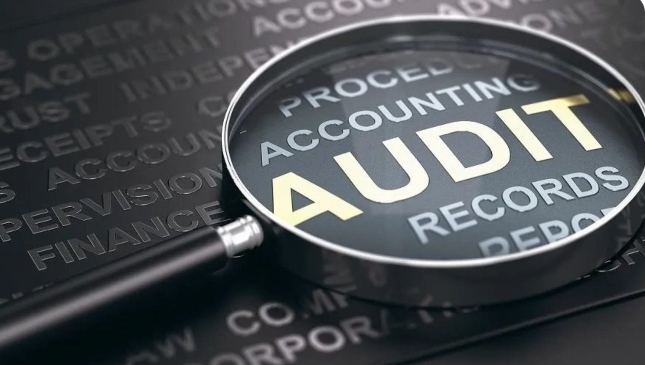
Concerns are mounting over the Federal Government’s commitment to transparency and fiscal discipline as persistent weaknesses in Nigeria’s audit system continue to raise doubts about public spending.
Experts and stakeholders say poor audit practices, delayed financial reporting, and limited disclosure have created an opaque system that undermines accountability and weakens confidence in government finances. The situation is further compounded by political patronage, inefficiencies in the public service, and corruption.
Four months into 2026, the Federal Government is yet to submit its audited financial statements for 2024 and 2025 to the National Assembly, as required by law. The most recent audit report reviewed by lawmakers remains that of 2022, while the 2023 report was only recently forwarded and is still awaiting legislative review.
Findings indicate that the 2024 audit is still being prepared, while work on the 2025 financial statement has yet to begin, partly due to ongoing budget implementation. This delay has made it difficult for the Office of the Accountant-General of the Federation to produce consolidated reports on time.
Earlier this year, the House of Representatives Public Accounts Committee directed the Accountant-General’s office to submit outstanding financial statements for 2023, 2024, and 2025 before October 2026. The committee expressed frustration over repeated failures to meet statutory deadlines, noting that the Fiscal Responsibility Act requires audited financial statements to be published within six months after each financial year.
Although the Office of the Auditor-General stated that the 2023 and 2024 financial statements were submitted before the March 31 deadline, only the 2023 audit report has been completed and forwarded to the National Assembly, where it is yet to be considered.
Delayed audits have long plagued Nigeria’s public finance system, with reports often submitted years after the relevant financial period. In many cases, officials responsible for the expenditures have already left office, making accountability difficult. For instance, the 2022 audit report was only submitted in 2025.
Analysts warn that such delays weaken oversight and render audit findings less effective. Large sums of public funds are frequently flagged as unaccounted for or tied to unretired advances, indicating gaps in documentation and financial control.
Investment banker Tolulope Alayande noted that late audit submissions defeat their purpose, as issues requiring urgent attention are only discovered long after the fact. He added that many government agencies fail to respond adequately to audit queries, with sanctions rarely enforced.
Similarly, governance experts argue that the absence of a comprehensive audit law, despite a pending bill awaiting presidential assent, has worsened the situation by failing to set clear timelines and enforce compliance.
Concerns have also been raised about weakening legislative oversight following the defection of opposition lawmakers to the ruling All Progressives Congress (APC), including the Chairman of the Senate Public Accounts Committee, Aliyu Wadada Ahmed, who retained his position after switching parties.
Observers warn that Nigeria’s audit challenges are not just administrative lapses but systemic issues with serious implications for governance, service delivery, and public trust. They stress that without timely audits and strict enforcement, financial mismanagement will continue with little consequence.

National
 News MasterUpdated 6 months Ago2 Mins read
FG Spending Under Scrutiny Over Weak Audit System, Delayed Reports
News MasterUpdated 6 months Ago2 Mins read
Share




Related Articles
National
Nigeria Moves Against South Africa Over Killing of Citizens, Demands Accountability
The Federal Government has intensified diplomatic pressure on South Africa following the...
National
Reps Approve Bill for New Federal Medical Centre in Ikwuano, Awaits Senate Approval
The House of Representatives has passed a bill sponsored by Hon. Obi...
National
FG Targets Malnutrition with New 10-Year Nutrition Policy
The Federal Government has taken a major step toward tackling malnutrition following...

National
Kalu’s Lawyers Reject Petition Seeking Revocation of Law School Certificate
Legal representatives of the Deputy Speaker of the House of Representatives, Benjamin...




Leave a comment