The Federal Government has firmly dismissed allegations by United States Senator Ted Cruz accusing Nigerian authorities of orchestrating a genocide against Christians and permitting the destruction of thousands of churches.
Responding through the Minister of Information and National Orientation, Mohammed Idris, on Wednesday, the government described Cruz’s assertions as “false, baseless, and misleading.”
“It’s absolutely absurd to claim that over 52,000 Christians have been killed or that 20,000 churches were destroyed. There’s no credible evidence to support such numbers,” Idris stated via his media aide, insisting that the Nigerian government is committed to protecting all citizens regardless of faith.
He emphasized that Nigeria is a multi-faith nation where Christians, Muslims, and others coexist peacefully, adding that no official would ever collude with extremists to target any religion.
While acknowledging the persistence of violent extremism, Idris noted that both Christians and Muslims have been victims of such attacks. “It’s wrong and unfair to portray these tragedies as a deliberate plan to exterminate Christians,” he said.
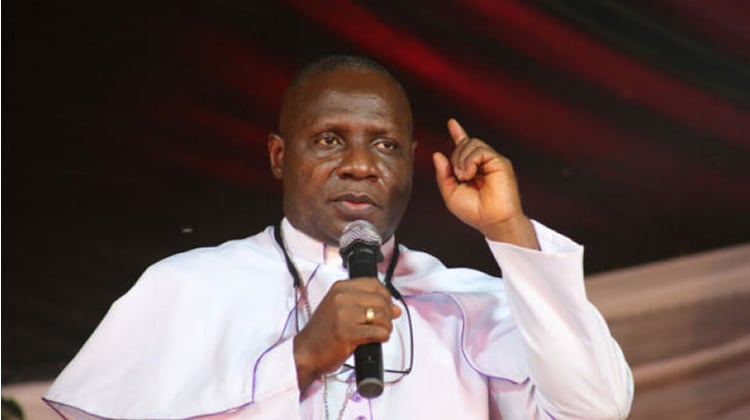
However, the Christian Association of Nigeria (CAN) took a more nuanced stance. In a statement signed by its President, Archbishop Daniel Okoh, CAN acknowledged that “many Christian communities, especially in the North, have suffered severe attacks, loss of life, and destruction of places of worship.”
Titled “Christian Genocide: CAN Clarifies Position,” the statement urged the government to confront the realities of insecurity instead of denial.
“Nigeria’s healing will not come from denial or blame, but from courage — the courage to face our collective failures, grieve together, and rebuild trust,” CAN declared.
The association highlighted its consistent advocacy for persecuted Christians, noting efforts to document religiously motivated attacks, engage international partners, and petition global bodies such as the International Criminal Court. CAN further lamented that government responses are often “slow or insufficient,” calling for urgent and transparent action to protect vulnerable communities and ensure justice for victims.
Meanwhile, the House of Representatives joined the Federal Government in condemning Cruz’s proposed Nigeria Religious Freedom Accountability Act, which seeks to designate Nigeria as a “Country of Particular Concern” — a move that could lead to sanctions on Nigerian officials under the Global Magnitsky Act.
Presenting a motion of urgent national importance, Deputy Speaker Benjamin Kalu argued that Nigeria’s Constitution guarantees religious freedom and prohibits the adoption of any state religion.
Kalu stressed that the country’s insecurity is driven by complex factors such as insurgency, banditry, farmer-herder conflicts, and communal violence, which affect citizens of all faiths.
“The claim that the Nigerian government targets Christians is not only false but also dangerous,” he said, warning that such external misrepresentations could undermine Nigeria’s sovereignty and strain relations with the U.S.
Majority Leader Prof. Julius Ihonvbere described the move as part of a misinformation campaign aimed at “demarketing Nigeria.” Katsina lawmaker Sada Soli and Edo representative Billy Osawaru called for stronger diplomatic engagement, lamenting that Nigeria currently lacks an ambassador to the U.S.
The House mandated relevant committees to coordinate a diplomatic response within 21 days, engage the U.S. Congress and Mission in Nigeria, and propose a Nigeria–U.S. joint fact-finding dialogue on religious freedom.
Resolutions from the motion are to be forwarded to the Presidency, Ministry of Foreign Affairs, U.S. Congress leadership, the Department of State, the African Union, and ECOWAS.

Politics
 News MasterUpdated 12 months Ago2 Mins read
🇳🇬FG Dismisses Cruz’s Genocide Claims; CAN Urges Honest Dialogue
News MasterUpdated 12 months Ago2 Mins read
Share



Related Articles
Politics
ORU WEST DESERVES BETTER, NO COMMUNITY WILL BE LEFT BEHIND — DCN OBIOMA OKORIE
Hon. Deacon Obioma Okorie, aspirant for Oru West State Constituency for the...
Politics
Abia’s Future in Focus: Mascot Uzor Kalu Emerges Voice of Reason Amid Abia APC Political Tension
“In the end, peace is not merely the absence of conflict, but...
Politics
Abia’s Future in Focus: Mascot Uzor Kalu Emerges Voice of Reason Amid Abia APC Political Tension
“In the end, peace is not merely the absence of conflict, but...
Politics
ADC Faces Crucial Test as Supreme Court Ruling Looms Over 2027 Ambitions
The African Democratic Congress (ADC) is at a defining crossroads as the...



Leave a comment