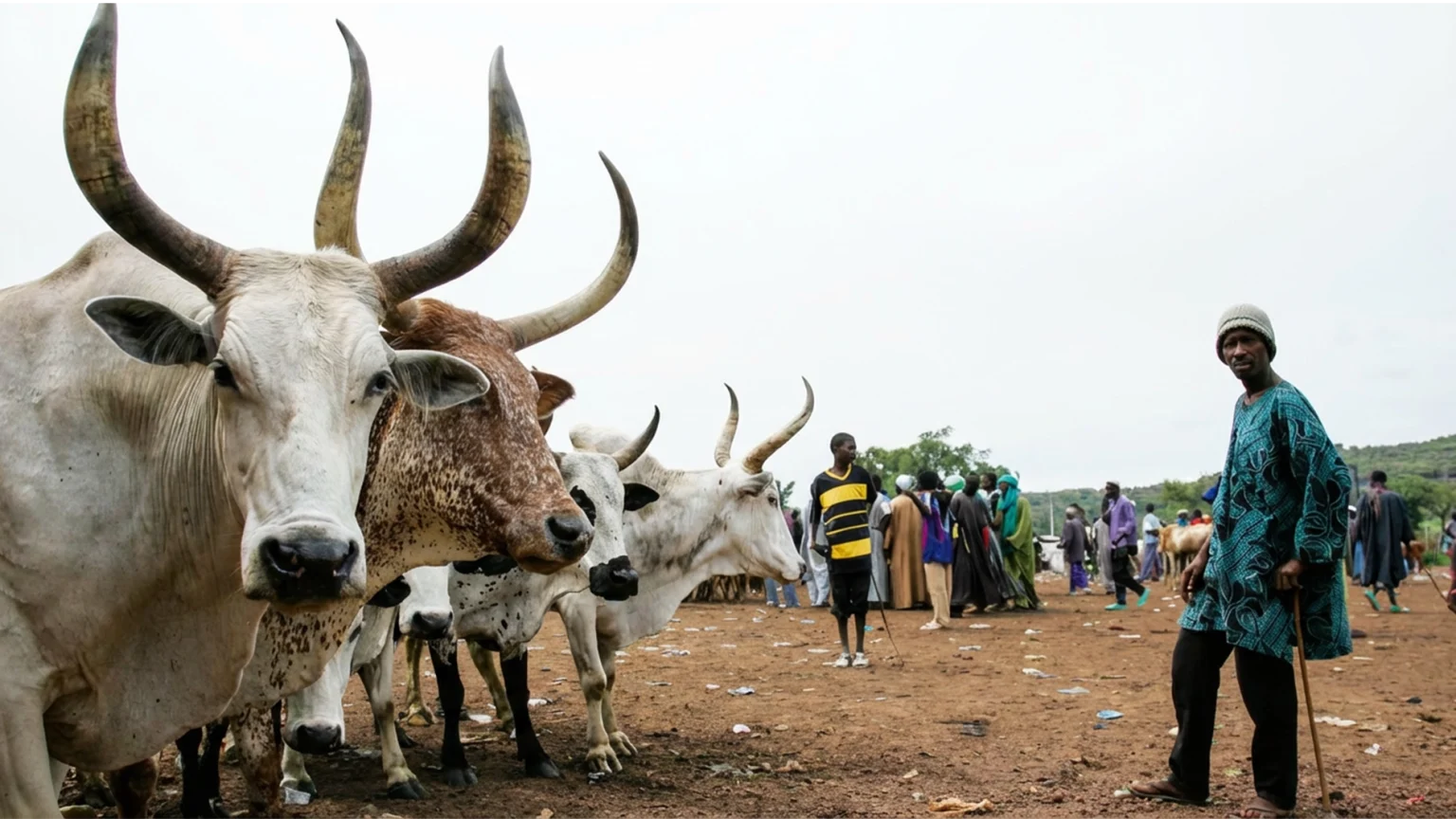
Farmer-herder conflicts have claimed about 3,000 lives and displaced more than 300,000 Nigerians between 2018 and 2023, according to data from the Nigerian Security Tracker (2024).
The figures were highlighted in Abuja by Farouk Bala of the Youth Against Disaster Initiative (YADI), who also referenced the 2024 Nigeria Watch Report. The report recorded an additional 567 deaths linked to such clashes across 20 states and the Federal Capital Territory within a year.
Bala described the recurring violence as a national security and humanitarian concern, urging the Federal Government to accelerate the introduction of structured ranching as a long-term solution. He said ranching should be viewed not only as a conflict-management strategy but also as a critical economic reform capable of modernising Nigeria’s livestock industry and boosting export earnings.
Although Nigeria’s livestock sector is estimated to contribute over $32 billion to the nation’s Gross Domestic Product (GDP), Bala noted that export performance remains weak. Despite having an estimated 20 million cattle, ranking among the top 15 globally, Nigeria reportedly generated only $172,000 from cow exports in 2024. Live animal exports stood at $1.15 million in 2021, while earnings from meat and edible offal exports remained below $200,000.
He contrasted this with global competitors, pointing out that Brazil earned about $9.3 billion from beef exports in 2024, the United States $7.2 billion, Australia about $8 billion, and Uruguay $2.85 billion through high-quality and traceable beef production.
According to Bala, the disparity reflects systemic challenges, including open grazing practices, poor traceability systems, inadequate cold-chain infrastructure and limited compliance with international health and sanitary standards.
He argued that establishing geographically defined ranching zones would reduce disputes by enabling legal and mediation-based conflict resolution instead of violence. Settled pastoral communities, he added, would also enhance cooperation with security agencies.
YADI maintained that ranching reform is not intended to undermine cultural practices or dispossess communities of land, but rather to modernise livestock production while preserving livelihoods and social harmony.
The group called for a comprehensive, inclusive and incentive-driven framework to ensure the success of ranching reforms. It also urged the National Orientation Agency (NOA), the media, civil society organisations, and traditional and religious leaders to lead sustained public awareness campaigns on the economic and security benefits of structured ranching.

Featured
 News MasterUpdated 7 months Ago1 Mins read
3,000 Killed, 300,000 Displaced in Five Years of Farmer-Herder Clashes – Report
News MasterUpdated 7 months Ago1 Mins read
Share






Related Articles

Featured
ARTICLE: Service Beyond the Ballot: Chief Mascot Uzor Kalu’s Enduring Commitment to the People
Leadership is not defined solely by electoral victory or the office one...

Featured
Supreme Court Set to Rule on PDP and ADC Leadership Disputes Today
Nigeria’s political landscape is on edge as the Supreme Court prepares to...

Featured
Mass Demonstrations in South Africa Highlight Rising Tensions Over Foreign Nationals
Large-scale demonstrations broke out across several major cities in South Africa as...

Featured
Article: Fixing Nigeria Starts with Fixing the States by Dr Uche Ogah
By Uche Ogah Nigeria’s development challenge is not merely a national dilemma....




Leave a comment