Concerns about rising inflation are growing following a sharp surge in global oil prices triggered by escalating tensions in the Middle East and the emergence of Mojtaba Khamenei as Iran’s new Supreme Leader.
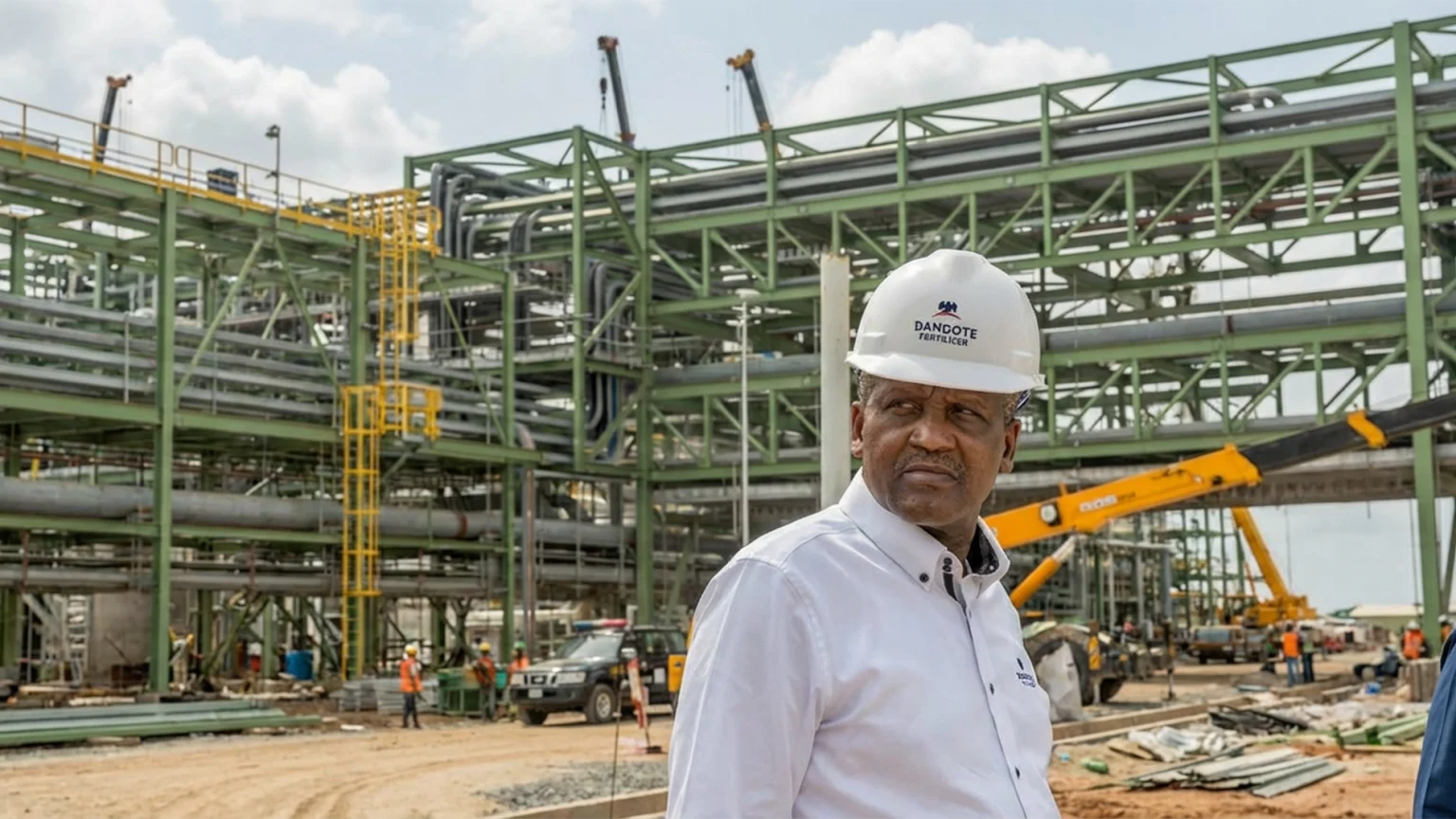
The development has heightened fears of a possible global economic shock, even as the Managing Director and Chief Executive Officer of Dangote Refinery and Petrochemicals, David Bird, assured that the refinery would continue to meet Nigeria’s fuel demand despite the volatility in international oil markets.
Bird said the refinery remains committed to supplying petroleum products to the domestic market, noting that Nigeria’s growing refining capacity would help the country avoid the supply shortages often experienced by nations that rely heavily on fuel imports.
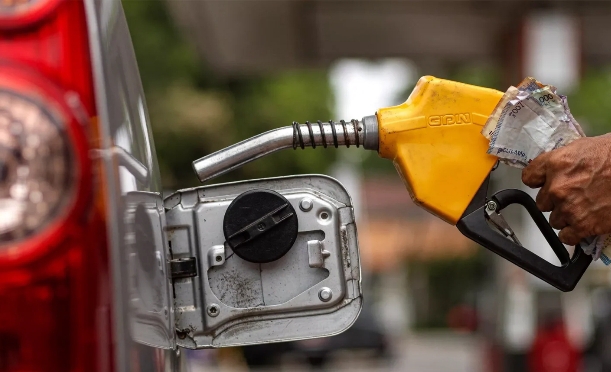
His assurance came as the refinery announced another increase in fuel prices, raising the gantry price of Premium Motor Spirit (petrol) to N1,175 per litre, up from N995, while diesel rose to N1,620 per litre from N1,430 per litre.
The price adjustment has intensified worries about further pressure on household incomes, transportation costs and the general cost of living.
Industry stakeholders warn that if the Middle East conflict continues, petrol prices in Nigeria could rise to N2,000 per litre, while diesel could reach N3,000 per litre.
Global oil markets reacted strongly to the geopolitical tensions, with benchmark crude prices rising sharply during early trading. Brent crude climbed to around $116 per barrel, while U.S. West Texas Intermediate (WTI) traded above $108 per barrel, representing one of the steepest single-day increases in recent years.
The rally followed an escalation of hostilities involving Iran, Israel and the United States, including reported attacks on energy facilities and military targets in the region. Concerns over possible disruptions to oil supply and tanker movements along major shipping routes have further unsettled global energy markets.
The situation was compounded by the leadership transition in Iran following the death of Ayatollah Ali Khamenei and the appointment of his son, Mojtaba Khamenei, a move seen as maintaining the country’s hardline political stance.
Beyond energy markets, global financial markets also experienced declines, with futures tied to the S&P 500 and Nasdaq-100 falling amid rising geopolitical uncertainty.
During a media briefing, Bird explained that while Dangote Refinery operates locally, its production costs remain closely linked to global market conditions, particularly crude oil prices and shipping costs.
According to him, crude supplied to the refinery is still priced in line with international benchmarks, even under Nigeria’s crude-for-naira arrangement.
He also highlighted the sharp increase in freight charges affecting the global oil trade, revealing that tanker shipping costs have risen from about $800,000 to roughly $3.5 million per shipment.
Bird maintained that domestic refining offers Nigeria an important advantage by improving fuel supply stability.
“Domestic refining gives Nigeria supply security, ensuring the country avoids fuel shortages and long queues even when global markets are disrupted,” he said.
However, experts argue that the presence of local refineries does not automatically guarantee significantly cheaper fuel.
The Chief Executive Officer of the Centre for the Promotion of Private Enterprise (CPPE), Dr Muda Yusuf, explained that crude oil accounts for the largest share of refining costs globally, meaning that rising crude prices inevitably translate into higher fuel prices.
He noted that crude prices have surged from about $65 per barrel to over $100 per barrel in recent weeks, pushing up the cost of refined petroleum products worldwide.
Because petroleum products are traded within an integrated global market, Yusuf said fluctuations in crude oil prices are quickly transmitted to domestic fuel prices in most economies, including Nigeria.
He added that domestic refineries often pay a premium of between $3 and $6 per barrel to secure crude supplies, meaning local refining operations remain exposed to global price movements.
While domestic refining reduces costs associated with shipping, marine insurance, port handling and logistics, Yusuf said it cannot completely shield Nigeria from global oil price volatility.
Meanwhile, the Petroleum Products Retail Outlets Owners Association of Nigeria (PETROAN) has urged the Nigerian National Petroleum Company (NNPC) Limited to accelerate production at the country’s state-owned refineries.
The association’s National President, Billy Gillis-Harry, called on NNPC’s Group Chief Executive Officer, Bayo Ojulari, to ensure the immediate commencement of operations at the Area 5 plant of the Port Harcourt refinery and the Warri refinery.
He said boosting domestic refining capacity would help reduce Nigeria’s exposure to international market shocks and strengthen energy security.
The latest increase marks the fourth fuel price adjustment by the Dangote Refinery since early March, raising concerns among marketers and consumers about the potential ripple effects on pump prices, transport fares and overall inflation.

Business
 News MasterUpdated 7 months Ago3 Mins read
Inflation fears rise as fuel prices climb, Dangote Refinery pledges steady supply
News MasterUpdated 7 months Ago3 Mins read
Share






Related Articles

Business
Hon. Amobi Ogah Engages Global Stakeholders at OTC Texas As Nigeria’s Energy Future Comes in Focus
U.S., Texas — Nigeria’s push for innovation and global collaboration in the...
Business
Fear of Oil Glut as NNPCL Raises Crude Prices Across Grades
Concerns are growing over a possible global oil glut as the Nigerian...
Business
Aliko Dangote’s Wealth Climbs to $34bn After $216m Single-Day Surge
Africa’s richest man, Aliko Dangote, has seen his net worth rise to...
Business
Nigeria’s Petrol Price Drops 15.6% Year-on-Year – NBS
The average retail price of petrol in Nigeria declined by 15.6 per...




Leave a comment