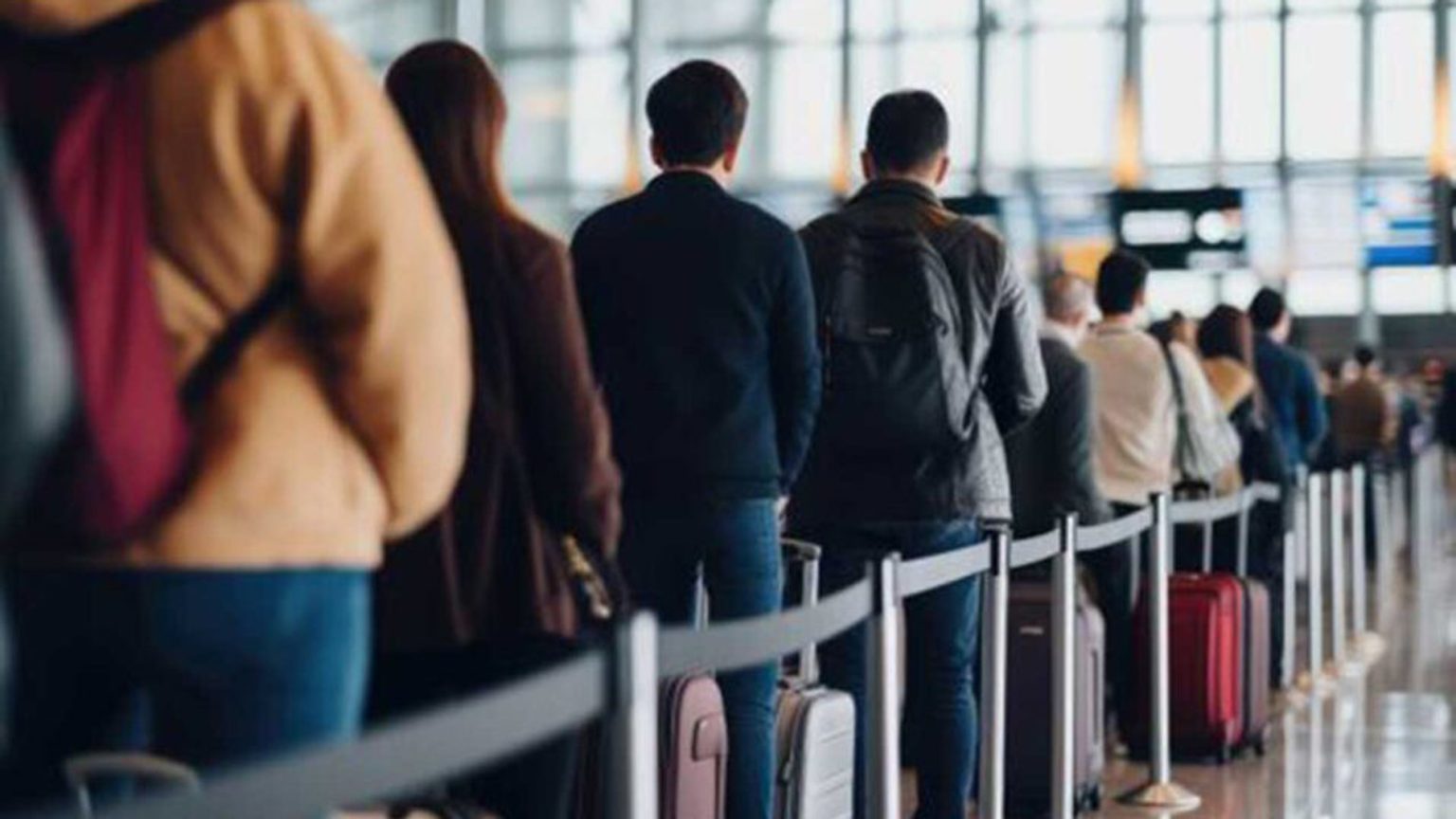
The ongoing conflict involving the United States, Israel, and Iran is significantly disrupting global air travel, triggering a sharp rise in ticket prices and widespread flight cancellations.
Airfares on several international routes increased by more than 100 per cent on Monday as airlines suspended numerous inbound and outbound flights across the Middle East. The sudden disruptions have forced passengers to cancel or postpone trips while travel agencies report growing numbers of refund requests.
Major Middle Eastern carriers, including Emirates, Etihad Airways, and Middle East Airlines (MEA), have indefinitely halted their services. Key aviation hubs such as Dubai, Abu Dhabi, Doha, and Tel Aviv are also experiencing severe restrictions, with thousands of flights cancelled and limited operations still in place.
The crisis is affecting not only travellers but also the movement of essential goods, including critical medicines like cancer treatments that require refrigeration. Pharmaceutical companies are now exploring alternative routes, including trucking supplies from airports in Saudi Arabia or using hubs in Istanbul and Oman.
In Nigeria, the disruption has a particularly strong impact because a large portion of international travel relies on Middle Eastern transit hubs. Travel agents estimate that about 40 to 45 per cent of passengers travelling in and out of Nigeria connect through the region on their way to Europe, America, or Asia.
Four Middle Eastern airlines—Emirates, Qatar Airways, Etihad Airways, and MEA—currently operate flights from Lagos and Abuja, offering about 47 weekly services and over 17,600 seats combined. However, with several routes now suspended, travellers are turning to European and African airlines for alternatives.
Searches on airline booking platforms show a dramatic rise in ticket prices. A British Airways return economy ticket booked for March 20 with a return on April 1 now costs about $2,656 (approximately ₦3.6 million), compared to about $1,050 (₦1.4 million) before the conflict. Similarly, Lufthansa return fares to Frankfurt have climbed to about $1,100–$1,150, up from around $583–$606 in February.
Group Managing Director of Finchglow Holdings Limited, Bankole Bernard, said the conflict has deeply affected global travel patterns because many flights from Nigeria pass through Middle Eastern hubs.
He noted that travellers heading to the Far East are now forced to use European airlines or African carriers such as Ethiopian Airlines, Kenya Airways, and RwandAir. However, European airlines often have limited luggage capacity compared with Middle Eastern carriers, creating additional challenges for Nigerian travellers.
Bernard also explained that the Middle East had become a preferred destination for many tourists due to relatively easier visa processes compared with Europe or the United States. According to him, the ongoing conflict could slow tourism growth and economic development in the region.
President of the National Association of Nigerian Travel Agencies (NANTA), Dr. Yinka Folami, warned that the crisis could significantly reduce global travel activity. He said between 35 and 40 per cent of flights linked to Nigeria could be affected by the disruption, leading to lower revenues for travel agencies as cancellations increase.
Meanwhile, aviation analysts say the wider conflict is also disrupting global trade routes. Industry analyst Charles Amokwu explained that tensions affecting key maritime routes like the Strait of Hormuz and the Suez Canal are creating serious supply chain challenges.
Ships are being forced to reroute around the Cape of Good Hope, adding between 12 and 19 days to Asia–Europe shipping journeys. The delays are reducing global cargo capacity and increasing costs for shipping companies.
Freight rates for container shipments have also surged dramatically, rising to between $4,000 and $5,000 per container on some routes, representing increases of up to 500 per cent since the conflict escalated.
While higher oil prices are boosting government revenues in oil-producing countries like Nigeria, analysts warn that ordinary households may face higher living costs because the country still depends heavily on imported goods and refined fuel.
Meanwhile, Emirates confirmed it has again suspended all flights to and from Dubai following new strikes targeting facilities near the airport. The airline urged passengers not to travel to Dubai International Airport while authorities assess the situation.
The carrier said flight operations will remain suspended until further notice, emphasising that passenger safety remains its top priority as it works with aviation authorities to determine when services can safely resume.

Featured
 News MasterUpdated 7 months Ago3 Mins read
International Travel Disrupted as Airfares Surge Over 100% Amid Flight Suspensions
News MasterUpdated 7 months Ago3 Mins read
Share






Related Articles

Featured
ARTICLE: Service Beyond the Ballot: Chief Mascot Uzor Kalu’s Enduring Commitment to the People
Leadership is not defined solely by electoral victory or the office one...
Featured
Supreme Court Set to Rule on PDP and ADC Leadership Disputes Today
Nigeria’s political landscape is on edge as the Supreme Court prepares to...

Featured
Mass Demonstrations in South Africa Highlight Rising Tensions Over Foreign Nationals
Large-scale demonstrations broke out across several major cities in South Africa as...

Featured
Article: Fixing Nigeria Starts with Fixing the States by Dr Uche Ogah
By Uche Ogah Nigeria’s development challenge is not merely a national dilemma....




Leave a comment