

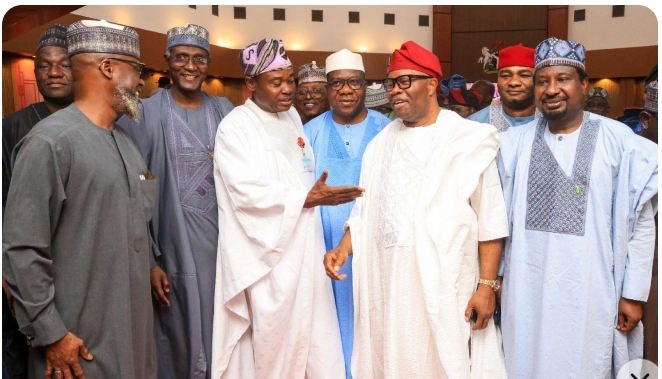
The National Assembly has approved a N68.3 trillion budget for the 2026 fiscal year, marking a significant increase of about 17 per cent from the initial proposal and placing the responsibility for funding and execution squarely on the Federal Government.
The budget was passed by both chambers three months after its presentation by President Bola Tinubu. If signed into law promptly, the fiscal cycle may effectively shift to an April–March timeline, as implementation would begin in the second quarter of the year.
The development comes amid concerns over delays in previous budget execution, particularly the 2025 appropriation, which only gained traction in September. This has raised questions about adherence to Nigeria’s budget cycle and fiscal discipline.
The approved budget represents a 24.2 per cent increase over the N54.99 trillion 2025 budget. It includes N32.29 trillion for capital expenditure, N15.43 trillion for recurrent spending, N15.81 trillion for debt servicing and N4.8 trillion for statutory transfers.
A key feature of the plan is the inclusion of N5.71 trillion in outstanding capital obligations carried over from 2025, alongside N2 trillion earmarked for priority projects. Lawmakers said the adjustments were necessary to ensure continuity of critical infrastructure projects and address funding gaps.
However, the expansion has sparked concerns about Nigeria’s fiscal sustainability. The initial proposal projected a deficit of N23.85 trillion against expected revenue of over N34 trillion. Analysts warn that if revenue underperforms—as it has historically—by about 30 per cent, the deficit could rise to nearly N35 trillion.
To finance the budget, the government plans to rely on increased oil revenue, tax reforms and borrowing. An upward review of the oil benchmark is expected to generate N2.59 trillion, while telecom taxes could bring in about N874 billion. Additionally, the government intends to raise over N6 trillion through external borrowing.
The Senate said the increase followed formal requests from the executive to address critical national priorities. Chairman of the Senate Committee on Appropriation, Olamilekan Adeola, described the revised budget as a “budget of consolidation” aligned with the administration’s economic agenda.
The House of Representatives had earlier approved the additional N9.3 trillion requested by the President after reviewing recommendations from its appropriation committee.
Meanwhile, the House also extended the implementation of the capital component of the 2025 budget to June 30, 2026, to allow more time for completion of ongoing projects.
While the government maintains that the budget will drive infrastructure development and economic growth, concerns remain over rising debt levels and the feasibility of funding such an expansive fiscal plan.








Leave a comment