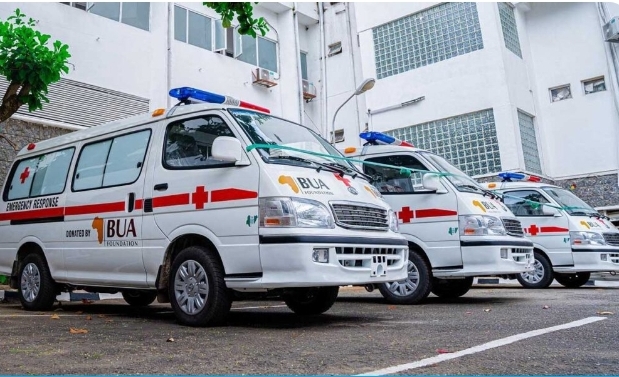
A new industry report has revealed that public ambulance services account for only seven per cent of emergency responses in Nigeria, highlighting major gaps in the country’s emergency healthcare system.
The Q1 2026 report by Salvus Emergency, authored by Emmanuel Oziwa-John, shows that despite the presence of over 36 emergency response frameworks and the expansion of the National Emergency Medical Services and Ambulance System (NEMSAS) to 30 states, most Nigerians still rely on informal or private means during emergencies.
According to the findings, commercial buses are the most common mode of emergency transport, accounting for 47 per cent of cases. Private vehicles and walk-ins make up 31 per cent, while private ambulance providers handle 15 per cent of emergencies.
Nigeria records more than six million medical emergencies annually, yet NEMSAS coverage remains below 0.2 per cent, underscoring the limited reach of the public system.
The report attributes low ambulance usage partly to public distrust, noting that many people fear being required to make upfront payments, despite a federal policy guaranteeing free emergency care within the first 48 hours.
It stressed that the core issue is not the number of ambulances, but inefficiencies in coordination, dispatch, and patient transfer within the system.
“The system fails because of fragmented coordination, routing and handoff, not a lack of hardware,” the report stated.
Response times also fall short of global standards. In Lagos, the average emergency response time is about 17 minutes—more than double the World Health Organisation’s recommended eight minutes—while in rural areas, delays can exceed two hours.
These delays have serious consequences. The report estimates that between 10 and 15 per cent of Nigeria’s 1.6 million annual deaths occur in emergency units, often due to late arrival or lack of pre-hospital care.
Additional challenges identified include poor data sharing, inadequate hospital preparedness, delayed funding, low health insurance coverage, and the absence of a national paramedic registry.
The report further revealed that by the third quarter of 2025, only 55 per cent of NEMSAS ambulance cases were taken to hospitals equipped with functional intensive care units or emergency departments capable of handling severe trauma.
It concluded that improving Nigeria’s emergency healthcare system will require more than just increasing ambulance numbers, calling instead for better coordination, improved trust, efficient dispatch systems, and real-time data integration across the sector.

National
 News MasterUpdated 6 months Ago1 Mins read
Report: Public ambulances handle just 7% of emergencies in Nigeria
News MasterUpdated 6 months Ago1 Mins read
Share






Related Articles

National
Nigeria Moves Against South Africa Over Killing of Citizens, Demands Accountability
The Federal Government has intensified diplomatic pressure on South Africa following the...

National
Reps Approve Bill for New Federal Medical Centre in Ikwuano, Awaits Senate Approval
The House of Representatives has passed a bill sponsored by Hon. Obi...
National
FG Targets Malnutrition with New 10-Year Nutrition Policy
The Federal Government has taken a major step toward tackling malnutrition following...

National
Kalu’s Lawyers Reject Petition Seeking Revocation of Law School Certificate
Legal representatives of the Deputy Speaker of the House of Representatives, Benjamin...




Leave a comment