
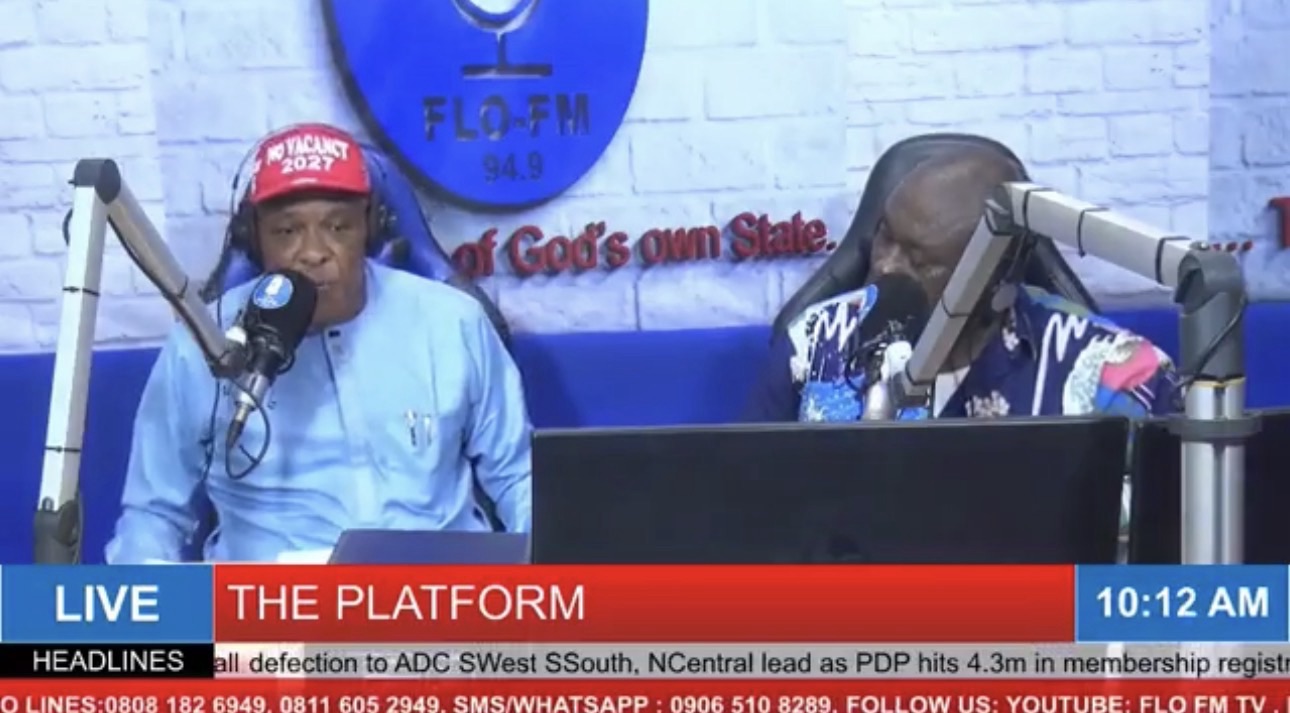
(Interview Monitored on Flo 94.9FM Umuahia)
Q: Honourable Aguocha, how would you assess the Labour Party primaries in Abia State?
A: First, I must commend the leadership and members of the Labour Party across Abia State for what can only be described as a model of internal democracy. The primaries were peaceful, transparent, and conducted in strict compliance with the Electoral Act and our party guidelines.
What stood out most was the absence of rancour and violence, which unfortunately has become common in many political environments. Instead, what we witnessed was discipline, maturity, and a shared commitment to strengthening our democratic institutions.
I also want to recognize that this level of political order reflects the leadership culture that has been encouraged under Governor Alex Otti, whose governance style has emphasized accountability, structure, and respect for due process within political engagement.
Q: You emerged with 77,482 votes. What does this signify to you?
A: It is deeply humbling and, at the same time, a strong responsibility. The 77,482 votes represent not just numbers, but people—families, communities, and party members who have continued to believe in my representation.
What is even more significant is that this figure surpasses what I recorded during the 2023 general election. That tells me that trust has not diminished; rather, it has grown.
To me, it is a mandate for continuity. It is a reminder that representation is not a one-time promise but a continuous obligation to serve, to listen, and to deliver.
Q: Critics argue that your unopposed emergence weakens the strength of the mandate. How do you respond?
A: Democracy is not defined only by competition; it is defined by participation and legitimacy. Even in an uncontested race, people still came out in their numbers to affirm a choice.
That level of participation speaks volumes. It means the people were not indifferent. It means they were intentional about endorsing continuity.
So, I do not see it as a weakened mandate. I see it as a strengthened trust, because it came voluntarily from the people themselves.
Q: Your opponent in the coming election is expected to be a former representative. What is your perspective?
A: I welcome it. Democracy thrives on choice. Every election is an opportunity for the people to evaluate performance and decide who best represents their interests.
I hold no ill feelings toward any opponent. Politics should never be personal. It should be about ideas, records, and vision.
What I bring to the table is a clear legislative record, active constituency engagement, and ongoing advocacy for development. The people will ultimately decide based on evidence, not sentiment.
Q: Are you intimidated by the experience of your opponent?
A: Not at all. Experience is valuable, but impact is more important. The real question is: what has been achieved with that experience?
The electorate today is more informed. They want measurable outcomes. They want accessibility. They want accountability.
I am confident in my record and the relationship I have built with my constituents. That confidence is not political arrogance; it is grounded in service delivery.
Q: Let us talk about your legislative record. What stands out?
A: So far, we have sponsored 26 bills and moved 12 motions covering education, healthcare, infrastructure, institutional reform, and economic development.
Some of these bills are already at advanced stages in the National Assembly. Others are shaping national discourse on development priorities for our region.
For me, legislation is not about quantity; it is about impact. Every bill is designed to solve a problem or create an opportunity.
Q: Can you highlight key bills of strategic importance?
A: Certainly. One of the most important is the bill for the establishment of a Federal Medical Centre in Ikwuano, which will significantly improve healthcare delivery and create employment opportunities.
We also have the bill upgrading the Federal University of Agriculture, Umudike into a conventional university. This will allow it to offer broader academic disciplines including Medicine and Law, thereby transforming it into a full-fledged citadel of learning.
Additionally, there is a bill for the establishment of a Federal Institute of Mining and Geosciences in Umuahia, which is designed to position our constituency within Nigeria’s emerging solid minerals economy.
Q: Why is the Federal Medical Centre bill particularly important?
A: Healthcare access remains one of the most pressing challenges in our society. The proposed FMC in Ikwuano will decentralize healthcare delivery and reduce pressure on existing facilities.
More importantly, it will bring specialized medical services closer to the people and create employment opportunities for our youths in the health sector.
Development must always be people-centred. That is the philosophy behind every legislative effort I support.
Q: You have also proposed the creation of additional local governments in Ikwuano. Why?
A: Ikwuano is one of the largest local government areas in Abia State, both in population and landmass. Creating Ikwuano North and Ikwuano South will improve grassroots governance and ensure fairer distribution of resources.
It will also enhance political representation and bring government closer to the people.
Historically, Ikwuano has had stronger administrative structures in the past. This proposal is about restoring balance and improving efficiency in governance.
Q: Beyond legislation, what have you done for your constituents?
A: Representation goes beyond lawmaking. We have implemented empowerment programmes, facilitated employment opportunities, supported education through scholarships, and engaged in youth development initiatives.
We have also maintained constant accessibility. My office remains open to constituents, because leadership must remain connected to the people it serves.
Q: You have been vocal on the issue of Mazi Nnamdi Kanu. What drives your position?
A: My position is rooted in justice, fairness, and national stability. I believe that issues of this magnitude require dialogue, constitutional understanding, and political resolution.
I have consistently advocated that the matter be approached in a manner that promotes peace, healing, and national cohesion, particularly in the South-East.
Q: What specific role have you played in advocating for his release?
A: I have engaged through legislative interventions, public advocacy, and consultations with relevant stakeholders.
My position has always been that constructive engagement remains the most sustainable path toward resolving tensions and promoting reconciliation within the country.
Q: Let us talk about Governor Alex Otti. How would you describe his leadership?
A: Governor Alex Otti represents a new era of leadership in Abia State. His governance style is defined by discipline, transparency, and results-oriented administration.
Across the state, we are witnessing infrastructural renewal, improved accountability, and a restoration of public confidence in government.
What stands out most is his calm but firm approach to governance. He does not govern by noise; he governs by structure, planning, and execution.
Q: How has his administration supported your legislative efforts?
A: Governance is most effective when there is synergy between the state and federal levels. Governor Otti’s reforms have created a stable environment that allows us to attract federal attention and development opportunities to our constituency.
His leadership has also inspired a renewed sense of responsibility among political office holders in Abia State.
Q: Finally, what message do you have for your constituents ahead of 2027?
A: My message is one of gratitude and renewed commitment. I remain deeply thankful for the trust, encouragement, and partnership of the people.
If given another opportunity, I will continue to deepen representation, expand development initiatives, strengthen legislative advocacy, and ensure that our constituency remains visible and influential at the national level.
Together, we will continue building a constituency defined by progress, dignity, and shared prosperity.