The Nigeria Incentive-Based Risk Sharing System for Agricultural Lending (NIRSAL) has achieved a major milestone, enabling over ₦70 billion in commercial financing for agribusinesses as of the third quarter of 2025.
In a statement on Wednesday, the non-bank financial institution described the feat as its strongest annual performance since inception, marking a critical turnaround for agricultural financing in Nigeria.
Established in 2013 through a collaboration between the Central Bank of Nigeria, the Federal Ministry of Agriculture and Food Security, and the Bankers’ Committee, NIRSAL was designed to transform Nigeria’s agriculture sector by providing structured, affordable finance across the value chain.
The fresh capital inflow comes at a vital time for the sector. Bank lending to agriculture had been declining—from 6.18 per cent of total lending in 2022 to 4.82 per cent in 2024—accompanied by a slowdown in growth from 2.5 per cent to 1.7 per cent. NIRSAL’s intervention has reversed this trend, with agriculture’s share of bank lending rebounding to 5.33 per cent as of May 2025.
According to the statement, more than 32 per cent of the facilitated funds directly supported value-added commodity exports.
Speaking on the development, NIRSAL Managing Director/CEO, Sa’ad Hamidu, said the ₦70bn milestone, though modest compared to the nation’s overall agricultural financing needs, demonstrates that the sector can be sustainably funded.
“₦70 billion may seem small, but its impact is significant. It proves that agriculture can be commercially and sustainably financed. With the right mix of capital, technical support, and risk mitigation, we can make the sector more productive, resilient, and globally competitive,” Hamidu stated.
He added that the agency remains optimistic about meeting its ₦150bn annual target. “This isn’t yet peak harvest season, when merchants and agro-dealers typically seek credit for offtake and input stocking. The opportunities ahead give us every reason for optimism,” he said.
NIRSAL noted that the record achievement—representing nearly a quarter of its cumulative ₦270bn facilitated to date—was driven by a new strategy implemented by its restructured Board and Executive Management.
Through tools such as value chain modeling, targeted technical support for agribusinesses and lenders, and robust risk-sharing mechanisms, NIRSAL has restored confidence among banks and redirected fresh funds into vital value chains including grains, cocoa, shea, and livestock.
Beyond financing, NIRSAL has also invested in capacity building. Over 1,100 bank staff have been trained in agricultural finance under its risk-sharing model, resulting in a rise in loan approvals. Additionally, 450 value chain participants have received training on feedlot management, commodity exports, and climate finance.
To further deepen data-driven investment and decision-making, NIRSAL plans to launch the NIRSAL LandBank Portal—a digital ecosystem connecting stakeholders from research to markets. The platform will provide insights for investors, policymakers, and development partners while supporting project development and climate finance initiatives.
The institution also disclosed a recent partnership with the Rural Electrification Agency to deliver off-grid power solutions to rural production and processing clusters—part of efforts to strengthen resilience across the agricultural value chain and advance Nigeria’s ambition for a $1 trillion economy.

Business
 News MasterUpdated 12 months Ago2 Mins read
NIRSAL Unlocks ₦70bn in Agribusiness Loans, Boosts Confidence in Agricultural Financing
News MasterUpdated 12 months Ago2 Mins read
Share




Related Articles

Business
Hon. Amobi Ogah Engages Global Stakeholders at OTC Texas As Nigeria’s Energy Future Comes in Focus
U.S., Texas — Nigeria’s push for innovation and global collaboration in the...

Business
Fear of Oil Glut as NNPCL Raises Crude Prices Across Grades
Concerns are growing over a possible global oil glut as the Nigerian...
Business
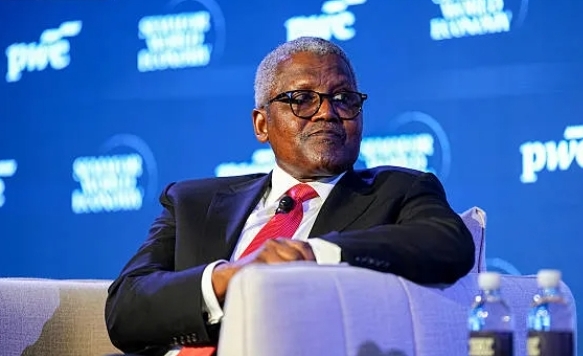
Aliko Dangote’s Wealth Climbs to $34bn After $216m Single-Day Surge
Africa’s richest man, Aliko Dangote, has seen his net worth rise to...
Business
Nigeria’s Petrol Price Drops 15.6% Year-on-Year – NBS
The average retail price of petrol in Nigeria declined by 15.6 per...




Leave a comment